Concrete Distributor
Coordinate concrete placing with compaction.

A pallet vibration station compacts fresh concrete through vibration applied to the production pallet. The reference design offered through REALJET uses clamping vibration, eight vibration units and an adjustable frequency range of 0–50 Hz. It is reviewed as part of the casting and compaction stage of a precast wall or slab line.
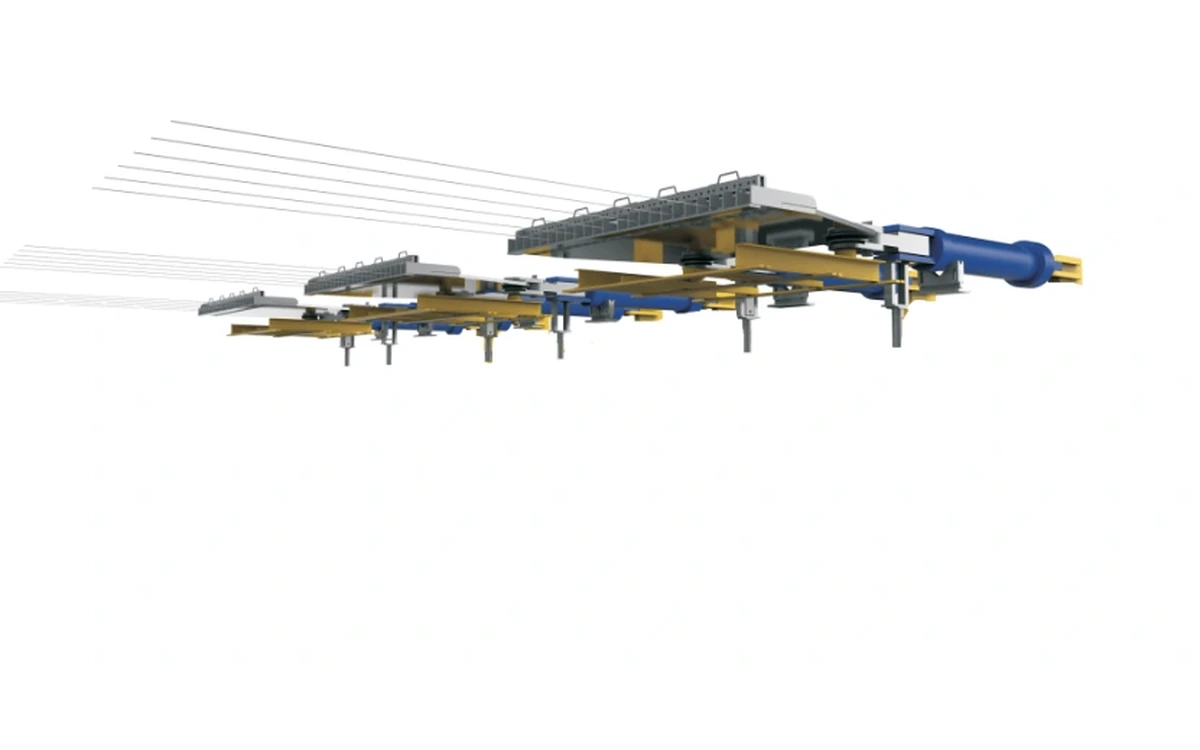
The vibration station works with the pallet, mould and concrete placing method. Its role is to provide the vibration needed by the agreed compaction process before the element moves into subsequent finishing and curing operations.
Selecting the station requires more than matching the pallet footprint. The total moving load, shutter arrangement, concrete process and supporting foundation also affect the equipment review. The reference dimensions and vibration settings provide a starting point for that discussion, rather than a universal setting for every wall or slab.
The equipment arrangement, foundation and pallet support points should be checked together. A frequency setting by itself does not establish the resulting concrete quality.
The timing of concrete placing and vibration depends on the element and concrete process. This sequence describes the equipment's role; the final production procedure is set during technical review and commissioning.
| Item | Reference specification |
|---|---|
| Reference overall dimensions | 8,786 × 3,590 × 457 mm |
| Vibration units | 8 |
| Working frequency range | 0–50 Hz |
| Excitation force, as specified per unit arrangement | 13 kN × 8 |
These figures describe the reference configuration. Final dimensions, equipment scope and operating conditions are confirmed in the project specification.
Provide the pallet size, its support layout and the combined operating load. Include drawings of the element and shutters, the concrete placing method and the height of the adjoining transfer equipment. For a retrofit, photographs of the current foundations and clearances help reveal installation constraints.
The vibration station and concrete distributor should be reviewed as a working pair. The assessment should identify the required casting sequence and how the operator controls each operation. Foundation details and the setting procedure belong in the agreed technical package, rather than being inferred from a catalogue photograph.
It applies vibration to a production pallet to support the compaction of freshly placed concrete. Its settings and operating sequence need to suit the selected pallet, mould and concrete process.
No. It is the upper end of the reference adjustable range. A suitable working setting is established for the actual product and production procedure.
No. The catalogue describes the vibration-unit arrangement as 13 kN × 8. That notation should not be treated as a verified uniform effective force throughout the pallet or element.
Start with pallet dimensions, total operating load, support points, foundation drawings and station height. The existing casting sequence and controls also need review.
Share your pallet drawing, product type and current compaction arrangement. REALJET can review the vibration station and its connection to the casting and pallet circulation system.
Thank you. We will review your requirements and contact you to clarify the next steps.
To add drawings or project details, reply when our team contacts you or email sales@realjetech.com.
Back to Equipment