
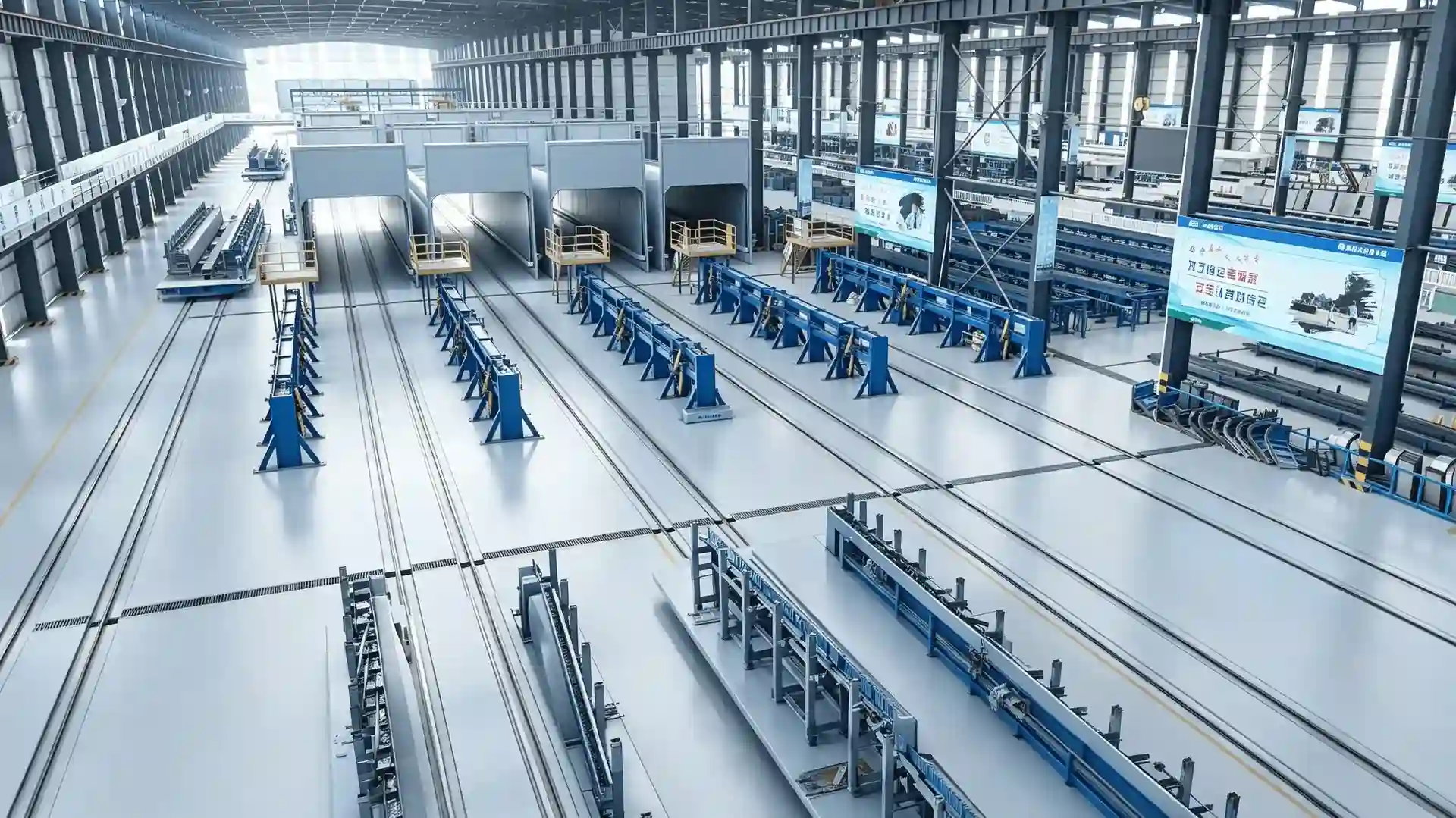
What a trough girder is
A trough girder, often called a U trough, is a precast concrete bridge member with a U shaped cross section. The deck sits in the trough and the two upstanding walls act as parapets and structural edges. Rail and metro viaducts use it because a single unit carries one or two tracks while keeping the structure shallow and the track bed integrated. Typical spans run from about 25 m to 35 m, though the approved design sets the real number.
The shape matters for production. Unlike a closed box girder, a trough is open at the top, so reinforcement, prestressing and concrete placement happen from above, and lifting has to engage the walls rather than an enclosed soffit. Those details feed straight into how a line is laid out.
What the production line makes
Realjet supplies production lines for precast concrete bridge components. A trough girder line is one configuration of that offer: it turns approved drawings, steel, concrete and prestressing into finished trough girders at a planned rate. Realjet does not supply the girders themselves. It supplies the beds, moulds, prestressing, concreting, curing and handling equipment, plus the engineering and commissioning where the project scope confirms it.
If your programme is a trough girder viaduct, the team reviews your approved section, span range, output target and site conditions before proposing a line configuration. The same casting, prestressing and handling logic also applies to precast U-girder production lines, which share the open section idea from a different structural family.
Casting and prestressing steps
Production follows the standard precast prestressed sequence. The bed or cell is prepared, the mould is cleaned and released, reinforcement and embedded items are set, and the prestressing strand is tensioned. Concrete is placed and vibrated, then cured, usually with low pressure steam so the girder reaches stripping strength within a shift or two.
Trough girders can be pretensioned, post tensioned, or both, depending on the design. Pretensioning anchors the strand at the bed ends; post tensioning uses ducts and anchors cast into the walls. The production line has to support whichever method the structure engineer specifies, because the tendons and anchor zones change the mould, the bed length and the stressing equipment. PCI publishes the general guidance on precast and prestressed concrete practice that most buyers use to frame the specification (PCI).
Capacity drivers and mould count
Output per day depends on bed length, cycle time and how many moulds or cells run in parallel. A long line bed can cast several girders in one pour if the strand and reinforcement allow it. A circulation layout moves forms between stations and can raise throughput where land is tight.
Map the activities that keep a mould occupied: bed prep, steel and insert setting, tensioning, casting, curing, destressing, demoulding, lifting, cleaning and inspection. A cycle that ignores curing and cleaning will understate the mould count. The supplier can design around a stated release condition but should not invent one to make the equipment count look small.
Confirm the acceptance standard and any trial assembly you want before delivery. A full span trough girder is large and hard to rework, so a workshop fit check of the first form set against the approved geometry pays back on the first batch. Name the standard the girder must satisfy and the inspection the supplier must document, because line output only counts once the product passes.
Factory space and utilities
A trough girder line needs a long, flat, load bearing area for the beds, crane coverage for lifting the open section, and space for reinforcement, prestressing, batching, curing and finished storage. The open U section is wide, so the crane and transport corridor must clear the full deck width, not just the wall height.
Utilities drive the build as much as the concrete does. Steam curing needs a boiler and distribution, concrete needs a batching and placing system, and the stressing and handling gear needs power. Water, compressed air and drainage round out the list. Where the site lacks a service, the supplier scope has to say who provides it, because a line quote that assumes power you do not have will fail on commissioning.
What to prepare before the RFQ
A useful trough girder line enquiry includes:
- approved trough girder section, span range and quantity by type;
- prestressing method (pre, post or both) and strand or duct layout;
- concrete strength, mix restrictions and stripping strength target;
- target daily or monthly output and the project programme;
- bed layout preference (long line or circulation) and available land;
- crane capacity, hook coverage and the lifting interface;
- utilities available on site and those the supplier must provide;
- curing method, mould count basis and quality acceptance standard;
- required engineering, installation and commissioning scope.
Send the approved drawings first. The line configuration follows the section and the programme, not the other way round, and a supplier response that ignores either will not match your viaduct.