
What a PHC spun pile is
PHC stands for pretensioned, spun, high-strength concrete. A PHC spun pile is a hollow cylindrical precast concrete element made by spinning a steel mould at speed while the concrete cures. Pretensioned steel wire or strand places the concrete in compression after the tension is released. These piles are deep-foundation members used for bridges, buildings, ports and marine works.
Spun piles are not the same as precast concrete pipes. A pipe is a conduit for flow. A pile is a structural foundation element driven or bored into the ground. The two share a centrifugal casting method, but the product, the design standard and the buyer are different.
Realjet supplies production lines and equipment for precast concrete components. Realjet does not supply the piles. It supplies the line that makes them.
How the line makes the pile
A typical sequence runs as follows. A steel cage is welded from PC wire or strand. The cage is placed in a cylindrical steel mould and concrete is charged. Pretensioning is applied, then the mould is spun at increasing speed. Centrifugal force packs the concrete against the wall and pushes excess water out, leaving a dense wall and a hollow core. The pile is then steam cured, demoulded after it reaches the authorised release strength, and cut to length.
The spinning stage sets both density and the hollow section. Low, medium and high speed stages are used, and the exact profile depends on diameter, mix and machine. Steam curing is normally a staged low-pressure process rather than atmospheric curing, because the pile must reach demould strength on a production cycle.
The cage welding step sets the prestress and the pile geometry. The wire or strand must be positioned to the approved cage drawing, and the welded joints must hold the tension without slip. Mould preparation, release agent and alignment of the two mould halves affect the outer surface and the dimensional result. These steps are production controls rather than design controls, so the line supplier should describe how each is managed while the buyer owns the approved cage and pile drawings.
Equipment package in the line
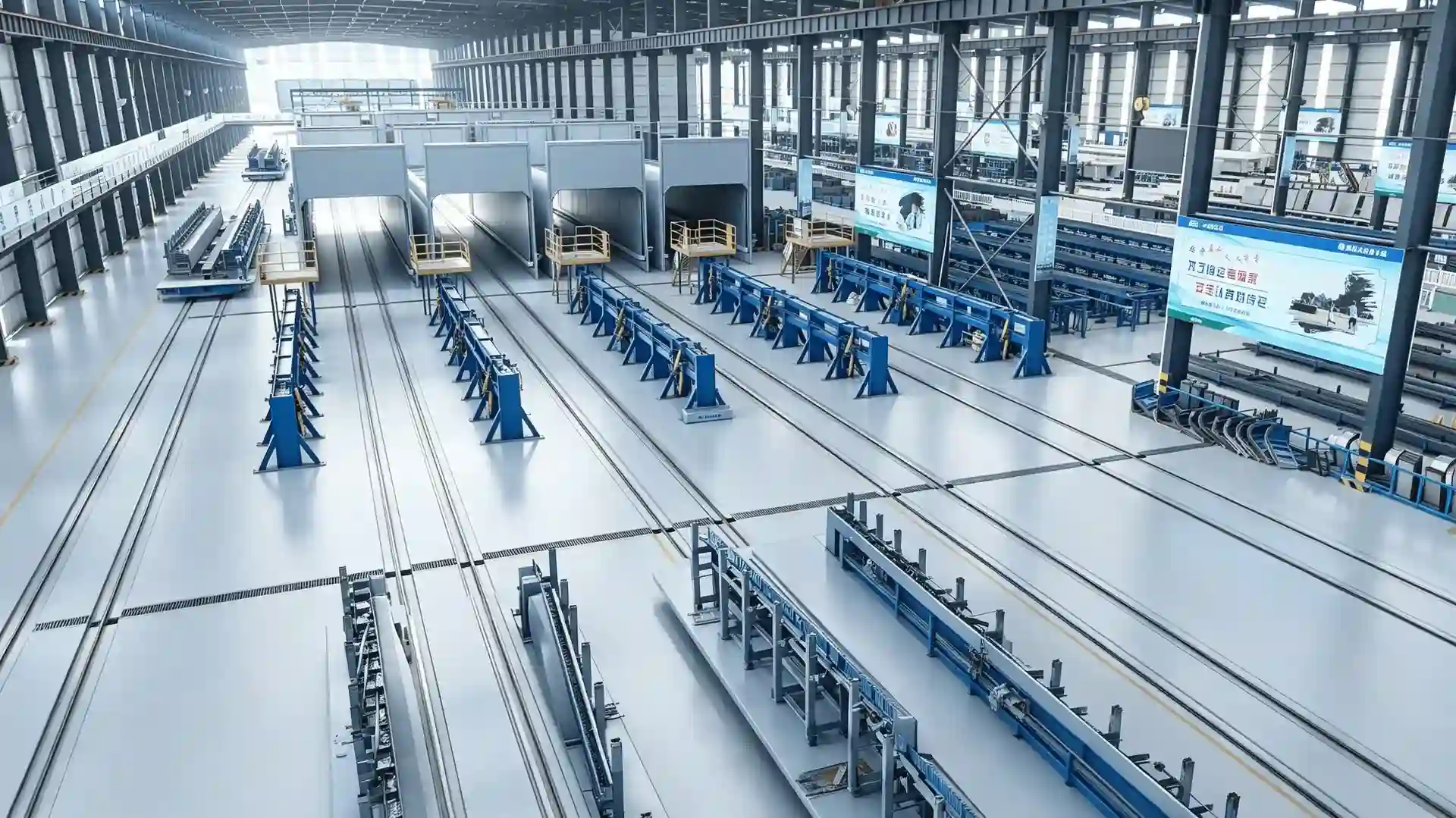
A complete line can include a cage welding machine, centrifugal spinning frames, the cylindrical steel moulds sized to the pile diameter and length, concrete batching and conveying, a steam curing chamber or kiln, demoulding and cutting equipment, and overhead handling. The spun-mould family used for pipes and piles belongs to the municipal and infrastructure mould range, and the moulds are project-specific.
Realjet scopes the equipment package to the product and output. The exact machine list should be confirmed during technical review rather than assumed from a generic layout.
Capacity drivers
Daily output follows the number of moulds and spinning frames, the curing capacity, the cycle time and the pile length. A longer pile holds a spinning frame and a curing position for longer. Diameter and wall thickness change concrete volume and spin time. Quotations should state the assumed cycle and the buyer inputs that support it. Concrete strength development and release approval remain with the buyer's authorised concrete and quality personnel.
Two lines with the same spinning frames can deliver different output if one has more curing positions or faster demould handling. When comparing quotations, put the assumed cycle, the number of moulds, the curing volume and the handling method side by side. A low equipment price with too few curing positions simply moves the bottleneck to the yard.
Factory space and utilities
Plan for long moulds, spinning frames with foundations, a curing chamber, gantry or crane coverage, a steam boiler, and water and power supplies. Civil foundations, the boiler permit and utility connections are normally part of the buyer's site scope unless the contract states otherwise.
The steam curing chamber is often the largest single item and the longest lead component, so confirm its dimensions and door arrangement against the pile length and the handling route before the layout is fixed.
Buyer inputs to prepare
Send the pile diameter and length range, wall thickness, prestress level, target concrete strength, daily output, the applicable standard and the site constraints. ACI publishes guidance on prestressed concrete pile design, and ASTM C76 describes the related centrifugal concrete pipe process that uses the same spinning method. Local pile standards such as GB/T 13476 or BS EN 12794 may also apply depending on the project country.
Supplier responsibility boundary
Realjet provides line engineering, equipment manufacturing, and installation and commissioning where the project confirms it. Civil works, concrete plant integration, local permits and the casting of the piles themselves sit outside the equipment supply unless the contract includes them. Mark each item as included, buyer supplied or excluded.
What to prepare before contacting the line supplier
Define the product range, output, standard and site constraints first. Then review the precast beam and component production line offer so the response addresses the correct equipment boundary for the project.