
Robotic concrete compression testing
Connect specimen identification, robot loading and compression testing in one coordinated workstation. REALJET integrates the pressure machine, handling equipment and test records around your laboratory workflow.
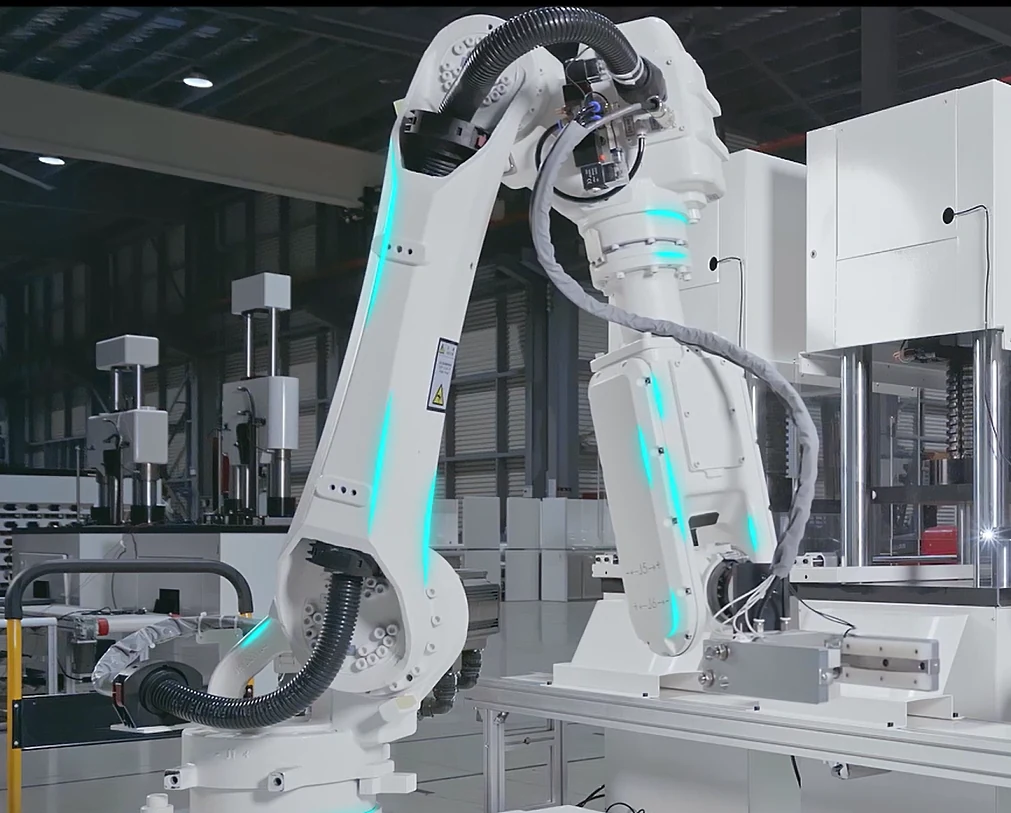
What does robotic compression testing automate?
A robotic concrete compression testing workstation combines a compression machine with specimen loading, transfer and result recording. The robot handles the agreed specimen movements while the testing machine applies the load. REALJET reviews machine access, specimen geometry, safety interfaces and data exchange together before specifying the workstation.
An automatic pressure machine controls the loading cycle. The workstation also coordinates specimen transfer, placement, guarding, result handover and removal of tested material.
- 01
Recognize and prepare
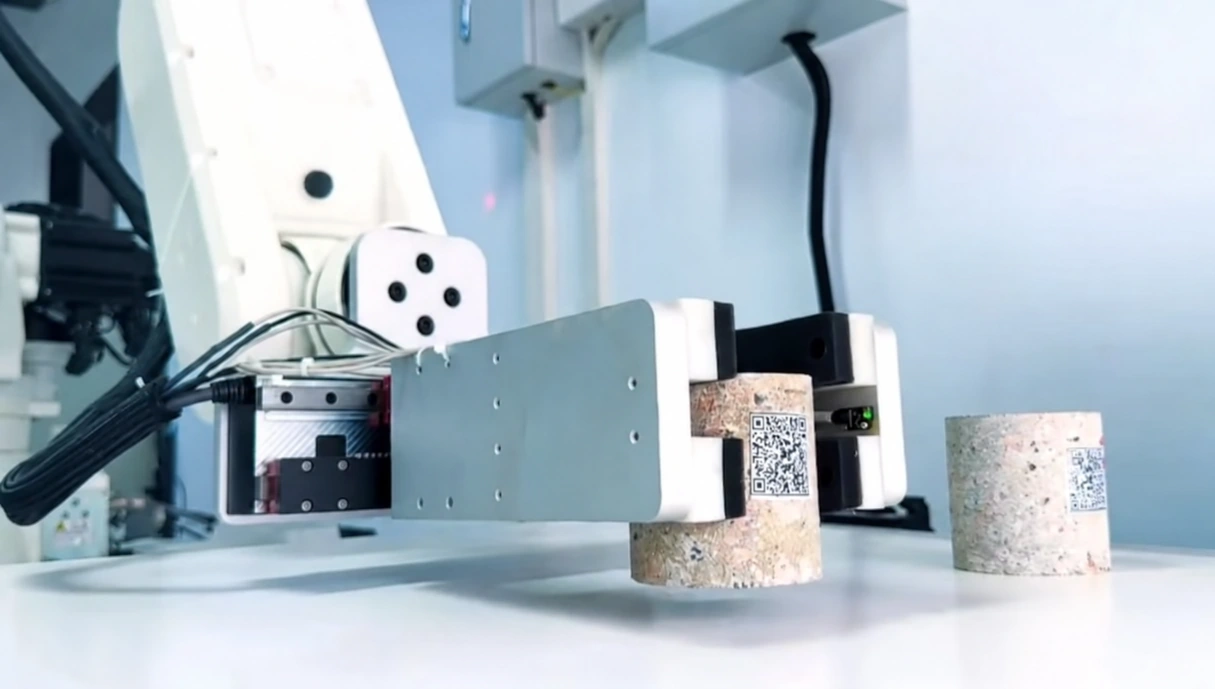
Confirm the specimen identity and required test; include measurement where specified.
- 02
Position and test
Place the specimen on the platen, confirm guarding and execute the selected test cycle.
- 03
Unload and record
Remove tested material, clear the work area and connect the result to the specimen record.
Specify the machine and robot together.
Force capacity, measurement range, platen access and controller interfaces affect the entire cell. REALJET reviews these with the specimen dimensions, end effector and number of machines.
| Technical item | Engineering review |
|---|---|
| Pressure machine | Force capacity, usable measurement range, loading control and calibration |
| Specimen | Shape, dimensions, mass and handling condition |
| Robot | Payload including tooling, reach and guarded working envelope |
| Placement | Centering method, positioning checks and platen access |
| Measurement options | Identity scan, mass and dimensional measurement |
| Waste removal | Unloading, platen cleaning and collection route |
| Data exchange | Test request, machine status, curve and result transfer |
A defined route for existing pressure machines.
Send the make, model, controller, guarding and interface documentation. REALJET checks the physical access and control sequence before specifying a retrofit. An interface review is part of the engineering scope.
Plan for residue, wear and manual recovery.
Crushed concrete changes the gripping and cleaning task. The configuration includes collection, cleaning access and a recovery process for incomplete tests or failed transfers. Routine checks cover the gripper, platen area and sensing devices.
Concrete laboratory questions.
Start with the operation you need to change. REALJET will help define the equipment and interfaces.
Can one robot serve multiple machines?
This can be evaluated against reach, guarding, test-cycle duration and access. The layout and handling schedule determine the practical arrangement.
Is dimensional measurement included?
It is a configurable workstation function. The quotation defines the measuring equipment, calibration and connection to the test record.
Can the workstation test cylinders or cores?
Those specimens need a separate handling and method review, including end preparation and gripping. They are not assumed to be covered by the cube configuration.
Who issues the test report?
The workstation supplies the agreed test records. Report review, approval and release remain part of the laboratory's quality process.
Get a layout for your
specimen workflow.
Tell REALJET your daily intake, test ages and available space. Start with the details you have.