
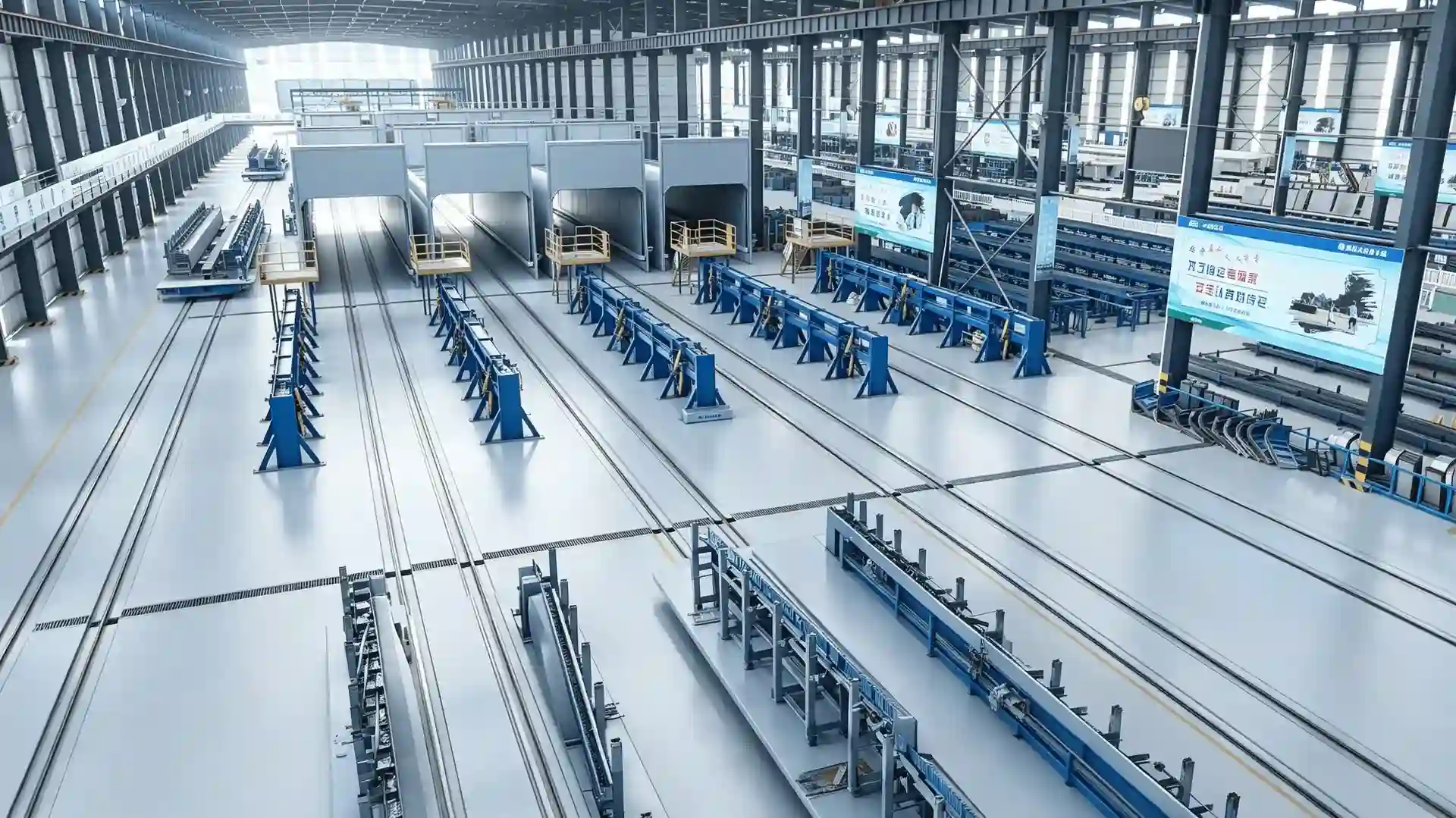
Tensioning is defined by the pile design, not the machine
A spun pile is prestressed before it is cast. Longitudinal bars or wires are stretched inside the mould, the concrete is placed and spun, and the prestress is released into the concrete after curing. That prestress gives the pile its resistance to the tensile stresses of handling, driving and bending. The tensioning machine is the equipment that applies the load through the mould-end anchorage, and it is selected from the approved reinforcement and prestress design rather than from the pile diameter alone.
The approved design fixes the required force and the method used to verify it. In China the product sits under GB/T 13476-2023, "Pretensioned spun concrete piles", which classifies piles by concrete strength, outer diameter, wall thickness and prestress category. Regional markets may apply equivalents such as EN 12794 for precast foundation piles. The tensioning equipment must work to the force and the sequence those documents and the project drawings define. The machine is a controlled actuator inside a verified design, not a standalone performance claim.
What the tensioning equipment must connect to
The tensioning station has to match the mould and the reinforcement anchorage at its ends. Required tensioning force and working stroke set the cylinder and reaction capacity. The mould-end connection and the anchorage interface decide whether the machine can actually engage the bars or wires without a custom adapter. Load measurement and the control arrangement decide whether the applied force can be recorded and checked against the design on every cycle.
Ask for the prestressing design, the reinforcement details, the mould-end drawings, the force and stroke requirements and the operating sequence before any quotation. A machine that looks comparable on paper but cannot read the load at the anchorage gives you no evidence that the pile was made to the approved stress. The record of applied force is part of the quality file, so the control scope is a selection input, not an accessory. The anchorage heads the bars use are prepared upstream by the PC bar processing machine, and their geometry has to be compatible with the tensioning end fittings.
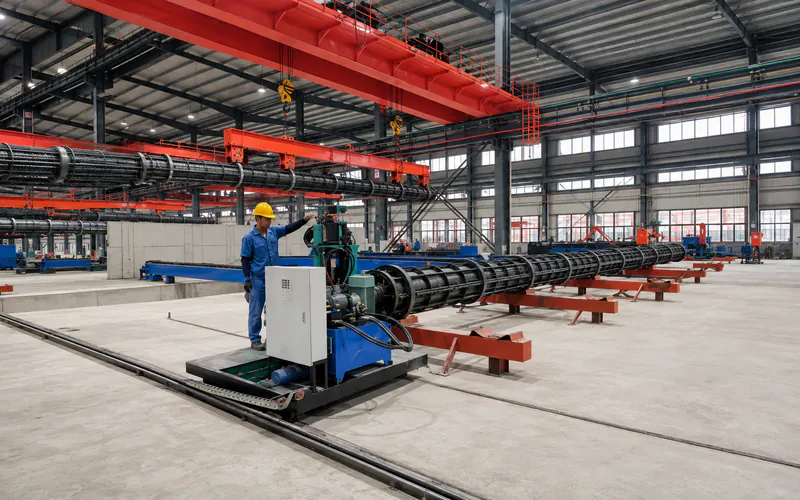
Prestressing Tensioning Machine for Spun Piles
The tensioning machine applies the prestressing load through the mould-end anchorage, so its force, stroke and control must match the approved pile reinforcement design.
View equipment detailsWorking stroke, access and the reaction arrangement
The working stroke is the distance the tensioning end travels while the load is applied. It is set by the bar or wire length, the anchorage detail and the mould-end geometry, and it is not a value you can read from the pile diameter. Where the tensioning is applied at both ends of a long mould, the stroke and the synchronisation between the two ends become part of the same specification. Access around the mould end decides how the operator and the measuring equipment reach the connection, and a tight bay can force a different machine configuration than the catalogue suggests.
The reaction arrangement is the part that resists the tensioning load while the concrete is still green. It is built into the mould end and the end plate, so the tensioning machine selection must confirm compatibility with the existing or proposed mould ends before a scope is proposed. Treating the reaction as someone else's problem is a common source of a machine that fits mechanically but cannot reach the required force at the right anchorage.
Confirm also that the load cell or pressure-based measurement is calibrated against the force you intend to use, because a measurement range that suits a small pile may not cover the longest and most highly stressed member in your range. Where tensioning is applied at both ends, the two ends should be demonstrably in step so the cage is not pulled off centre inside the mould.
Adding tensioning to an existing mould line
An existing line can be upgraded, but only after its mould ends, anchorage details, reaction arrangement and controls are reviewed. The new tensioning equipment must be compatible with the way the current mould closes and reacts the load, and the existing capacity must be confirmed before a replacement or retrofit scope is proposed. Skipping that review risks a machine that fits mechanically but cannot reach the required force at the right anchorage.
State the upgrade boundary clearly. Civil works, local permits and the casting of the piles themselves sit outside the equipment supply unless the contract includes them. The supplier can include the tensioning machine in a coordinated equipment package or review it for an existing line, but the buyer still owns the pile design and the release approval.
Prepare a comparable enquiry
Send the pile diameter and length range, the prestress level, the bar or wire specification, the mould-end drawings and the daily output. Include the working stroke and the method you expect for load verification, and name the standard that governs the product. With those inputs, review the spun pile production line planning page so the proposal addresses the right equipment boundary. Treat the first offer as the opening of a scope discussion, and ask the supplier to state every assumption it made about your product and your site.