
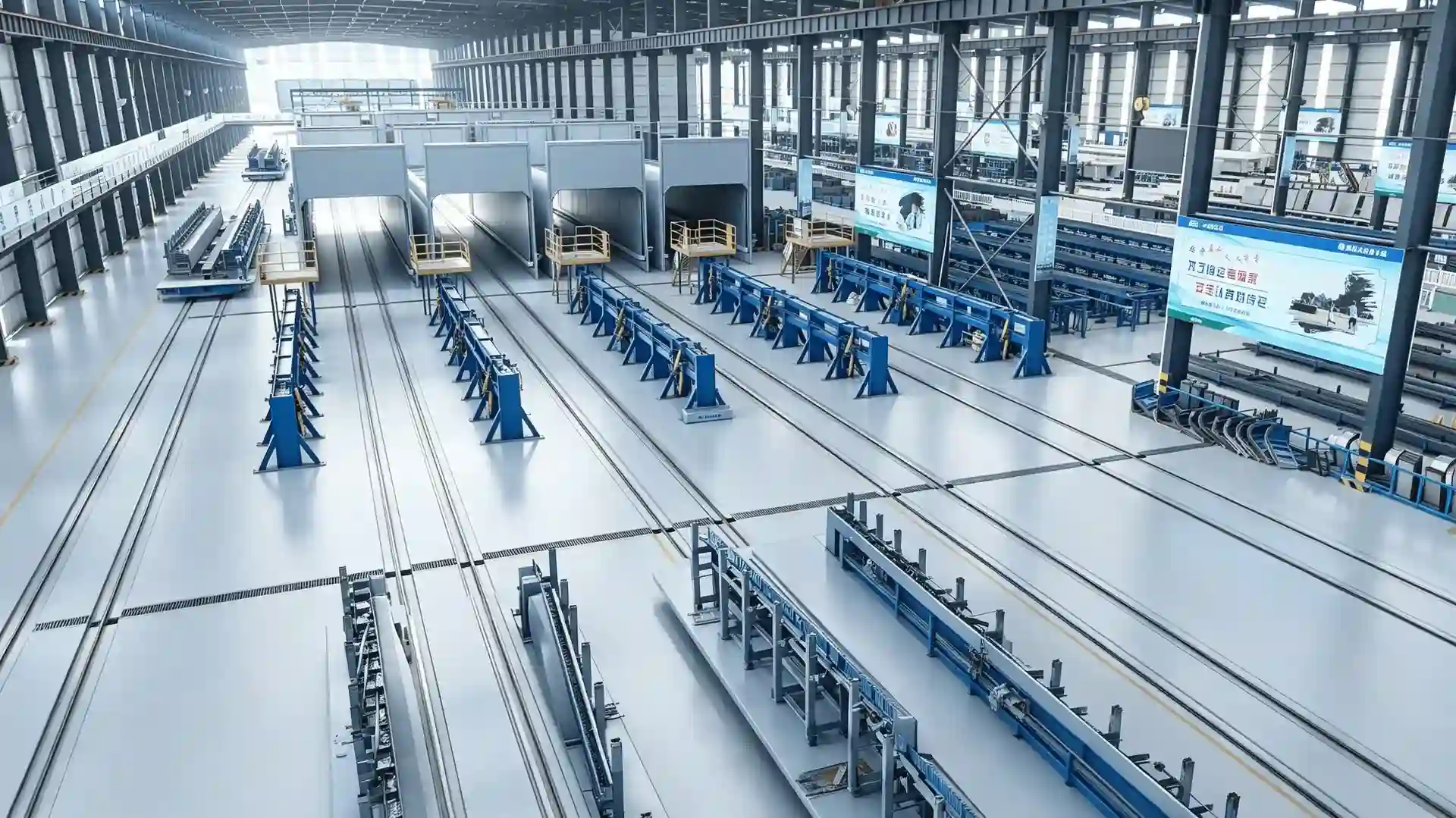
A winch pulls, it does not lift
A material transfer winch supplies pulling force along an agreed route in the plant. It may pull a transfer trolley or serve another defined transfer duty, with the rope path and anchoring set by the layout. The important limit is that a winch is a pulling device, not a lifting device. Any load that has to be raised off the ground needs its own lifting selection with confirmed load, braking and operating requirements.
Where a winch fits, it is a simple and robust way to move a load along a fixed path. The rope runs from the drum to an anchor at the far end, and the load moves as the drum winds or unwinds. That simplicity is also its constraint: the route must be defined, the anchoring must be sound, and the load must stay on its wheels or track throughout the move. A winch is chosen for a route, not as a general replacement for a crane.
Start from the route and the load
Selection begins with the moving load and the route, not with a catalogue size. The load is the trolley or material being pulled, and the route adds resistance through gradients, curves and rolling friction. Starting conditions matter: the force to start a stationary load is higher than the force to keep it moving, and a winch sized only for the running condition may stall on the first pull.
Route length and rope capacity follow from the same picture. The drum must hold enough rope for the full travel plus the wraps needed for safe operation, and the rope must suit the pull without exceeding its working limit. Rope routing past obstacles, around guides and to the anchor point decides the effective pull at the load, so the route drawing belongs in the enquiry, not a note added later. A change to the route after the drum is built can mean a rope that is too short or an anchor that lands in the wrong place.
Match the drive to the duty
The winch arrangement comes from the duty. Required line pull and operating frequency set the drum and motor, while travel distance sets the rope capacity. Braking and travel limits keep the load under control at both ends of the run, and the control positions decide where the operator stands and how the stop is triggered.
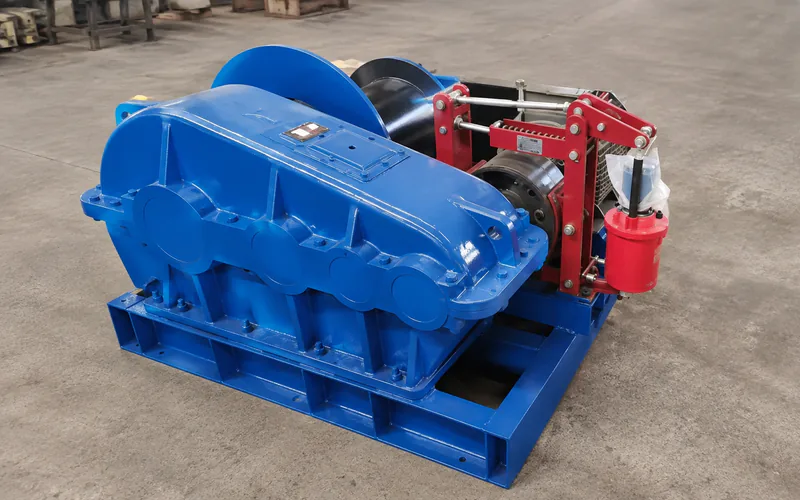
Winch for Spun Pile Plant Material Transfer
The winch supplies pulling force along a defined transfer route, so its line pull, rope routing and travel distance must match the trolley or material it moves on the line.
View equipment detailsThe winch does not act alone. It pulls a trolley whose movement may also be driven by a friction-wheel unit, and the two must be coordinated so the rope and the contact drive do not fight each other. Where the winch serves the trolley, confirm the trolley's rated load, support spacing and travel route with the supplier so the pull matches the load the trolley actually carries. A trolley built for finished piles and a trolley built for a loaded mould place different demands on the same rope, and the winch should be selected for the heavier of the two if both will share the route.
Power, controls and safety devices
A pulling duty needs holding as much as moving. The brake must hold the load at rest, the travel limits must stop it at the ends, and the control positions must let the operator see the load and the route. These are not options to add at installation; they are part of the selection because a winch without controlled stopping is a hazard, not a tool. Limit switches, a clear control station and a braking system suited to the duty should be specified up front.
Supply boundaries also need stating. The drum, guide, anchoring and rope may be supplied by one party while the runway, the trolley and the electrical connection belong to another. Naming those boundaries early avoids a gap at the anchor point or the control panel when the line is being set up. The anchoring in particular is often assumed to be a site item, yet it is the point that decides whether the winch can develop its rated pull at all.
What to send the supplier
Send the moving load, the route length and gradient, the rope routing and the required operating speed and frequency. State whether the winch pulls a trolley or another duty, and include the trolley drawings and the interface with any friction-wheel drive. Give the stopping positions and the safety devices you expect, because those decide the brake and control configuration. Mention the number of moves per shift and the ambient conditions, since duty cycle and environment affect the motor and the rope life.
With those inputs, review the spun pile production line planning page and treat the winch as one item in the transfer plan rather than a separate purchase. Share the route drawing early so the pulling duty is matched to the load before any equipment is built. A winch selected against the real route and load earns its place on the line; one picked from a size table rarely does.