
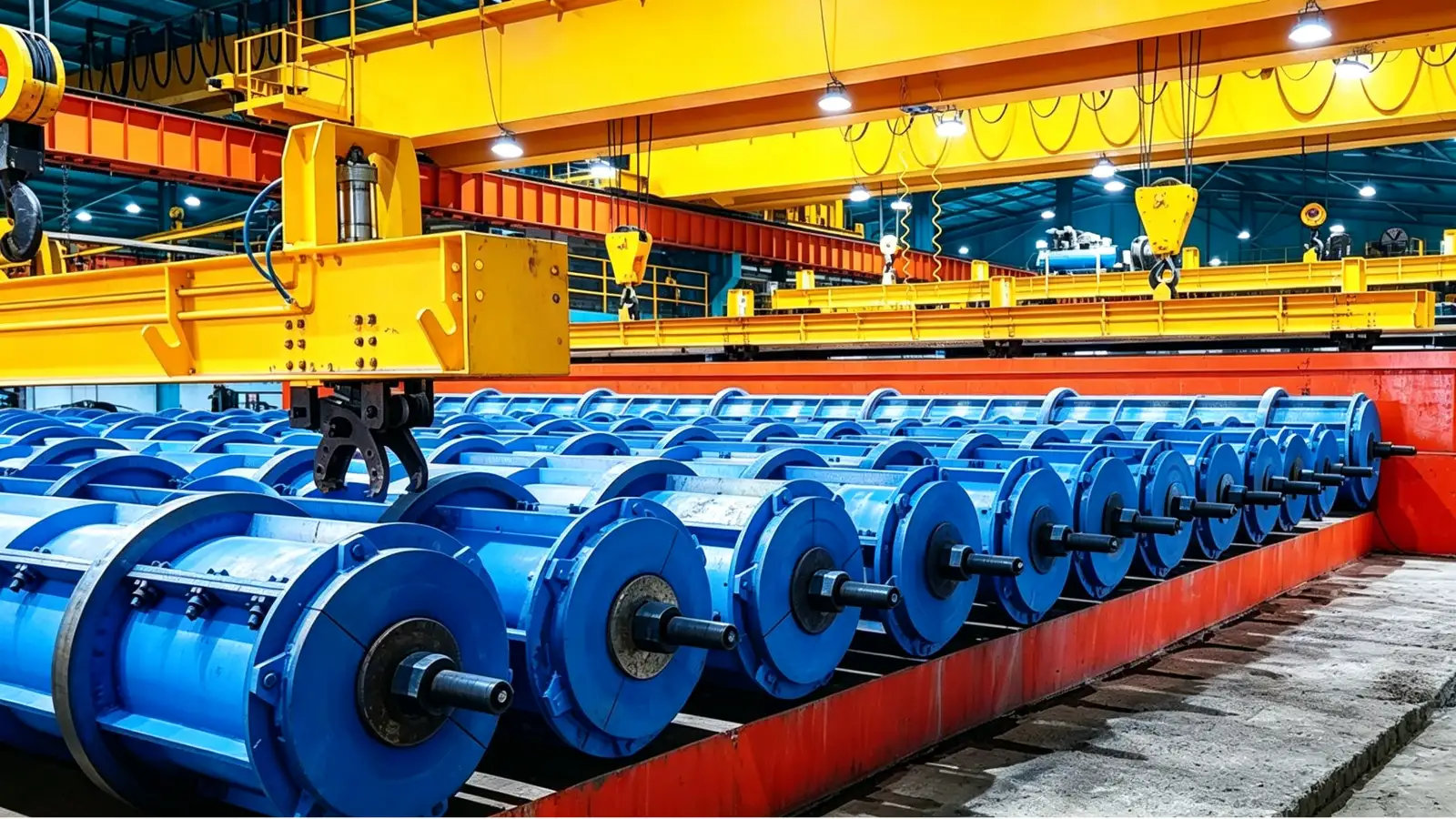
Feeding is a timed hand-off, not a separate job
In a spun pile line the concrete batching plant is not a stand-alone unit that happens to sit near the moulds. It is the start of a timed hand-off: the plant weighs and mixes the concrete, the concrete is moved to the mould, the mould is filled, and then the spinning machine compacts it. If any step in that hand-off falls behind, the whole line slows, because the spinning station cannot start until a filled mould is ready in front of it.
The product itself is defined by the applicable standard, such as GB/T 13476-2023 for pretensioned spun concrete piles in China or EN 12794 for precast concrete foundation piles in European markets, and those standards expect a consistent, placeable concrete. The batching plant has to deliver that concrete in step with the mould cycle, not merely in the right proportions.
Batch volume and discharge timing follow the mould cycle
A concrete batching plant supplies the controlled batches used to fill the spun pile moulds. Its weighing, mixing and discharge arrangement must serve the mould-feeding cycle as well as the approved concrete mix. Batching is planned around the concrete demand of each mould and the time available at the feeding station, so the mixer output, the storage and the discharge timing all matter.
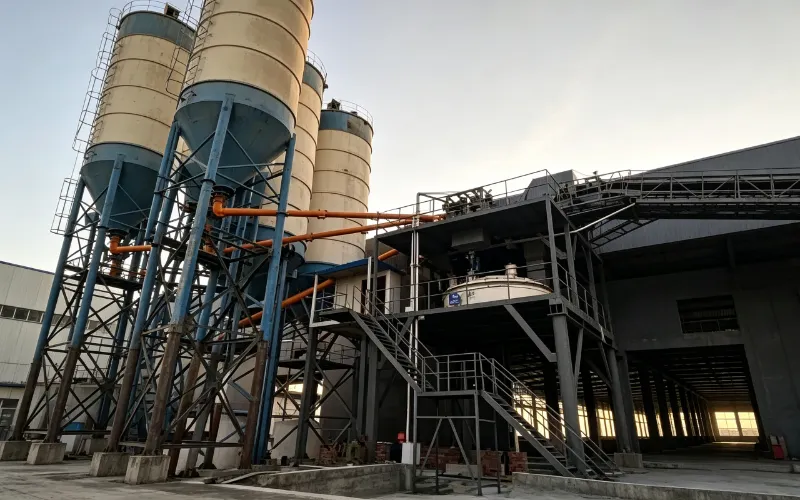
Concrete Batching Plant for Spun Piles
The concrete batching plant supplies the batches that fill the moulds, so its mixer output, storage and discharge timing must follow the mould-feeding cycle.
View equipment detailsCapacity selection starts with concrete volume per pile, the planned mould schedule and the time available for feeding. Average hourly demand alone does not show whether the plant can supply several moulds in quick succession, because the constraint is usually the peak feeding window rather than the daily average. Review storage and discharge timing alongside mixer output so the plant can meet a burst of moulds without waiting on the next batch.
An existing batching plant can be reviewed against the proposed mix, weighing and dosing requirements, discharge height and transport route. Reuse depends on those interfaces and the available capacity during the planned shift, so the review should be specific to the spun pile application rather than to concrete production in general.
The spinning station sets the pace the feeder must meet
The centrifugal spinning machine rotates the concrete-filled mould to compact the concrete and form the hollow pile section. The roller arrangement and drive are matched to the mould family and the planned forming cycle, and the spinning station supports and rotates the mould through the agreed forming stages. Its timing is what the batching and feeding side has to keep up with.
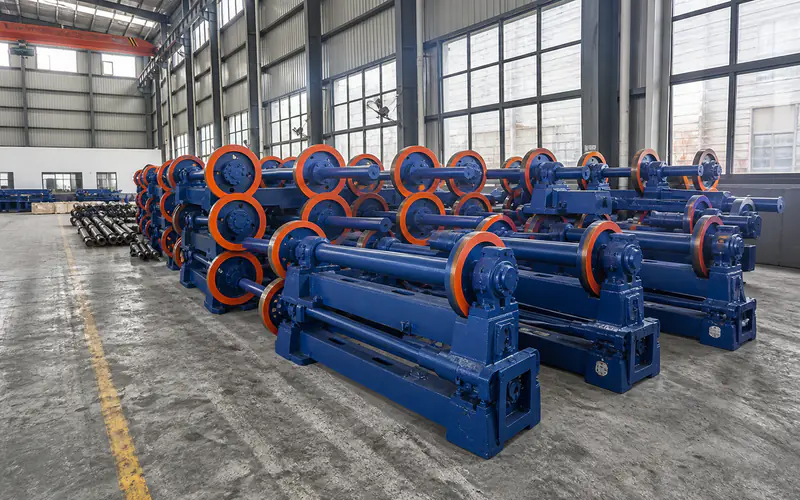
Centrifugal Spinning Machine for Concrete Piles
The centrifugal spinning machine compacts the filled mould, so its roller arrangement and drive must match the mould family and the planned forming cycle.
View equipment detailsBecause spinning starts only after a mould is filled and closed, the feeder that cannot keep a filled mould ready forces the spinner to wait. The relevant planning figure is the loaded mould and running-ring geometry, the planned cycle and the site foundation conditions, reviewed together with the feeding rate. A spinner sized for a fast cycle gains nothing if the mould in front of it is still being filled.
Transport and placing between batching and mould
Between the mixer and the mould, the concrete has to be moved and placed without delaying the cycle. The transport method, the discharge height and the distance to the feeding station decide how much time sits between a finished batch and a filled mould. Short, direct routes keep the concrete fresh and the cycle tight; long or interrupted routes add waiting that the mixer cannot compensate for.
The placing arrangement at the mould also has to suit the pile geometry and the feeding method. The goal is a filled mould that reaches the spinning station on schedule, with the concrete still workable and consistent with the approved mix.
What breaks the beat and how to avoid it
The beat breaks in predictable places. A batching plant sized on a daily average stalls during the morning feeding burst. A transport route that shares space with crane movements adds stops. A discharge height that does not match the feeding station forces manual handling. Each of these is a planning gap, not a machine fault.
Avoid them by planning the batching, transport and spinning as one sequence. State the mould schedule, the concrete volume per pile, the transport route and the feeding-station geometry together, and review whether the plant can sustain the peak feeding window rather than the average. The batching plant, the mould and the spinning machine are one line when they are planned that way, and three separate bottlenecks when they are not.
What to confirm with the supplier
Send the concrete mix design, the batch demand, the pile output per shift, the available footprint and the material delivery method. Include the mould schedule and the feeding-station geometry so the batching and transport can be matched to the spinning cycle rather than specified in isolation.
With those inputs, review the spun pile production line planning page and ask for the batching, transport and spinning interface to be confirmed as a connected sequence. A line whose feeding beat is planned with its spinning cycle starts without the stoppages that appear when concrete supply is treated as a separate job.