
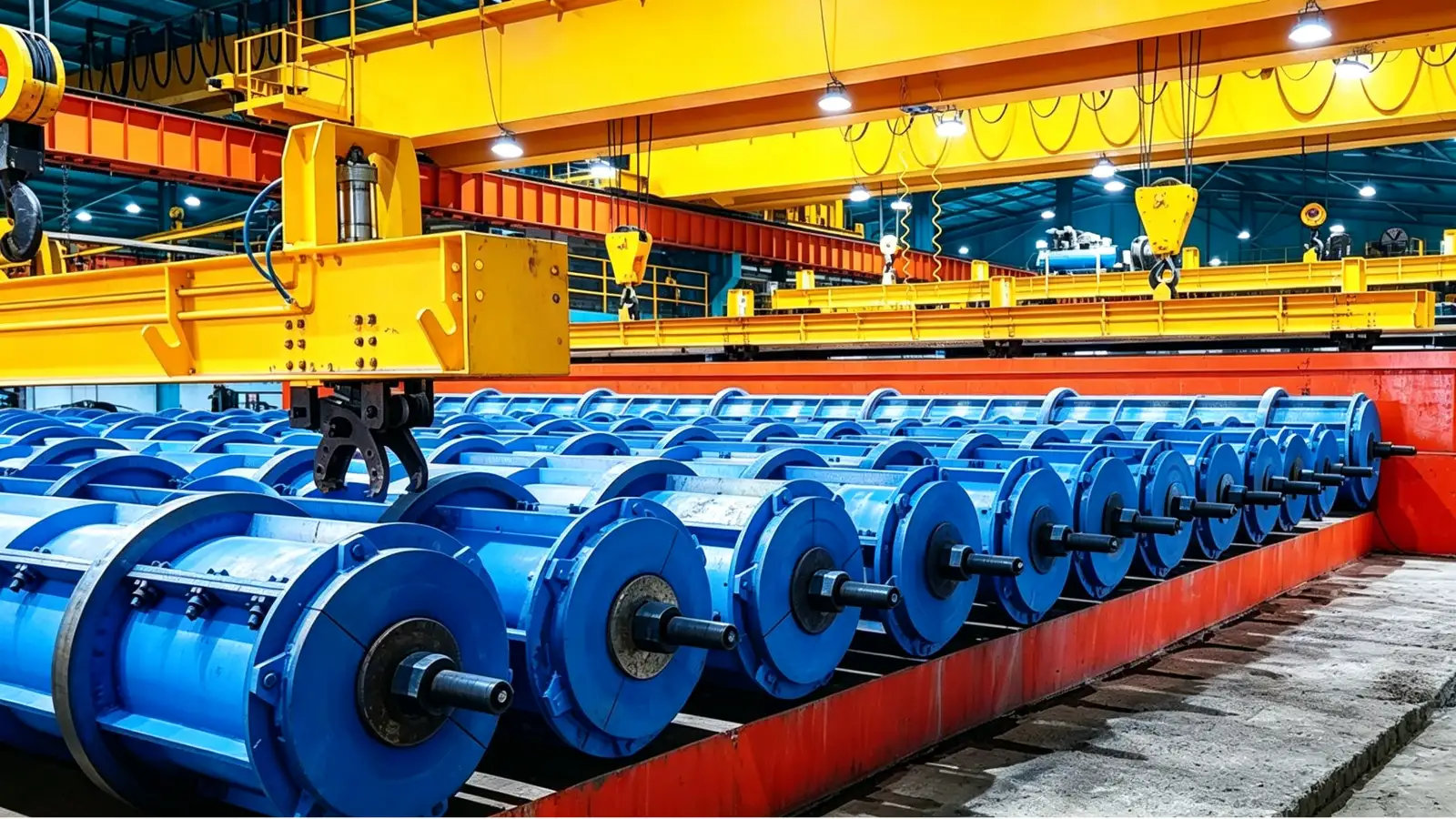
Start with the boundary, not the machine list
When a buyer first describes a spun pile line, the conversation usually runs as a list of machines: a batching plant, steel moulds, a spinning machine, a crane. That list matters, but it hides the question that actually decides whether the project starts smoothly. Before any machine is ordered, someone has to decide what the equipment supplier delivers and what the buyer provides from its own side.
A spun pile production line is a project, not a single product. Realjet supplies the production line, the equipment and the project solution. It does not sell the spun piles themselves. The pile product is defined by the applicable standard, such as GB/T 13476-2023 for pretensioned spun concrete piles in China or EN 12794 for precast concrete foundation piles in European markets, and the buyer normally owns the pile design, the mix approval and the release decision. Settling where the supplier's responsibility stops and the buyer's begins is the first planning step, because every later dispute about a missing item is really a scope dispute.
What the equipment supplier normally delivers
For a coordinated spun pile equipment package, the supplier's scope typically covers the process equipment that forms, compacts and cures the pile: the steel moulds that define the pile shape, the centrifugal spinning machine that compacts the concrete, the tensioning machine that applies prestress, and the preparation equipment that readies the reinforcement. Where the contract includes it, the supplier also handles the engineering, the equipment manufacturing, the installation and the commissioning of those items.
The exact boundary is a contract matter, not a fixed rule. Some buyers ask the supplier to deliver only the machines, then arrange their own installation and civil works. Others ask for a coordinated package that includes installation and commissioning. The point is to state the boundary explicitly, because an unstated assumption on either side becomes a change order later.
Handling equipment is where the boundary moves
Heavy handling is the area where supplier and buyer scopes most often diverge, because the same physical movement can be drawn on either side of the line boundary. Long moulds are lifted at two defined points, and that lifting has to coordinate with the mould lifting plan and the production bay. A twin-hook overhead crane is the usual tool for this, but whether the supplier provides the crane or the buyer installs it against the supplier's specifications is a decision to record.
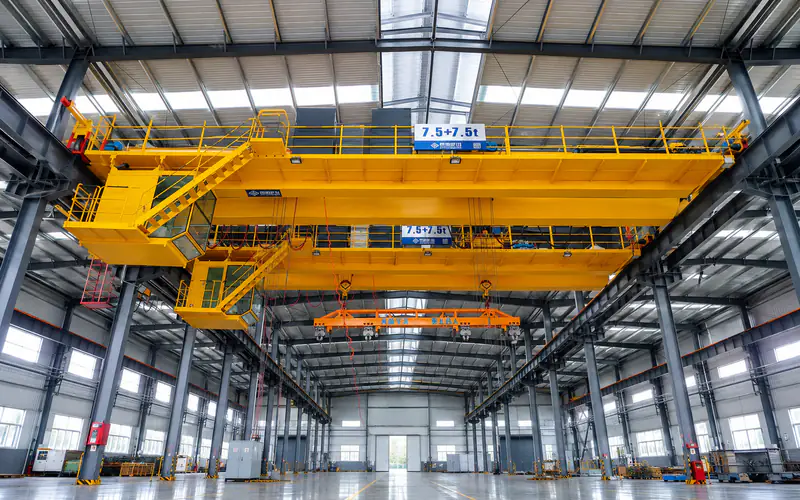
Twin-Hook Overhead Crane for Spun Pile Moulds
The twin-hook overhead crane lifts long moulds at two coordinated points, so its capacity, span and hook arrangement must follow the mould mass and the production bay.
View equipment detailsOnce a pile or a loaded mould has to move between stations, the transfer equipment enters the same discussion. A transfer trolley supports long piles or moulds as they move between production or finishing stations, and its support spacing, rated load and travel route have to match the plant circulation plan. A trolley that carries a complete steel mould has a different support and load interface from one that carries finished piles, so the two should be specified separately even when they share a travel route.
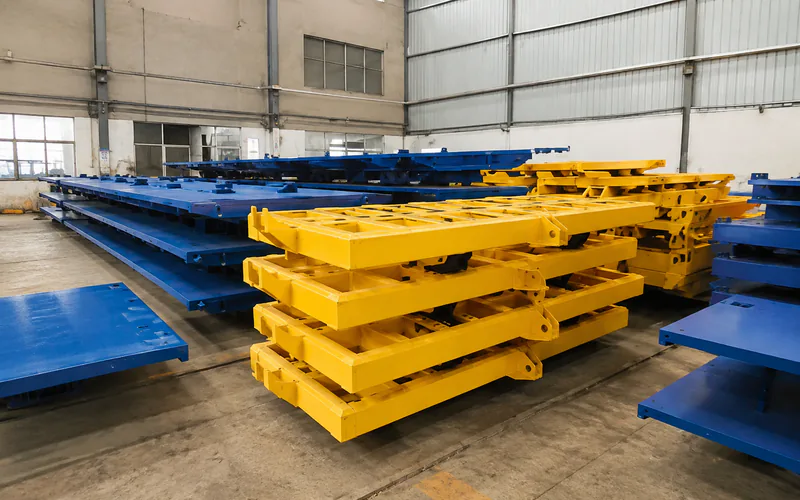
Transfer Trolley for Spun Concrete Piles
The transfer trolley moves piles and loaded moulds between stations, so its rated load, support spacing and travel route must match the pile sizes and the plant layout.
View equipment detailsThe practical rule is simple. Name every handling item in the enquiry and say who supplies it. The crane, the runway, the trolley and the lifting accessories look like one system on the floor, but they are often split between supplier and buyer in the contract. Deciding that split early is cheaper than discovering it during installation.
Utility packages need a stated boundary
The utilities that feed the line are the other common source of boundary disputes, because every utility item connects to something outside the equipment supply. Compressed air is a good example. A screw air compressor serves the pneumatic tools and devices around the line, including the mould opening and closing stations, and its sizing comes from the simultaneous demand at the points of use rather than from a catalogue figure.
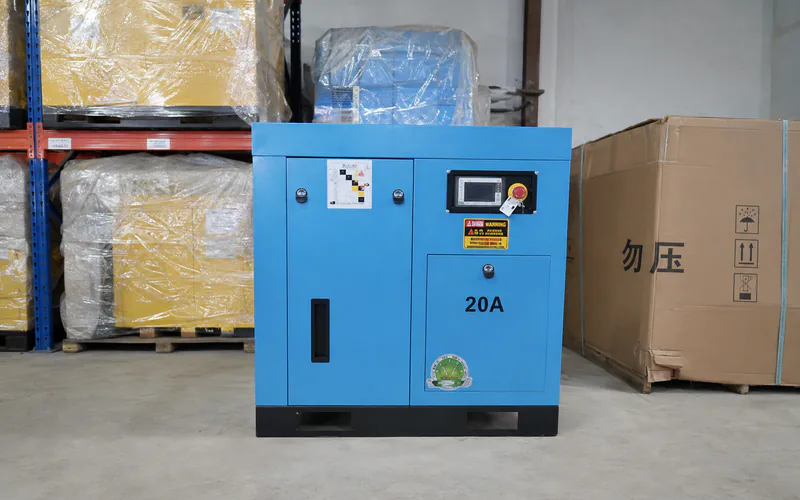
Screw Air Compressor for Spun Pile Plants
The screw air compressor feeds the pneumatic mould-fastening tools, so its pressure, flow and storage must follow the simultaneous demand at the points of use.
View equipment detailsWhether the receiver, the air treatment and the distribution pipework are included is not automatic. Storage, filtration and drying requirements depend on the connected equipment and the site conditions, and they should be named in the proposal rather than assumed. The same applies to the curing steam, the electrical supply and the water treatment. Each of these connects the equipment to a building system that may belong to the buyer.
Civil works, permits and the pile design stay with the buyer
Outside the equipment supply sit the items that no machine list resolves. Civil works such as the pit foundations, the runway structure and the building itself are normally the buyer's responsibility. Local permits, the electricity connection to the grid and the fuel supply to the boiler are site obligations. The pile design, the concrete mix approval and the release strength decision remain the buyer's engineering and quality responsibility, supported by the equipment and the curing records but not replaced by them.
None of this reduces the supplier's role. It clarifies it. A supplier can plan a line only when it knows which parts of the site it is designing against and which parts the buyer will deliver to an agreed point. Treating civil works, permits and the design as someone else's problem at the enquiry stage is what produces the gaps that surface at commissioning.
What to put in the enquiry so the scope is clear
Prepare a short scope statement alongside the technical inputs. List the equipment you expect the supplier to provide, name the items you will provide yourself, and ask the supplier to confirm or correct that split. Include the pile sizes and output target, the site plan with building dimensions and runway information, the available utilities at the boundary, and the standard you will work to.
With those inputs, review the spun pile production line planning page and ask for the supply boundary to be stated item by item. A line whose responsibilities are agreed before the machines are ordered starts up without the disputes that follow an unclear scope.