
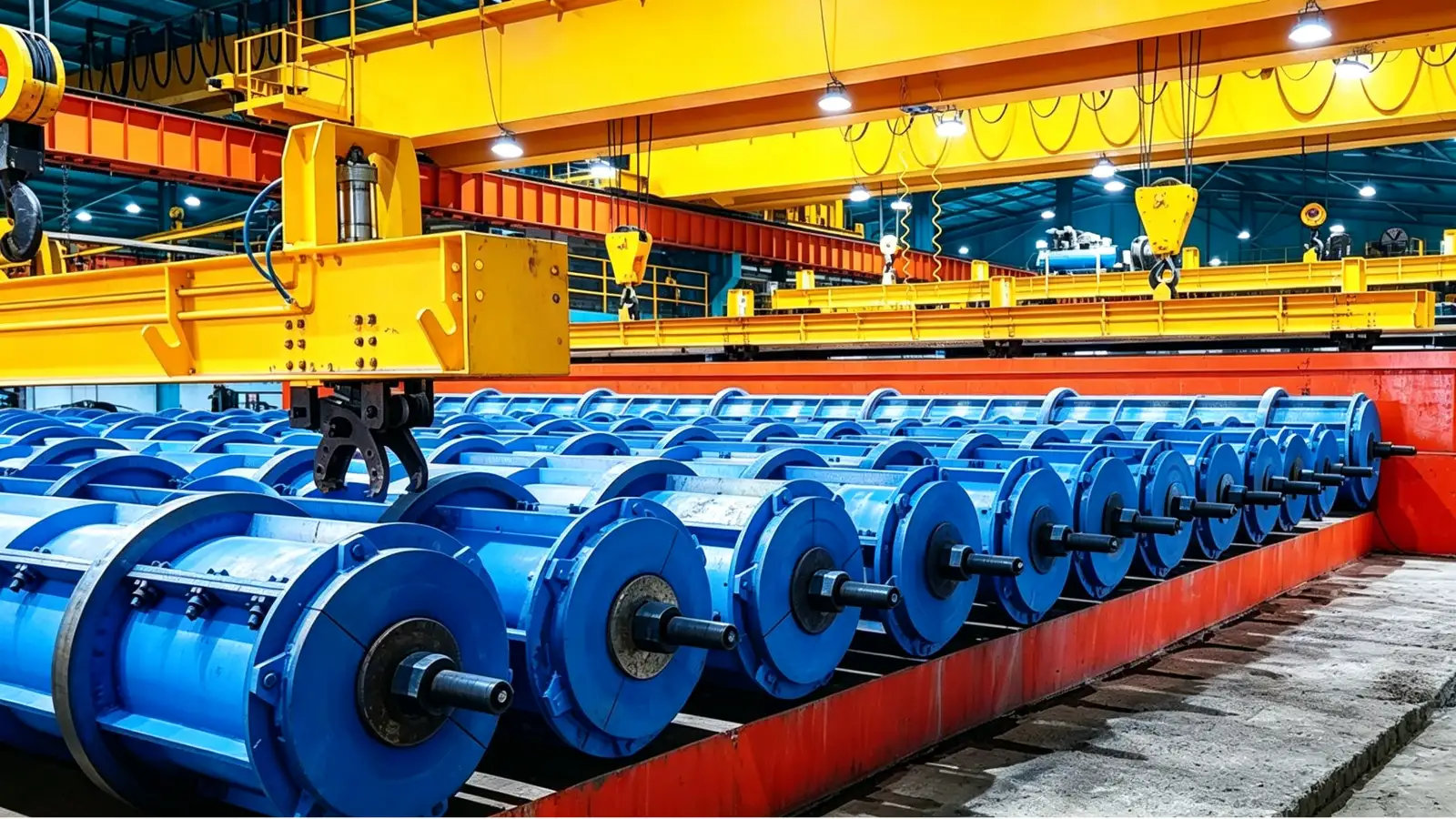
Start from the flow, not the floor area
A spun pile line is easy to describe as a row of machines, but the plant only works when material reaches each machine on time and the finished piles leave it without damage. Flow planning asks a simpler question than equipment sizing: what moves, where does it wait, and how does it get there. The answer decides the building length, the crane coverage and the yard space as much as any machine specification.
The product itself sets the rules. GB/T 13476-2023, the current Chinese standard for pretensioned spun concrete piles, covers not only the pile dimensions and strength but also marking, storage, lifting and transport. A plant that plans storage and handling around that standard from the start avoids retrofits later. European projects work to EN 12794 for precast concrete foundation piles, which sets its own marking and handling expectations. Either way, the storage and transfer plan is part of compliance, not an afterthought.
Receiving and storing raw materials
Concrete raw materials arrive continuously. Cement and aggregate need covered storage sized to the batching plant intake and the delivery frequency, not to a single day's use. Steel arrives in several forms: PC bars or strand for longitudinal reinforcement, wire for the spiral, and the plates and strip that become end plates and skirts. Each has its own handling and identification need, and each must reach its preparation machine without becoming a floor bottleneck.
The batching plant sits at the head of the concrete supply, so its receiving and storage must match the planned mix rhythm. If the cement silo or aggregate bunker is too small for the delivery cycle, trucks wait and the line waits with them. The reinforcement materials feed the bar processing, wire drawing and cage welding machines, so their receiving point should shorten the path to those machines rather than add a cross-plant move. End plates and skirt strip are smaller items but need clean, organised storage so the right size reaches the assembly station without sorting on the floor.
Moving loads between stations
Once material is in work, the line moves heavy, awkward loads. Long split moulds are lifted at two defined points, and that lift has to clear the stations between which it travels. A transfer trolley carries piles or a loaded mould between stations along a planned route. A friction-wheel drive gives that trolley its motion along the ground. These three items look separate on a layout drawing but they are one handling system, and they should be planned together.
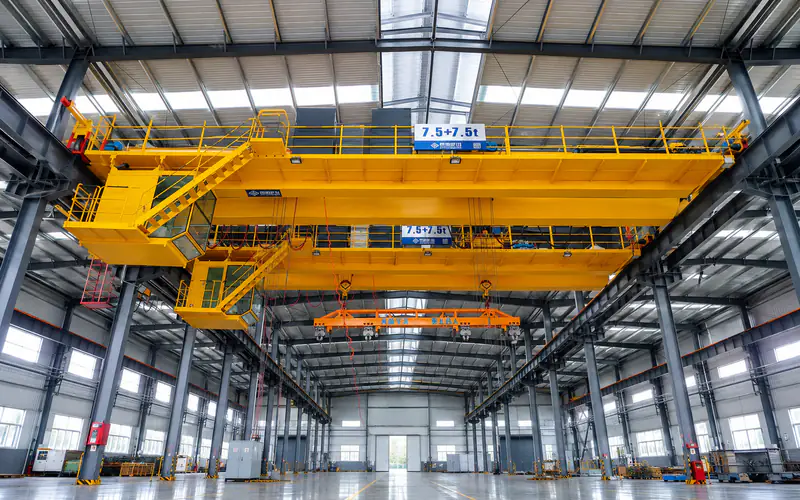
Twin-Hook Overhead Crane for Spun Pile Moulds
The twin-hook overhead crane lifts long moulds and finished piles at two coordinated points, so its capacity, span and hook arrangement must follow the mould mass and the production bay.
View equipment detailsThe crane is the only item that lifts across bays, so its span, hook spacing and lift height must match both the mould length and the building. Equal split of the mould weight between the two hooks should not be assumed; the lifting-point plan and the centre of gravity decide the load at each hook.
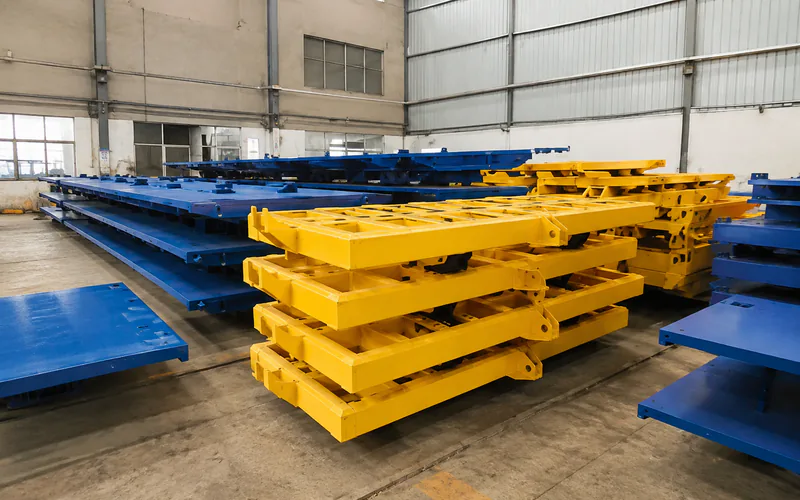
Transfer Trolley for Spun Concrete Piles
The transfer trolley moves piles and loaded moulds between stations, so its rated load, support spacing and travel route must match the pile sizes and the plant layout.
View equipment detailsThe trolley supports long piles or a complete mould, and its support spacing and rated load depend on what it carries and in what condition. A trolley built for finished piles is not the same as one built for a loaded mould, so the two duties should be specified separately even when they share a track.
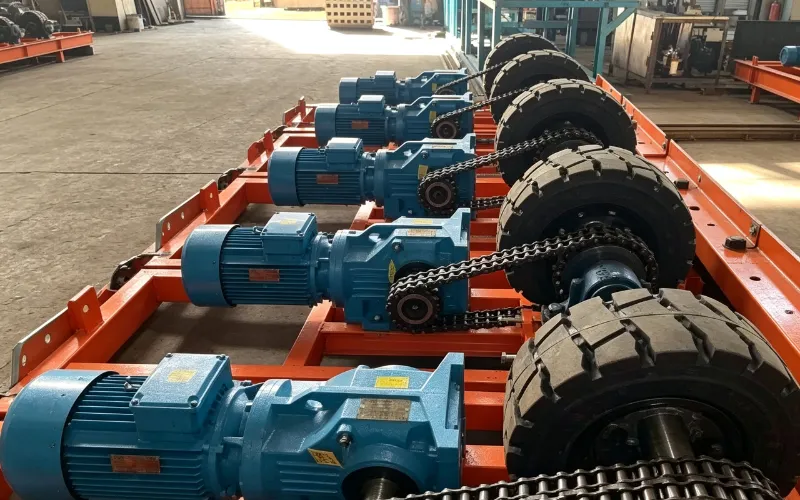
Friction-Wheel Drive for Production Trolleys
The friction-wheel drive moves a production trolley along its ground route, so its driving force, speed and stopping points must suit the trolley load and the line layout.
View equipment detailsThe drive transfers force through contact with the trolley, so its placement and number follow the route, the load and the stopping positions. Where trolleys serve shared work areas, the positioning and stopping accuracy matter as much as the pull.
The finished pile storage yard
Curing releases a pile from the mould, but the pile is not finished until it reaches the yard and, later, the truck. Spun piles are long and relatively slender, so the yard needs firm, level support at the right spacing to prevent bending, and enough area for the planned output plus the curing and release lead time. GB/T 13476-2023 covers storage and lifting requirements, so the yard layout should meet them rather than the minimum the floor plan allows.
Yard space is where many lines under-plan. A line that spins a pile in minutes but cures it for hours cannot ship it the same day, and the piles accumulate. The yard must hold that accumulation, the inspection queue and the outgoing stock. Under-sized storage pushes piles closer together than the standard allows or forces early, risky moves, and either one shows up as damage or rejection.
What to put in the enquiry
Flow planning belongs in the first supplier conversation, not the commissioning week. Include a site plan with building dimensions and runway information, the pile sizes and the output target, the receiving and dispatch points, and the yard area you can provide. State who supplies the crane, the runway, the trolley and the drive, because those boundaries move between supplier and buyer more than any other line item.
With those inputs, review the spun pile production line planning page and ask the handling and storage scope to be stated item by item. A line whose material flow is planned before the machines are ordered avoids the gaps that appear when the first pile has nowhere to go.