

The curing cycle both machines serve
Curing is where the pile schedule is decided. A filled mould spends far longer in the curing pit than anywhere else on the line, and the cycle that pit runs has the same four stages in mainstream precast practice: a preset delay while the concrete sets, a controlled temperature rise, a holding period at the target temperature and a controlled cool-down before handling. The Portland Cement Association's curing guidance describes this sequence and notes that steam is normally delayed a few hours after casting; the Canadian Precast/Prestressed Concrete Institute puts the ramp at 10 to 20 °C per hour and the holding stage at around 60 to 70 °C, a ceiling worth respecting because sustained temperatures above it are associated with delayed ettringite formation in products exposed to wet conditions.
Pile production adds its own product rules. GB/T 13476-2023 governs pretensioned spun concrete piles in China and EN 12794 governs precast foundation piles in Europe, and many plants producing high-strength PHC piles follow atmospheric steam curing to demoulding strength with autoclaving as a separate second stage where the product calls for it. The exact schedule depends on the mix and the product, so the control and steam equipment must follow an agreed programme rather than a universal one.
What the control cabinet governs
The curing control cabinet is the point where the programme becomes operation. It collects the temperature measurements from the curing pits or chambers, runs the stages of the agreed cycle and operates the steam valves that let steam in or hold it back. Its configuration follows the curing layout: how many pits or chambers exist as separate zones, where the sensors sit, and whether the cabinet must only display temperatures or also record them for the production file.
Three configuration questions deserve attention before purchase. First, sensor positions: a single sensor at the steam inlet reads the supply, not the pile, so the zones and measurement points have to represent the pit as a whole. Second, recording: pile quality files reference the curing records behind each batch, so the number of channels and the record output should match what the project's quality system expects. Third, valve interfaces: the cabinet operates valves, and whether those valves, their wiring and the piping belong to the cabinet supplier, the boiler supplier or the site is a scope question with a cost attached.
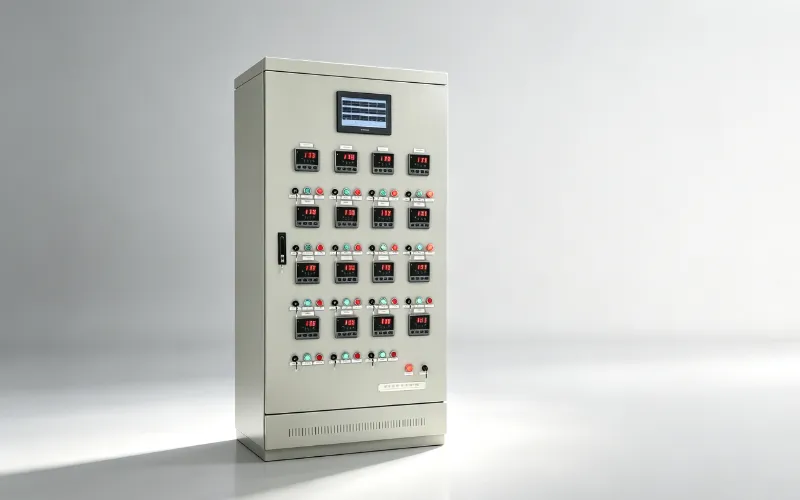
Steam Curing Control Cabinet for Spun Piles
The curing control cabinet runs the temperature programme pit by pit, so its zones, sensors and valve interfaces decide how closely the curing cycle is followed.
View equipment detailsHow the boiler follows the schedule
The steam demand under a curing programme is not flat. Little steam flows during the preset delay, the ramp stage draws heat as fast as the programme allows, the holding stage replaces losses at a steadier rate, and the cool-down needs nothing. A plant with several curing pits staggers these stages against each other, and the peak arrives when several pits ramp at once. Boiler duty therefore comes from the pit schedule and the number of pits operating together, not from the piles per day alone.
Distribution losses and water conditions complete the picture. Steam travels through piping that loses heat, and condensate returns or does not, so the duty at the boiler is higher than the duty the pits absorb. Feedwater treatment and blowdown affect how the boiler sustains that duty over years of daily cycles. These are normal selection inputs, and a supplier who receives the curing schedule, the pit count and the fuel available at the site can size the boiler against the real profile instead of a round output figure.
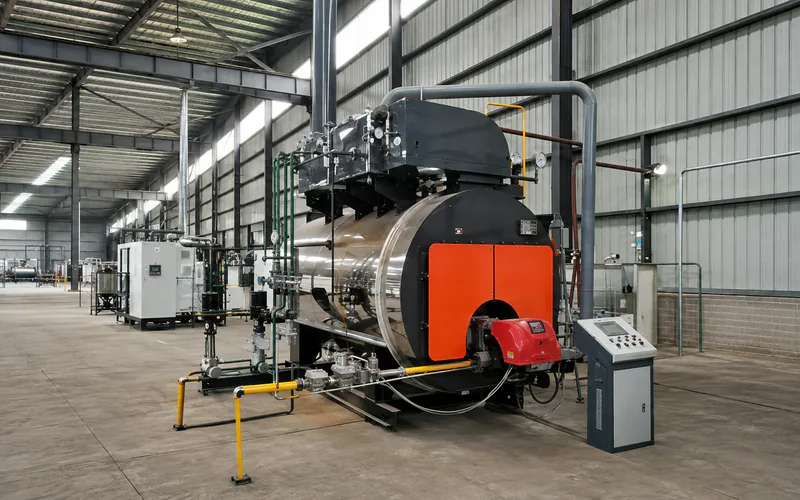
Steam Boiler for Spun Pile Curing
The steam boiler supplies heat on the profile the curing programme demands, so its duty must follow the pit schedule and the number of pits running at once.
View equipment detailsInterfaces to confirm before purchase
The curing system spans several supply scopes: the cabinet, the boiler, the valves and piping between them, the pit enclosures and their seals, and the site utilities that feed the boiler. None of these boundaries is self-evident, and the contract has to say which party supplies and connects each one. The cabinet is a monitoring and control component; it does not include the steam system by default, and assuming it does is a common way for gaps to appear at commissioning.
Agree the technical conditions at the boundaries as well as the scope. The steam pressure and temperature the boiler delivers have to suit the valves and distribution the pits use, the sensor positions have to be fixed before the pit linings are built, and the recording format has to satisfy the quality system that will read it. Writing these down before ordering costs little; sorting them out on site rarely does.
Bring both specifications to one table
The cabinet and the boiler are purchased as two items but commissioned as one system, so the safest sequence is to fix the curing layout, the zone count, the temperature programme and the recording requirements first, and then select both machines against them. The spun pile production line planning page is where that review can start with a supplier, and bringing the pit layout and the curing schedule to the first conversation is worth more than any catalogue comparison.