
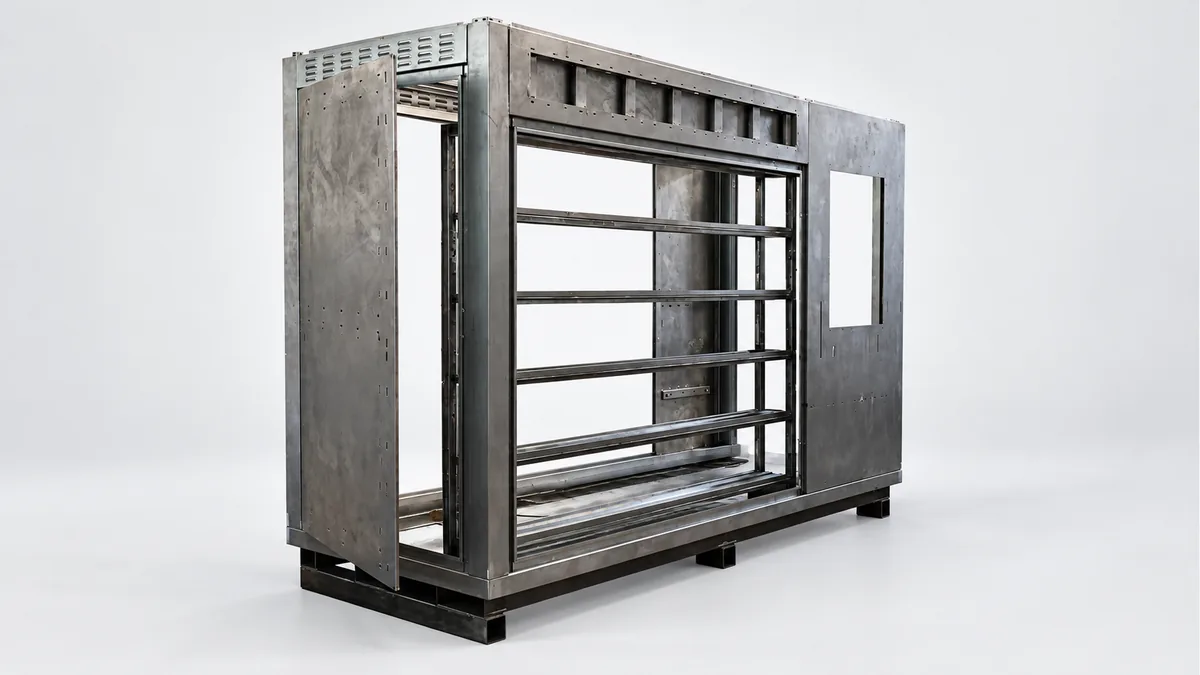
Battery Storage Cabinet Frames to your design
Source a welded cabinet frame for your battery energy storage system (BESS) or data-center battery backup equipment. REALJET makes the structural frame to your module-support, enclosure and base-interface drawings.
Choose the part and delivery condition
| Your order | Information that sets the scope |
|---|---|
| Welded cabinet frame | Frame drawing, sections and joining requirements |
| Frame with support attachments | Module-support drawings, datums and hardware list |
| Frame prepared for door and panel fitting | Door opening, hinge positions and panel connections |
The frame is a structural component. Cells, battery modules, controls, thermal management and complete enclosure qualification are outside the frame order unless separately agreed.
Fit it to the equipment around it
Battery support positions, cabinet diagonals and the door opening have to agree after welding. Define the installed module arrangement and base connections. An outdoor BESS enclosure and an indoor AI data-center backup cabinet also need different environmental requirements.
| Intended installation | Equipment interface to supply |
|---|---|
| AI equipment | AI infrastructure battery backup cabinet |
| Battery storage equipment | Battery energy storage cabinet |
Plan the manufacturing around these features
The steps below are proposed for the drawing review. Your material, geometry and acceptance requirements determine the final route, tooling and inspection provision.
Establish module and enclosure datums
Review support attachments, base members and door opening together. Identify purchased sections and weld access before frame preparation.
Control geometry through joining
Review tack-up and weld sequence with restraint on functional interfaces. Plan free-state checks after release, rather than fitting the door to a frame held square in a fixture.
Prepare panel and support interfaces
Review any post-weld machining and finishing. Coating allowance, masked contacts and the sequence of panel fitting follow the cabinet design.
Manufacturing capability for your component
| Your component feature | Existing process and its use | Confirm for your order |
|---|---|---|
| Frame and support attachments | Plate preparation, bending and welded fabrication. Prepare the frame and supports around a shared door/module/base datum scheme. | Member specification, joining access and the cabinet fixture. |
| Post-join interfaces | Machining and assembly coordination. Review drilling/boring and any required face finishing after welding at functional interfaces. | Cabinet-size measurement reach and free-state opening checks. |
| Enclosure protection | Phosphating, powder coating and painting routes. Review frame finish and panel/door contact areas with the intended indoor or outdoor cabinet assembly. | Actual finish specification; complete-enclosure tests remain separate. |
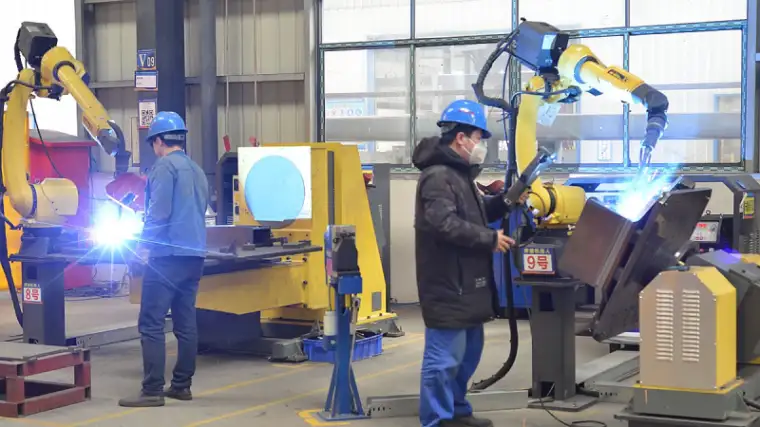
CNC press brakes with working lengths up to 6 m and capacity up to 500 tonnes form part of the existing fabrication route. The cabinet’s material, geometry, loading and interface tolerances still determine the selected process and checks.
Define what the first article must demonstrate
| Feature | Proposed check | Record to agree |
|---|---|---|
| Door opening and frame geometry | Measure opening size, diagonals and relevant twist with the frame supported as agreed after fixture release. | Opening/frame results with support condition. |
| Battery supports and base | Measure support locations and base fixing pattern from common datums; trial-fit nominated rails or trays. | Interface dimensions and mating-part identification. |
| Loads and enclosure tests | Confirm a separate route for structural loads or complete-enclosure testing, with the required panels/seals fitted. | Approved assembly/test plan; no bare-frame IP claim. |
Identify the drawing revision, measurement datums and pass/fail limits before the sample is made. The quote confirms the available measuring setup, any mating fixture and whether a specialist test needs an external provider.
Packing for your next assembly step
Identify the permitted lifting and restraint locations. Protect the door opening and support datums, and confirm whether attachments should be installed before shipment. State the quantity and delivery city so packing volume and the requested delivery terms can be included.
Questions before you send drawings
When should the door opening be checked?
Check it after frame joining and fixture release, and review it again where finish or installed supports affect fit. A door fitted only while the frame is restrained does not establish the delivered frame condition.
Can you make a frame for our battery module arrangement?
Yes. Send the cabinet assembly, module-support interfaces and loading requirements. The frame quotation follows that approved design rather than a universal module layout.
What should I send for the drawing review?
Send the dimensioned PDF, available STEP/DXF/DWG files and assembly view. Include material, finish, quantity, delivery city and drawing revision. Mark the features in the inspection plan that control acceptance.
Can we approve a sample before ordering repeat quantities?
Request a sample or pilot batch with the agreed dimensional report and any mating checks. Scope, timing and test provision are quoted after review; repeat supply follows the accepted drawing revision and any agreed sample changes.
Discuss your equipment cabinet welded frame
Send the part and assembly drawings with your quantity and required delivery condition. Highlight the interfaces and checks listed above that matter to your order.
Attach files in your email application. To arrange file transfer first, use the enquiry form.
AI server and data-center components → · Battery storage, EV charging and solar components →