
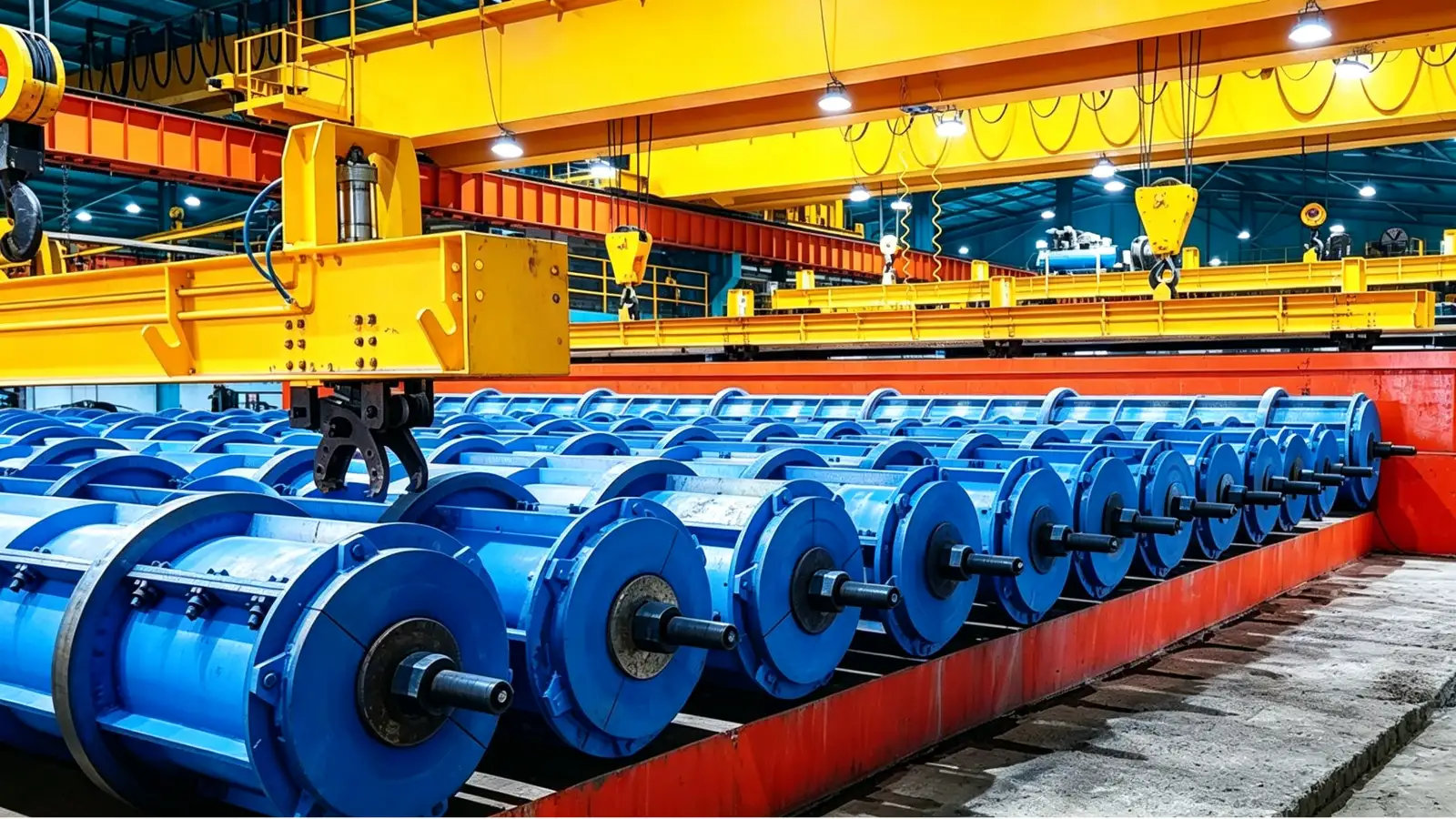
What the PC bar processing machine does
In a spun pile line, the longitudinal prestressing bars are the members that carry the tensioning load. Before they enter the cage welding machine, each bar must be cut to the correct length and formed with an anchorage head at the end. The PC bar cutting and heading machine performs both operations, turning coiled or bar-stock prestressing steel into prepared bars ready for the cage.
The cut length decides how far the bar reaches inside the pile and how it seats against the end plate. The headed end is the anchor that the tensioning machine pulls against. If either is wrong, the cage will not fit the drawing, and the tensioning step cannot be carried out as designed.
This machine sits at the start of the reinforcement preparation chain, ahead of wire drawing for the spiral and ahead of cage welding. It is a preparation station, not a forming or spinning machine, and its output quality sets the tone for everything downstream.
Inputs that decide the configuration
The first input is the incoming bar. Prestressing bars for spun piles are supplied to a defined grade and diameter, and the machine must suit the material condition as it arrives at the plant. Confirm whether bars come as straight stock, in coils, or require straightening before cutting, because that changes the infeed arrangement.
The second input is cut length. The machine must hold the length tolerance your cage and end-plate drawings require. Because heading changes the effective length, the cut-to-length setting and the heading operation have to be coordinated, not treated as separate steps.
The third input is head geometry. The anchorage head must match the end-plate and tensioning system. Tooling is selected from the bar specification, the required head shape and the anchorage detail, so a bar diameter alone is not enough to specify the machine. The material condition and the end connection must be reviewed together.
The fourth input is throughput. The machine must keep pace with the cage welding rate and the planned daily pile output. Undersize it and the whole reinforcement chain slows; oversize it and you pay for capacity you will not use.
Bar diameter range also belongs in the specification. The machine must accept the bar diameters your reinforcement design uses, and the heading tooling must suit each one you plan to run. If you intend to produce several pile classes, list every bar diameter so the supplier can confirm tooling coverage.
Material traceability is the fifth input, and buyers often overlook it. Prestressing bars are a critical component, and the bar certificate, diameter and head geometry should be traceable to the pile reinforcement drawing. Agree early whether the supplier provides tooling for your specific head profile or expects you to supply it, because that decision affects both price and lead time.
Selection questions buyers should ask
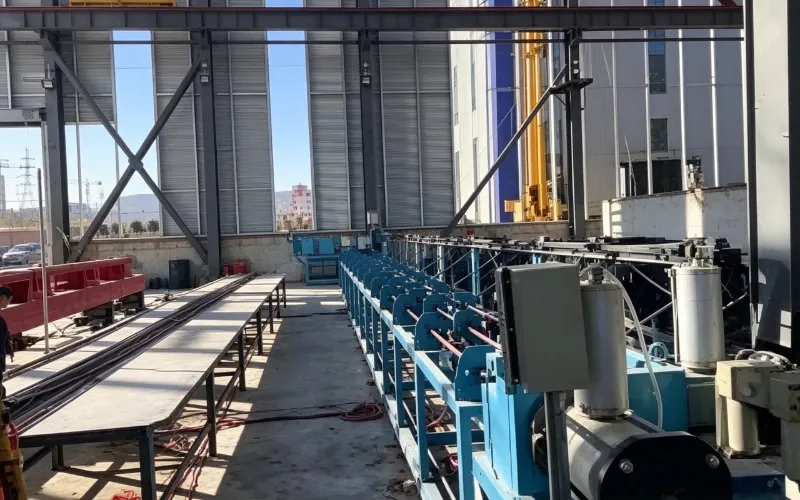
PC Bar Cutting and Heading Machine for Spun Piles
The bar processing machine prepares the prestressing bars that become the cage's longitudinal members. Its cut length and head geometry must match the approved pile reinforcement and end-plate drawings.
View equipment detailsAsk the supplier whether the proposed scope covers cutting, heading or both, and whether incoming material handling, straightening and finished-bar collection are included. These items are often assumed but must be confirmed so the package matches the form in which bars arrive.
Ask what determines the heading tooling. The answer should reference your bar specification and head detail, not a generic diameter. If a supplier cannot tie tooling to your drawing, the machine may not produce the anchor your tensioning system needs.
Ask how length change from heading is controlled. Because the head formation reshapes the bar end, the machine should compensate so the finished prepared bar meets the cage length. Request the expected tolerance and how it is held across a production run.
Ask about daily demand and how the machine is loaded and unloaded. The feed-rack layout and the finished-bar collection method affect floor space and labour, and they should suit your plant circulation rather than a standard layout.
Preparing an enquiry that suppliers can quote
A useful enquiry package for this machine includes the reinforcement drawings, the bar specification with grade and diameter, the required cut lengths, the head details, and the daily bar demand. Add the incoming material form and any space or utility limits at the preparation area.
State the cage welding machine you plan to pair it with, because the prepared bar length and head must suit the cage the welding machine assembles. Mismatched interfaces between preparation and welding cause rework that slows the whole line, so the two stations should be specified as one reinforcement chain rather than as separate purchases.
Keep the finished-bar destination in mind as well. The output of this machine feeds the cage welding station, so the collection method should hand bars to the next process without double handling. If your line follows GB/T 13476-2023 or another applicable standard for the finished pile, state that early so the supplier can confirm the preparation scope supports it.
Realjet supplies spun pile production lines and individual equipment, and we do not sell finished spun piles. Provide your pile reinforcement drawings and daily demand, and we will review the bar processing scope against your cage and end-plate requirements so the machine fits the line you are building. You can compare the full spun pile production line scope before you send an enquiry.