
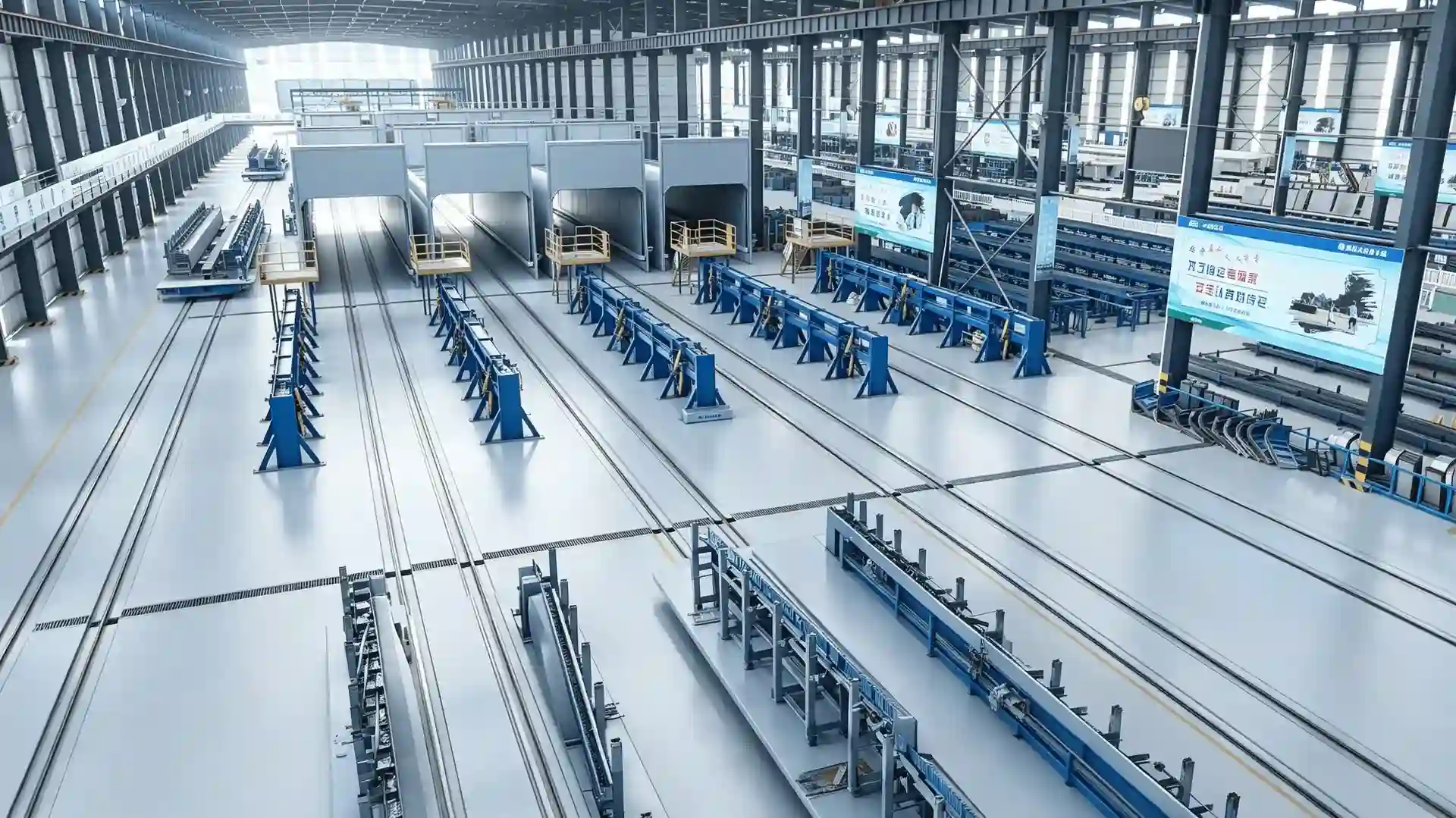
Why the product range drives every equipment choice
A spun pile production line is not a generic machine you size once and forget. Every major item, from the steel mould to the spinning rollers and the overhead crane, is matched to the pile shapes the line is built to make. Before asking suppliers for a quotation, a buyer should define the product range: the diameters, lengths, prestress classes and annual volume the plant must serve.
This step is often rushed because it feels like a commercial question rather than an engineering one. In practice it is the opposite. The product range is the input that decides whether a proposed equipment list will actually run. Two lines that look similar on paper can be completely different once you fix the length of the longest pile or the heaviest mould.
The governing product standard matters here. In China, GB/T 13476-2023 (Pretensioned spun concrete piles) classifies piles by concrete strength, outer diameter and prestress level, and it sets the marking, storage, lifting and transport rules that the finished product must meet. In the European market, EN 12794 (Precast concrete products, Foundation piles) is the harmonised standard under the Construction Products Regulation 305/2011. Either way, the standard tells you what the pile must comply with, and the pile specification tells the equipment supplier what the line must produce.
What defines your pile product range
Start with outer diameter. Spun piles are commonly produced in diameters from about 300 mm up to 1200 mm, though the exact set a project needs depends on the local foundation market. A plant serving small building foundations may need only the smaller diameters, while a plant serving bridges, ports and heavy civil works will need the larger ones.
Then fix the single-section length. Typical production lengths run from roughly 7 m to 15 m per section, with longer installed piles achieved by joining sections on site. The longest single section in your range sets demands on the mould, the spinning station and the crane that shorter piles never will.
Prestress class is the third factor. GB/T 13476-2023 defines piles by effective prestress into classes such as A, AB, B and C. Higher classes carry more prestressing steel and place stricter demands on bar preparation, tensioning control and end anchorage. Decide the classes you will offer before equipment selection, because the tensioning and bar-processing equipment must be rated for them.
Annual volume is the fourth input. It sets how many moulds you need in circulation, how many spinning stations, and how much curing capacity the steam system must provide. Volume is a throughput question, not a single-machine question, and it is easy to underestimate.
The steel mould sets the diameter and length envelope
The steel mould is the fixed tool that gives the pile its shape, so it is usually the first product-range decision. Its diameter and length define the pile you can make, and its running rings, end connections and lifting points define how the rest of the line interacts with it.
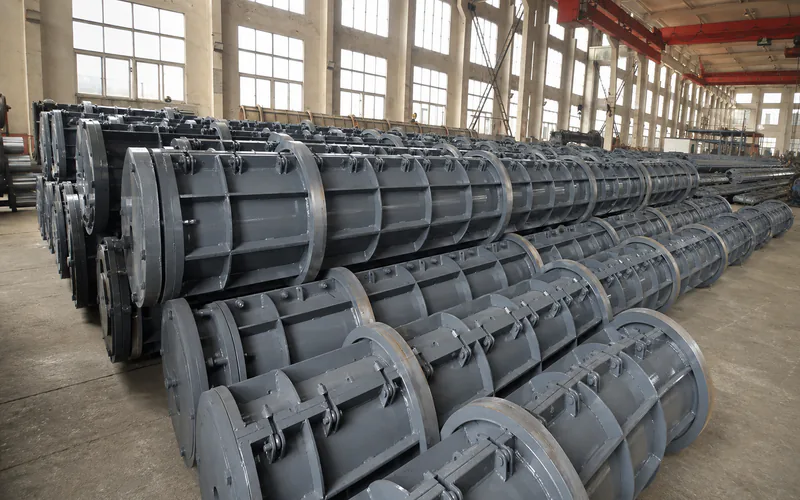
Steel Mould for Prestressed Spun Concrete Piles
The steel mould fixes the pile diameter, length and running-ring geometry, so it is the first product-range decision. Mould dimensions set the envelope every downstream machine must match.
View equipment detailsWhen you specify the mould family, list every diameter and length you intend to produce, not just the most common one. The supplier needs the full envelope to confirm running-ring spacing, roller positions and closure details. A matching diameter on paper does not guarantee compatibility across the whole range, because length and end geometry also change the loaded mass and the handling points.
Matching the centrifugal spinning machine to the mould family
The centrifugal spinning machine supports and rotates the filled mould to compact the concrete. Its roller arrangement, drive and control are matched to the mould family, so the machine you choose must accept every mould in your range, including the heaviest loaded combination and its running-ring pattern.
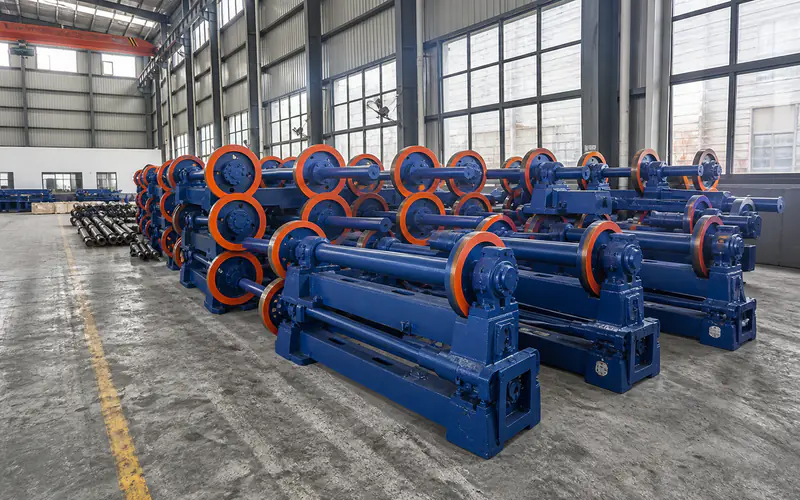
Centrifugal Spinning Machine for Concrete Piles
The centrifugal spinning machine must accept the full mould family the range requires, including the heaviest loaded mould and its running rings. Spinning parameters are then tied to the mould set.
View equipment detailsSpinning is not a single fixed speed. The operating stages depend on the mould, the pile section and the concrete mix, and the recipe is established during commissioning for the agreed product set. If your range includes both small and large diameters, confirm that one spinning station can serve them, or plan the number of stations accordingly. Do not assume diameter alone is enough to judge compatibility.
Handling the longest pile safely with the crane
Long moulds need a lifting arrangement that supports the load at defined points. A twin-hook overhead crane is common because it lifts the mould at two coordinated points and keeps the load stable as it moves between stations.
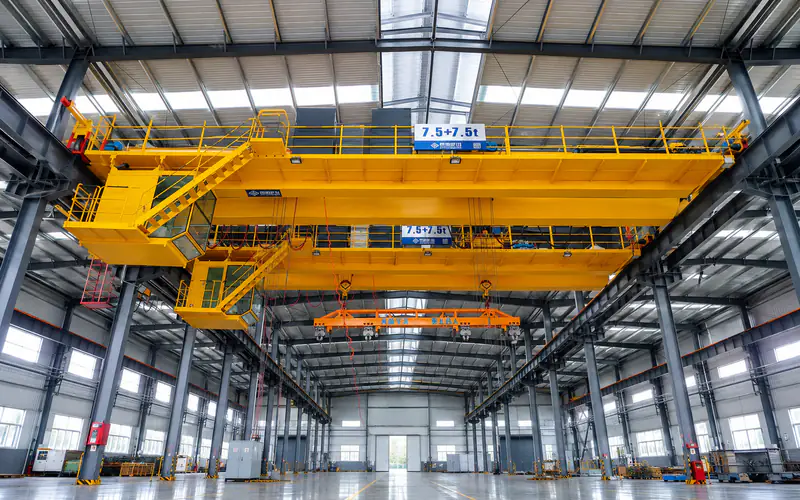
Twin-Hook Overhead Crane for Spun Pile Moulds
The longest pile in the range decides crane span, hook load and lifting-height requirements. The crane must serve every station the mould visits without clearance problems.
View equipment detailsThe longest pile in your range drives the crane specification. It sets the bay span, the hook load at each lifting point and the lifting height needed to clear the line. Equal loading between the two hooks should not be assumed: the centre of gravity and the lifting-point arrangement decide the actual load at each hook. Provide the building dimensions, runway information and the stations to be served so clearances can be checked across the complete movement.
A pre-specification checklist
Before you ask for equipment quotations, write down the following and keep it with your drawings:
- The full set of diameters and single-section lengths the line must produce.
- The prestress classes you will offer, with the corresponding bar and end-plate requirements.
- The annual volume target, expressed as piles or metres per year, with a realistic peak month.
- The site constraints: bay dimensions, crane runway, available headroom and the curing space.
- The product standard your market requires, whether GB/T 13476-2023, EN 12794 or another applicable specification.
Realjet supplies spun pile production lines, individual equipment and project solutions. We do not sell finished spun piles. Once you have this range defined, we can review it against your drawings and propose an equipment scope that matches the pile family you actually intend to make. You can also review the full spun pile production line scope before you send an enquiry. Share your product schedule and site information, and we will help you confirm which machines belong in the line.