
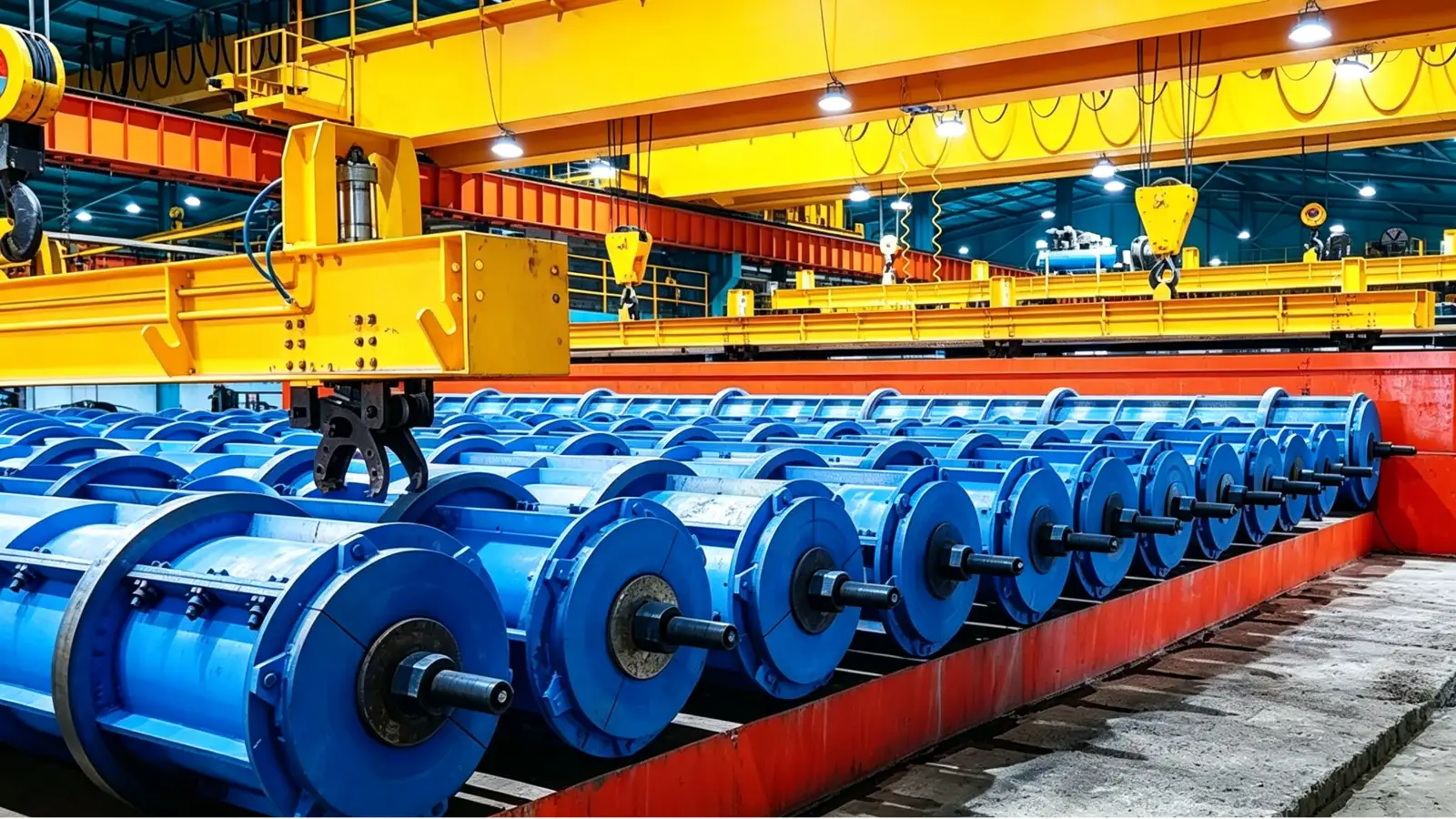
Curing sets the steam demand
Spun pile concrete gains strength fast enough for demoulding through accelerated steam curing. The boiler is the heat source for that curing system, and its duty is driven by how much concrete is in the pits or chambers at one time and how the curing cycle is scheduled. ACI 517.2R, the American Concrete Institute guide on accelerated curing at atmospheric pressure, describes a controlled pre-steam rest, heating, holding and cooling sequence that limits thermal gradients and surface cracking. In China, GB/T 13476-2023 sets the product requirements that curing must help meet, including strength at release.
Output per day is only a starting point. A line that cures one large batch at a time needs a different boiler than one running several chambers on offset schedules. The simultaneous chamber load and the heat lost through covers and the building matter as much as total daily tonnage.
Size around simultaneous load, not daily average
Boiler capacity should be read against the peak steam demand across the curing schedule, including the moments when two or three pits are heating at once. Average daily demand hides those peaks, and an undersized boiler stretches the cycle or limits how many moulds can be in the pits together.
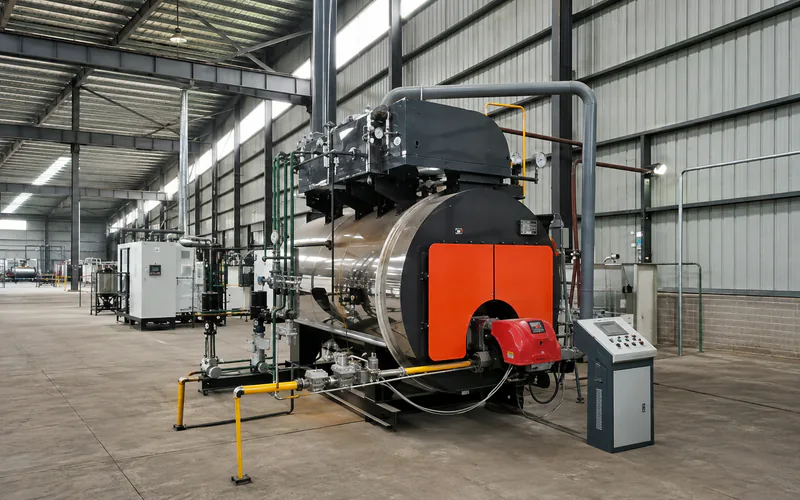
Steam Boiler for Spun Pile Curing
A steam boiler supplies the heat for accelerated pile curing. Its duty and steam conditions are set by your curing volume, simultaneous chamber load and site fuel, so it must be sized with the curing system rather than separately.
View equipment detailsHeat losses grow with chamber size, cover quality and ambient temperature, so the same pile volume can mean very different boiler duty in a cold workshop versus an enclosed, insulated one. Review the curing system layout with the boiler scope so distribution losses are part of the calculation rather than an afterthought.
A useful way to frame the question is to compare the steam needed to raise and hold one chamber with the steam needed when the schedule queues two or three at once. The boiler must cover the queued case without forcing you to slow production or extend the hold, because either response erodes the throughput the line was bought to deliver.
Fuel, pressure and the site utility interface
The boiler you can install depends on the fuel available at the site. Natural gas, oil and solid or biomass fuels each change the burner, storage and emissions considerations, and local rules may restrict what is permitted. Steam pressure and the feedwater and condensate arrangement are the next interface: poor feedwater treatment shortens boiler life and risks scale, while unconsidered condensate return wastes heat. Where several fuels are available, compare delivered cost, storage footprint and the controls each needs before fixing the burner specification.
Coordinate with curing control and distribution
The boiler does not work alone. A curing control cabinet monitors pit temperatures and stages the cycle, and the steam distribution connects the boiler to each chamber. Those controls and the piping must be scoped together so the boiler output reaches the right pit at the right time. Where the approved process includes autoclaving, note that the autoclave is a separate pressure vessel with its own steam interface, not part of the boiler itself.
Boiler type and configuration options
Most spun pile plants use packaged fire-tube boilers sized for low-pressure steam, because the curing demand is steady and the pressure is modest. Water-tube or higher-water-content boilers appear where the steam load swings or the site needs hot water and process steam from one source. A packaged unit with burner, controls and safety devices factory assembled is simpler to install and commission than a field-built system, though the choice still depends on local boiler regulations and the inspection regime they require.
Permits, emissions and maintenance scope
Before the boiler is ordered, confirm the permits and emission limits that apply where the plant will run. Fuel choice, burner technology and stack treatment are shaped by those limits, and they change both cost and lead time. Maintenance scope should be agreed up front: water treatment, regular inspection, spare burner parts and tube access all affect availability over the boiler's life. Treat these as part of the equipment scope, not as items to settle after installation.
Common specification gaps
The mistakes that inflate cost later are usually gaps left in the scope. A boiler sized only on daily tonnage ignores simultaneous load. A curing system specified without its distribution and control leaves the boiler and the pits disconnected. Feedwater treatment and condensate return left to the civil contractor may never get detailed. Closing those gaps in the enquiry, with the curing schedule and pit layout attached, gives a proposal you can actually compare with another supplier's.
What to give the supplier
Before asking for a boiler proposal, prepare the curing schedule, the number and size of pits or chambers, the required steam conditions, the available fuel and the installation location. Include the water supply and any local emission limits. For a boiler included in a coordinated spun pile equipment package, review the spun pile production line overview and share your curing layout and drawings so the scope is confirmed against your project.