
Mould fastening needs air where the work happens
Spun pile moulds are split shells closed by many fasteners along the flange. Opening and closing them is repeated, physical work at every cycle, so a pneumatic impact wrench is commonly used to speed up fastener removal and installation. That convenience depends on having compressed air at the workstation, not just somewhere in the plant. If the tool starves for pressure at the moment several moulds are being opened, the fastening station becomes the bottleneck of the whole cycle. Each metre of mould flange can carry several fasteners, and a long pile mould therefore means dozens of bolts to remove and refit every cycle. The fastening station sits on the critical path between demoulding and the next pour, so its reliability directly limits daily output.
Size the compressor for how the tools are used
A screw air compressor supplies the pneumatic tools and devices along the line. Sizing it from the nameplate of one wrench understates the job, because several tools can run at once and each mould-opening station draws air in bursts.
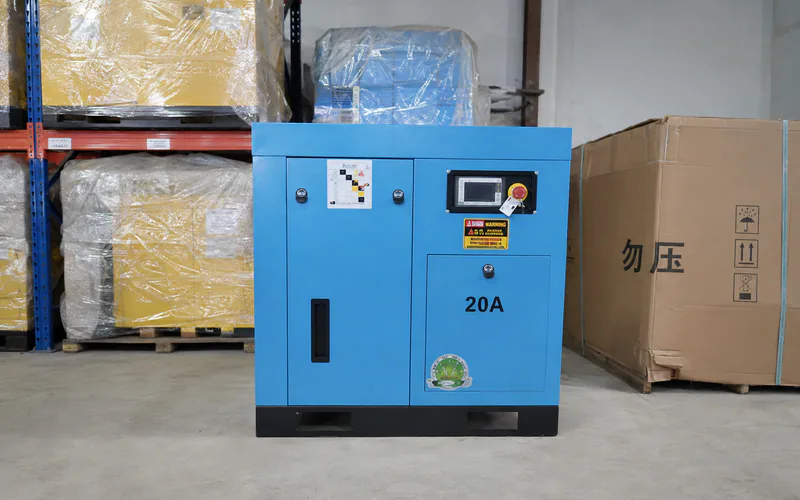
Screw Air Compressor for Spun Pile Plants
A screw air compressor feeds the pneumatic tools and devices around the line. Its pressure, flow and storage are set by the tools you run together, so it must be sized from point-of-use demand and distribution losses.
View equipment detailsThe pressure that matters is the pressure at the tool, not the reading at the compressor outlet. Long or undersized distribution lines lose pressure between the source and the workstation, and a receiver sized for the duty smooths the burst demand from impact wrenches. Air treatment and filtration also belong in the scope where the site and connected devices require them. Estimate the air from the number of wrenches expected to run together, their rated consumption and the duty cycle at each station. A single wrench drawing air for a few seconds looks small, but three stations opening moulds in the same hour can exceed a small compressor's sustained output.
Match the wrench to the mould and the procedure
A pneumatic impact wrench assists fastener work, but its fit and reach decide whether it actually helps. Socket dimensions, the spacing of fasteners along the mould flange and the length needed to reach them all set the tool choice.
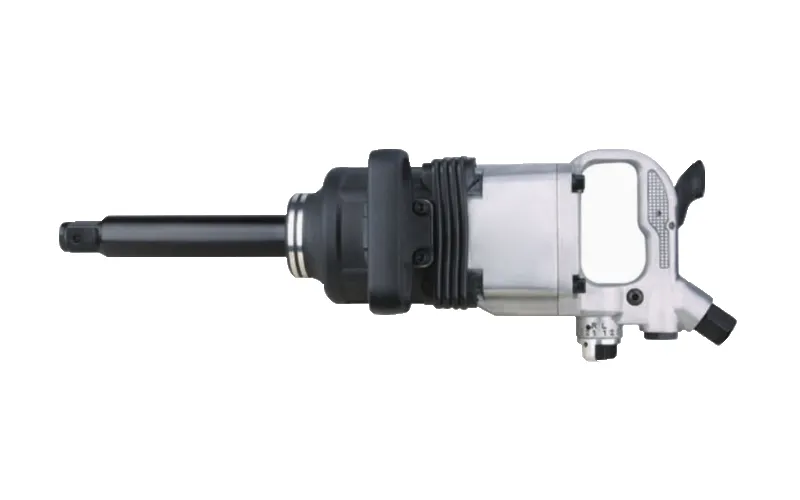
Pneumatic Impact Wrench for Spun Pile Moulds
A pneumatic impact wrench assists the repeated opening and closing of split pile moulds. Its socket fit, reach and air needs follow your mould flange and fastener layout, so it is selected with the fastening station.
View equipment detailsAir pressure and consumption, tool weight and handling all enter the selection, together with how often the mould is opened and closed. Longer moulds need a longer reach and sometimes a balanced tool, because an awkward posture slows the work and wears the operator out over a shift. Where a controlled final tightening value is specified, the wrench supports the work but does not by itself verify that value; the agreed fastening procedure and its check method still apply.
The mould sets the fastening task
The split steel mould determines how much fastening the line must do. Its shell joints, closure fasteners and running-ring layout fix how many bolts sit along the flange and how they are accessed when the mould is on the bed.
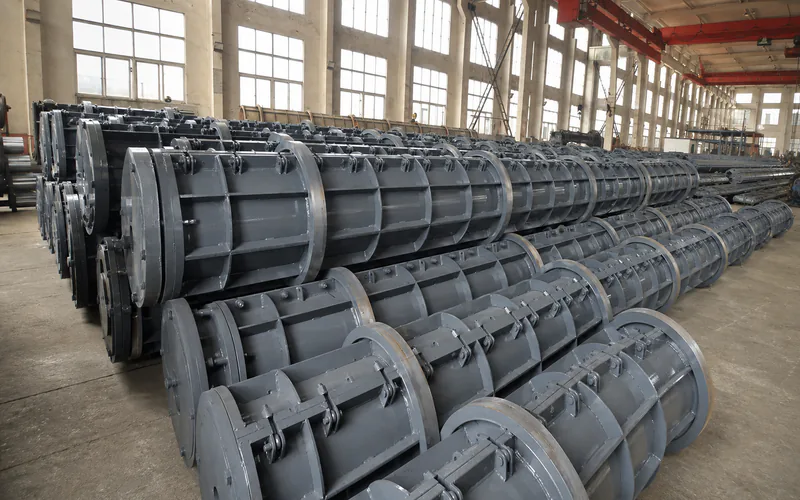
Steel Mould for Prestressed Spun Concrete Piles
The split steel mould determines the fastening job. Its shell joints, closure fasteners and running-ring layout set how many bolts must be reached and where, which is what the air tool and workstation must serve.
View equipment detailsThat is why the air tool and the fastening station are designed around the mould, not the other way round. A change in mould length or flange detail changes the number of fasteners and the access length, which then feeds back into compressor and wrench selection. Running-ring position and flange stiffness also matter, since a flexible flange can make fasteners hard to seat evenly, which the air plan cannot fix on its own.
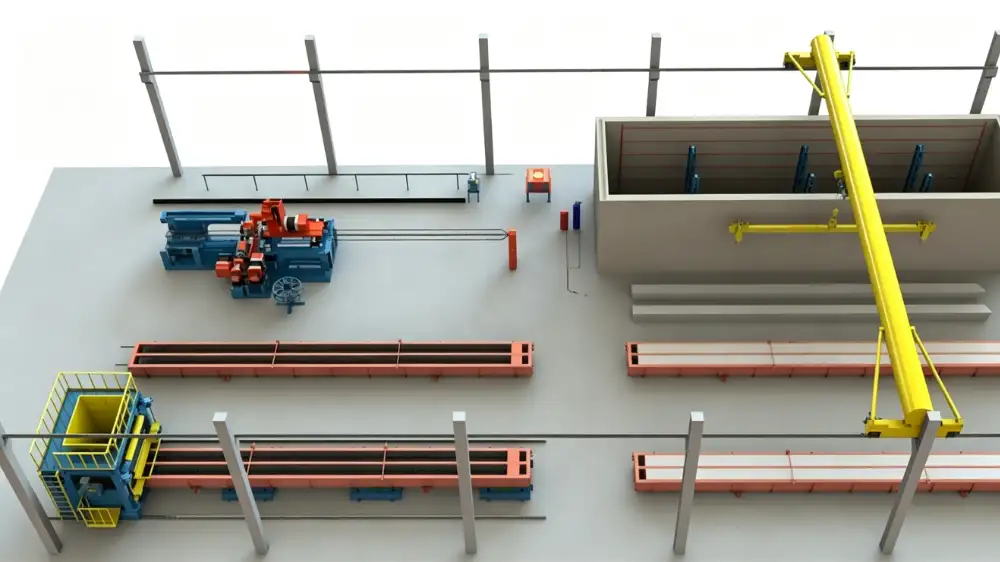
Design the air distribution with the line layout
The compressor, the drops to each fastening station and the main distribution should be planned together with the production layout. A route that serves today's two stations but cannot reach a third leaves the next capacity step boxed in. Build in service access and isolation so a section can be maintained without stopping the whole line. Also account for the crane and trolley routes when laying the line, so a hose or manifold does not end up in the lifting path. A tidy, supported distribution is easier to inspect and less likely to be damaged during mould movement, which protects both the air supply and the people working nearby. The receiver and main line must absorb the burst demand at the start and end of each mould cycle, so pressure at the tool does not sag exactly when several moulds are being opened together.
What to confirm before ordering
Before the compressor and tools are ordered, confirm the mould drawings, the number and position of fastening stations, the expected number of wrenches running together and the available power and water for the compressor. Share the line layout so the distribution and the drops are designed for the actual stations rather than assumed. A small stock of sockets, hoses and a backup wrench also keeps one failed tool from stopping a station, which is far cheaper than a longer line stoppage. Agree the air plan with the rest of the spun pile production line scope so the fastening station does not become the limit on daily output.