
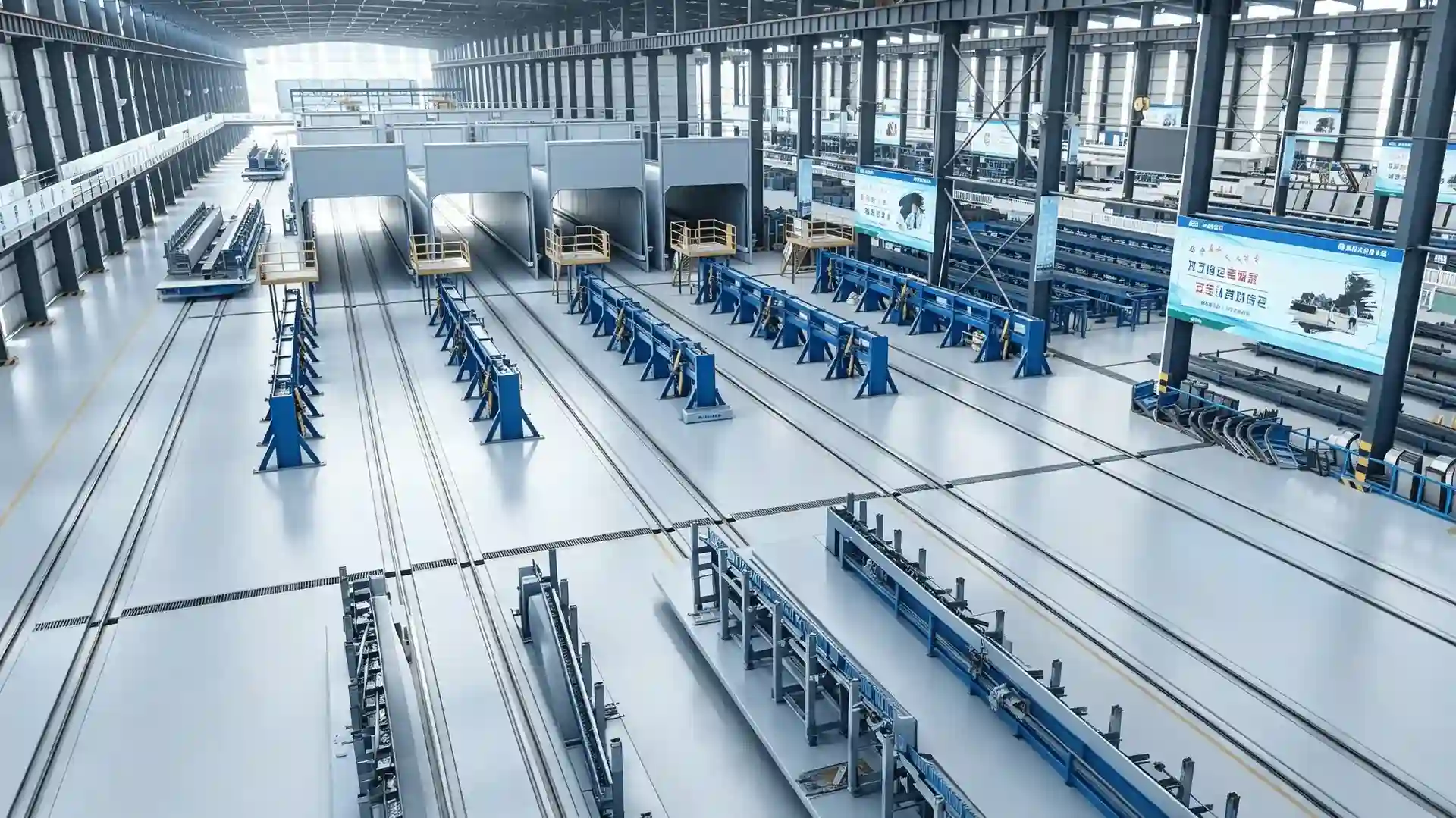
Define the product range before asking for any number
A spun pile line budget starts with the products you intend to make, not with a price list. The diameters, lengths and prestress classes you plan to produce set the mould set count, the spinning machine size and the handling capacity. In China, GB/T 13476-2023 defines the classification, dimensions and marking of pretensioned spun concrete piles, so the product schedule should be checked against that standard before equipment scope is fixed. For projects aimed at the European market, EN 12794 covers precast concrete foundation piles under the EU Construction Products Regulation 305/2011, and the product definition there affects what the line must be able to produce.
Annual output matters as much as product range. A line designed for a few large diameters in steady volume looks very different from one that changes tooling several times a week for many short orders. Output target, shift pattern and working days per year together decide how many moulds must be in circulation and how fast the forming and curing stations must turn over. Two lines with the same annual tonnage can still need different equipment if one runs few long campaigns and the other many short changeovers.
Forming equipment sets the core capacity
The centrifugal spinning machine is the heart of the line. It rotates the concrete-filled mould through controlled stages to compact the concrete and form the hollow section. Its roller arrangement, drive and speed control are matched to the mould family and the loaded mould weight, not to a single diameter.
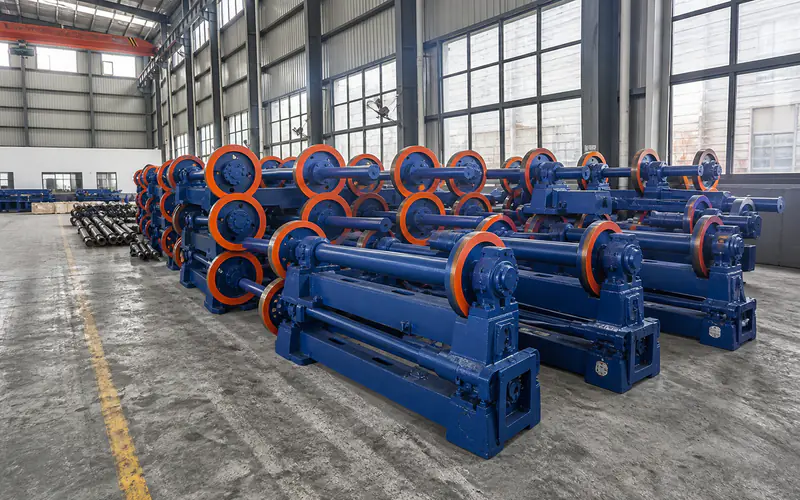
Centrifugal Spinning Machine for Concrete Piles
The centrifugal spinning machine sets the forming capacity of the line. Its size, roller arrangement and drive must match the mould family and pile weights you plan to produce, so its scope is central to any budget.
View equipment detailsBecause the spinning machine is tied to the mould running rings and lengths, its scope cannot be decided in isolation. The same station must serve every pile size in your schedule, and the forming recipe is established for each product family during process development. Budget the spinning machine together with the mould set it must accept, rather than as a standalone item.
Concrete supply must match the feeding cycle
Fresh concrete has to reach the mould at the right time and consistency. A concrete batching plant produces the controlled batches and discharges them to the feeding station, so its storage, weighing and mixing arrangement are sized from your approved mix design and the volume each pile demands.
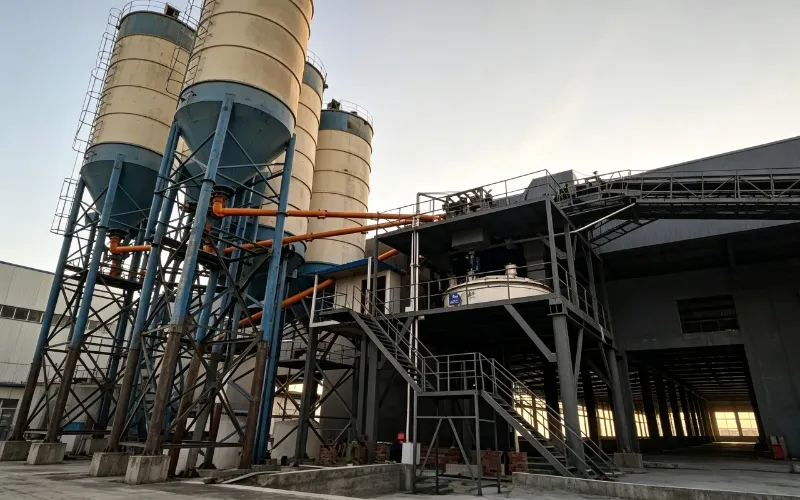
Concrete Batching Plant for Spun Piles
The concrete batching plant must keep pace with the mould feeding cycle. Its storage, weighing and discharge arrangement are sized from your mix design and the concrete volume each pile requires.
View equipment detailsBatching capacity is not only about mixers per hour. It is about whether the plant can supply several moulds in quick succession during the busy part of the shift, while holding the aggregate, binder, water and admixture systems your mix requires. An existing plant on site may be reviewed against these interfaces, but reuse depends on discharge height, transport route and spare capacity during production.
Heavy handling shapes both equipment and building cost
Long spun pile moulds are moved and lifted at two defined points. A twin-hook overhead crane carries them between stations, and its capacity, span and hook arrangement are fixed by mould mass and the production bay geometry.
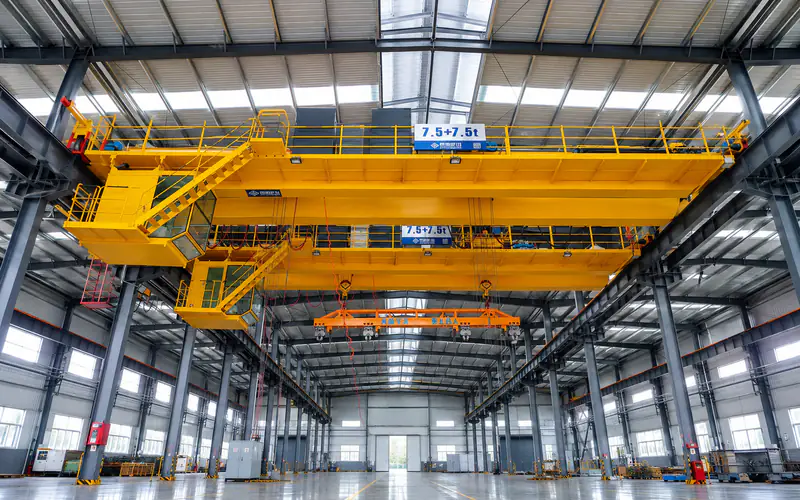
Twin-Hook Overhead Crane for Spun Pile Moulds
A twin-hook overhead crane lifts long moulds at two points through the production bays. Its capacity, span and runway are fixed by mould mass and building geometry, which also shapes the civil cost.
View equipment detailsThe crane is also a building problem. Runway beams, column spacing, hook clearance and the travel path between stations must be designed together, and those decisions feed straight into the civil works estimate. Where the line reuses an existing building, the bay span and headroom often decide whether the planned crane can be installed at all.
Civil works, utilities and the steam system
Beyond the machines, the building shell, ground bearing, pit depths for spinning and curing, drainage and utility connections form a large and often underestimated cost block. Steam for accelerated curing is supplied by a boiler sized from the curing volume and cycle, while compressed air, power and water each need their own supply plan. These items are site specific: a greenfield plot and an existing factory bay lead to very different numbers.
Land and building cost also depends on how much of the process is covered. A fully enclosed, insulated hall protects the curing cycle and the workforce but costs more than a partially covered layout. Drainage for washdown and condensate, and clear access for raw-material and finished-pile vehicles, are easy to forget until the civil contractor prices them.
Automation level changes labour and equipment cost together
The level of automation sits across every line item. Manual mould handling, feeding and fastening reduce equipment cost but raise labour and slow turnover, while automated transfer, feeding and tensioning reduce headcount and cycle time at higher capital cost. The right level is the one that matches your labour cost, order profile and output target, not the most automated option on paper.
Commissioning, training, spares and contingency
The equipment quote is rarely the whole story. Installation, commissioning, operator training, initial spare parts and a contingency allowance all belong in the budget from the start. Curing control, boiler and compressor scopes also need clear boundaries so that sensors, piping and controls are not left as open items between supplier and civil contractor.
What to prepare before requesting a budget
Before asking any supplier for figures, gather the product range and annual output, the site conditions and available utilities, and the standards your market requires. A clear reinforcement and mix design, a mould size schedule and a building drawing turn a vague estimate into a comparable proposal. For a coordinated equipment package built around your project, review the spun pile production line overview and share your drawings with the equipment scope you have defined.