
Utility planning comes before the equipment list
Most spun pile line enquiries start with the machines: a batching plant, moulds, a spinning machine, a crane. The utilities that feed those machines arrive later in the conversation, and that order creates problems. A boiler ordered after the curing pits are drawn may not match the steam demand those pits actually generate. A compressor sized from a catalogue figure may leave the mould fastening stations short of pressure at the far end of the hall.
Utility planning belongs at the front of the project because three of the largest operating costs on a spun pile line are energy costs: steam for curing, electricity for spinning and handling, and compressed air for tools and controls. None of them can be finalised from the equipment list alone, because each one depends on the curing schedule, the pile mix and the way the line runs its shifts.
Steam is the largest single energy load
Curing consumes more energy than any other part of spun pile production. Moulds leave the casting area, enter curing pits or chambers, and stay there while the concrete gains the strength needed for prestress release. Many high-strength pile processes add a second, autoclave stage; other pile products cure in atmospheric pits only. Whichever process the project approves, the steam system has to serve it.
GB/T 13476-2023, the Chinese product standard for pretensioned spun concrete piles, sets a minimum concrete strength before the prestress can be released, and the curing schedule is the means of reaching it. The European market applies EN 12794 to precast concrete foundation piles. The standard you work to does not size the boiler, but it defines the release condition the curing system must reach reliably.
Boiler duty follows the demand profile rather than the daily output figure. What matters is how many pits or chambers run at the same time, how quickly each one needs to reach temperature, and what the distribution pipework loses on the way. A line that staggers its curing pits presents a flatter demand curve than one that starts three chambers together after a shift change. The fuel or energy source available at the site, feedwater treatment and condensate return all shape the final specification.
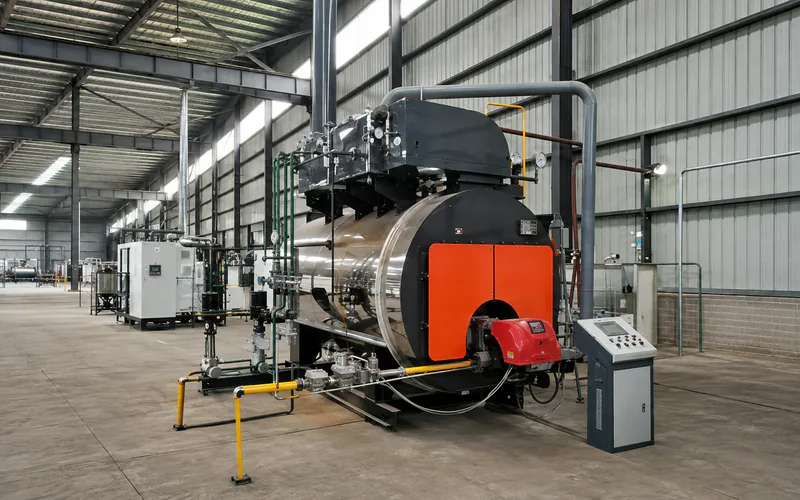
Steam Boiler for Spun Pile Curing
Curing steam is the largest utility load on most spun pile lines, and boiler duty follows the simultaneous demand of the curing pits rather than the number of piles produced per day.
View equipment detailsCompressed air is sized at the point of use
The air system looks small next to the boiler, but it sits on the critical path of every mould cycle. Pneumatic impact wrenches open and close split mould fasteners, and other pneumatic devices serve stations along the line. Pressure available at the tool decides whether the fastening work keeps pace with the mould schedule, and that pressure is lower than the reading at the compressor outlet.
Sizing starts with a list of the connected equipment and the number expected to run at the same time. Pressure losses along the distribution route, receiver capacity and air treatment then decide whether the far stations hold pressure during simultaneous use. Where the supply scope ends is a contract question: receivers, dryers and distribution pipework are items that buyers and suppliers allocate differently, so they should be named in the proposal rather than assumed.
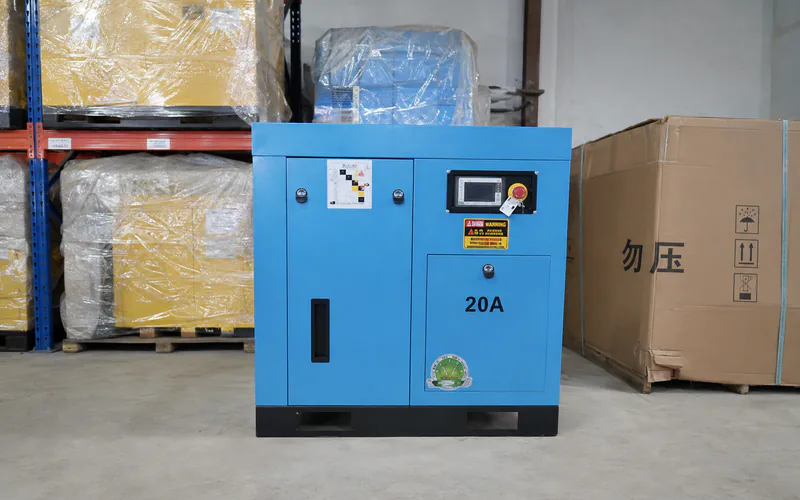
Screw Air Compressor for Spun Pile Plants
Compressed air feeds the mould fastening tools and pneumatic devices, so compressor capacity must come from the simultaneous demand at the points of use, not from the line's rated output.
View equipment detailsTemperature records support the curing evidence
Curing pits on a modern line are monitored continuously. A curing control cabinet collects the temperature measurements from each zone, runs the agreed stages and keeps the records the quality file needs. Its configuration follows the plant layout: the number of pits, the sensor positions, the steam valves it may drive and whether recording or automatic stage control is required.
The records support process control, but they do not by themselves establish release strength. Demoulding follows the approved curing procedure and the project quality requirements, and the cabinet is one part of that evidence chain. Confirming the control scope early prevents a familiar gap: sensors and valves priced separately from the panel that is supposed to operate them.
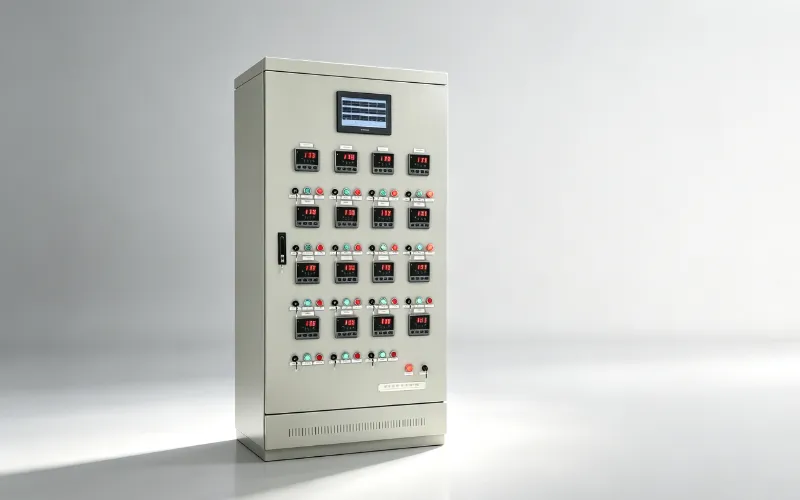
Steam Curing Control Cabinet for Spun Piles
The curing control cabinet records pit temperatures and curing stages, which supports the approved curing procedure and the release evidence the product standard expects.
View equipment detailsPower and water close the utility picture
The spinning machine drives take the largest electrical load on the line, and their start and stop pattern differs from the steady load of a boiler burner or a compressor motor. Overhead cranes, welding stations and the control systems add to a profile worth reviewing with the electricity supplier before the transformer is ordered.
Water has two roles that need separate attention. The mixing water must suit the approved concrete mix, and the boiler feedwater must be treated to protect the boiler itself. Curing pits also hold water seals and condensate that the drainage design has to handle. None of these are equipment choices, but all of them appear as site works that somebody has to pay for, so the responsibility should be settled in the contract rather than discovered during commissioning.
Supply boundaries to settle before you order
Utility equipment attracts boundary disputes because every item connects to something outside the equipment supply. The boiler connects to a fuel supply, a water treatment arrangement and a boiler house that may or may not be part of the contract. The compressor connects to a distribution network. The control cabinet connects to sensors and valves installed by whoever builds the pits.
Before the equipment proposal is finalised, ask the supplier to state which items it supplies, which connections it designs and where its responsibility stops. Realjet supplies the steam boiler, compressed air and curing control equipment within a coordinated spun pile line package, and confirms dimensions, capacities and supply boundaries against the project requirements before a proposal is finalised. The civil works, permits and the production of the piles themselves remain outside the equipment supply unless the contract includes them.
Bring the utility inputs to the enquiry
Prepare the curing schedule, the number and size of the curing pits, the fuel and water available at the site, the electrical supply capacity and the pneumatic equipment list. With those inputs, review the spun pile production line planning page and ask for the utility scope to be stated item by item. A line whose utilities are planned with its machines starts up without the gaps that surface when energy is treated as an afterthought.