
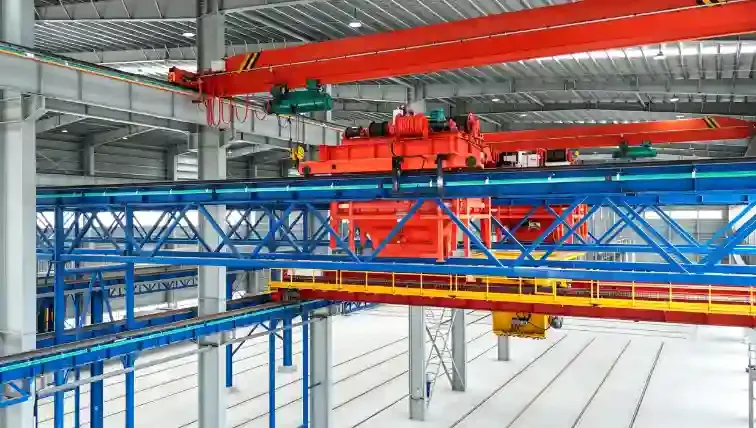
Two casting methods, two different factories
Precast producers work with two casting methods, and the choice is normally made before any equipment is selected. In wet cast production, a flowable mix with a measurable slump is placed in a mould or on a bed, consolidated, finished, and left in place until the concrete has gained enough strength to be stripped. In dry cast production, a very low slump or zero slump mix is placed and consolidated by intense vibration, by mechanical action, or by both, and the form can be removed immediately after compaction.
That distinction matters because ASTM C1837, which covers production of dry cast concrete for pipe, box and precast structures, defines dry cast concrete in the same terms: a very low slump or zero slump concrete that requires continuous and intense vibration, or mechanical means, or a combination of vibration and mechanical means, to consolidate the concrete, enabling immediate removal of the forms from the product. The American Concrete Pipe Association describes the same split from the plant floor: in dry cast the form comes off almost immediately after compaction, while in wet cast the form stays until the product reaches an initial required strength.
For a buyer planning a line, the consequence is that these are not two settings on one machine. The two methods call for different mould counts, curing arrangements and handling equipment, so the factory that houses them differs as well.
What the mix does to the process
A wet cast mix carries enough water and paste to move under its own weight or with modest vibration. It fills narrow mould recesses, flows around congested reinforcement and reproduces surface detail, which is why architectural faces, stairs, columns, beams and panels are usually wet cast. The cost is time: the element occupies its mould while it hardens, so the mould is unavailable and the curing regime becomes part of the production plan rather than a service function.
Self compacting concrete is the extreme version of wet cast. ACI Committee 237 defines it as highly flowable, non segregating concrete that can flow through reinforcement under its own weight without mechanical consolidation, and the ACPA paper notes that its main production benefit is removing vibratory compaction from the operation. A plant running self compacting mixes still needs the same curing discipline; it removes one source of surface defects rather than the need for a defined cycle.
A dry cast mix is stiff, closer to damp soil than to flowing concrete. It will not flow into a recess, so the shape has to be vibrated and pressed into place with a vibrating table or a press, and the finished surface is coarser. In exchange, the product holds its shape the moment it leaves the mould, and that is what makes immediate stripping possible.
The production line types compared article covers how beds, fixed stations and circulation arrangements are organised. The casting method decides which of those arrangements can be used at all.
What the line has to provide
A wet cast line is usually built around a casting area:
- batching and mixing sized for a measured slump mix;
- a distribution system, from a travelling concrete distributor over a bed to a placing arrangement worked from a skip or a pump;
- moulds or beds that hold the element while it cures;
- internal or external vibration, selected for the section;
- a curing regime, often steam or a heated enclosure, to reach stripping strength on a predictable cycle;
- stripping and lifting equipment rated for the element, and a storage area that supports it correctly.
Because the mould is occupied for hours, output is normally reached by adding moulds rather than by speeding up a single one. That is why mould count is one of the first questions in a wet cast enquiry, and why curing capacity is a production constraint rather than a detail to be settled later.
A dry cast line is built around a machine cycle:
- a filling and dosing system that spreads a stiff mix evenly across the mould cavity;
- a vibrating table or press that compacts the mix to the required density;
- a mould that can be stripped immediately, usually onto a steel pallet;
- pallet handling, cleaning and oiling between cycles, because the pallet carries the product away;
- a curing area sized for pallets rather than for moulds;
- take off and stacking equipment for the finished units.
Mould count is far lower here, since the same mould returns to the machine within minutes. The constraint moves to the pallet pool, the machine cycle and the handling rhythm. Where those do not match the filling machine, the line runs below its rated capacity however fast the machine itself can work.
Curing, and what each method expects from it
Wet cast depends on a defined curing regime to reach stripping strength on schedule. Steam curing, heated enclosures and accelerating admixtures all have a place, and the choice interacts with the mix design, the mould material and the finish requirement. The curing system therefore belongs in the line specification from the start, because the stripping cycle and the mould count both depend on it.
Dry cast depends on low water content and compaction instead. Products are stripped immediately and then cure on the pallet or in a stacked curing area, often under ambient conditions or a light accelerated regime. The lower water content also means less drying shrinkage and better early dimensional stability, which is one reason dry casting dominates high volume production of small repetitive units.
Neither method is more advanced than the other; they answer different product requirements, and a plant that tries to serve both from one set of equipment usually compromises one of them.
The product list decides more than preference
In practice the product range picks the method, and it is worth testing that against the market the plant is built to serve.
Dry cast suits pipes, box sections, manhole rings and chambers, kerbs, retaining wall blocks, pavers, fence posts and masonry units. These are products with defined shapes, high repetition, modest detail and dimensions that have to stay stable from the first unit to the thousandth. Product standards such as ASTM C76 for reinforced concrete pipe and ASTM C90 for loadbearing concrete masonry units set the requirements those products have to satisfy.
Wet cast suits structural beams, columns, wall panels, floor and roof slabs, stairs, and bridge and tunnel elements, along with anything that carries an architectural face. The European common rules for precast concrete products, EN 13369, and plant quality references such as PCI MNL-116 shape the tolerance and production control expectations for these elements.
A plant that intends to make both has to decide whether it will run two production areas under one roof or one flexible area that changes over. The two options carry different footprints, staffing levels and utility loads, and the answer usually follows the ratio of structural work to repetitive small units in the order book.
Capacity, footprint and labour
Capacity in a wet cast plant is set by the number of moulds, the cure cycle and the speed of stripping, lifting and storage. Floor space is dominated by casting beds, curing chambers and the storage area that has to hold elements until they reach handling strength. Labour is concentrated on mould preparation, placing, finishing and stripping. Where the product mix repeats, a circulation line or a carousel with panel moulds can raise output per person, at the cost of a larger investment in transport and curing equipment.
Capacity in a dry cast plant is set by the machine cycle and the pallet pool. The footprint per unit of output is smaller, because neither moulds nor elements occupy large casting bays, and the labour per unit is lower once the line is running. Automation is more likely on the handling side, where pallet movement, oiling and stacking happen on every cycle.
For either method, the number worth writing into the enquiry is the output the plant has to reach, expressed in units or in cubic metres per shift, with the product sizes and the shift pattern it applies to. A supplier can then size the machines, the moulds and the curing area against a real target instead of a nominal one. The cycle time and output discussion applies the same logic to beam production.
What to send with the enquiry
A production line enquiry that can be answered without a second round of questions usually contains:
- the product schedule, with geometry, unit weight and expected annual or monthly volume for each item;
- the standard each product has to meet, named by edition, and any local approval requirement;
- the finish requirement for each face, and whether any face is architecturally visible;
- the casting method the buyer intends to use, or a request for advice on which method fits the product list;
- the mix design assumptions, and a clear statement of who owns the mix design;
- target output per shift, the shift pattern, and the elements or units that set the pace;
- available floor area, headroom and column grid, plus any constraint on where casting and curing can sit;
- power, water, steam and compressed air available at the plant;
- local conditions that affect the mix and the cure, including climate, aggregate availability and cement types;
- the delivery boundary the buyer expects, from equipment supply to installation and commissioning.
Where the responsibility sits
The buyer and its designer own the product geometry, the mix design, the standards the products must meet and the approvals that go with them. Realjet supplies production lines for precast concrete components, including engineering, equipment manufacturing, installation and commissioning where confirmed by the project, and does not sell the precast components themselves. The equipment package scope article sets out how that boundary is normally described in a line contract.
Once the product list and the casting method are settled, most of the remaining decisions follow: mould quantity, curing method, handling equipment and layout. Precast production line solutions are planned from those inputs, so it is worth fixing them before the first quotation is requested.