
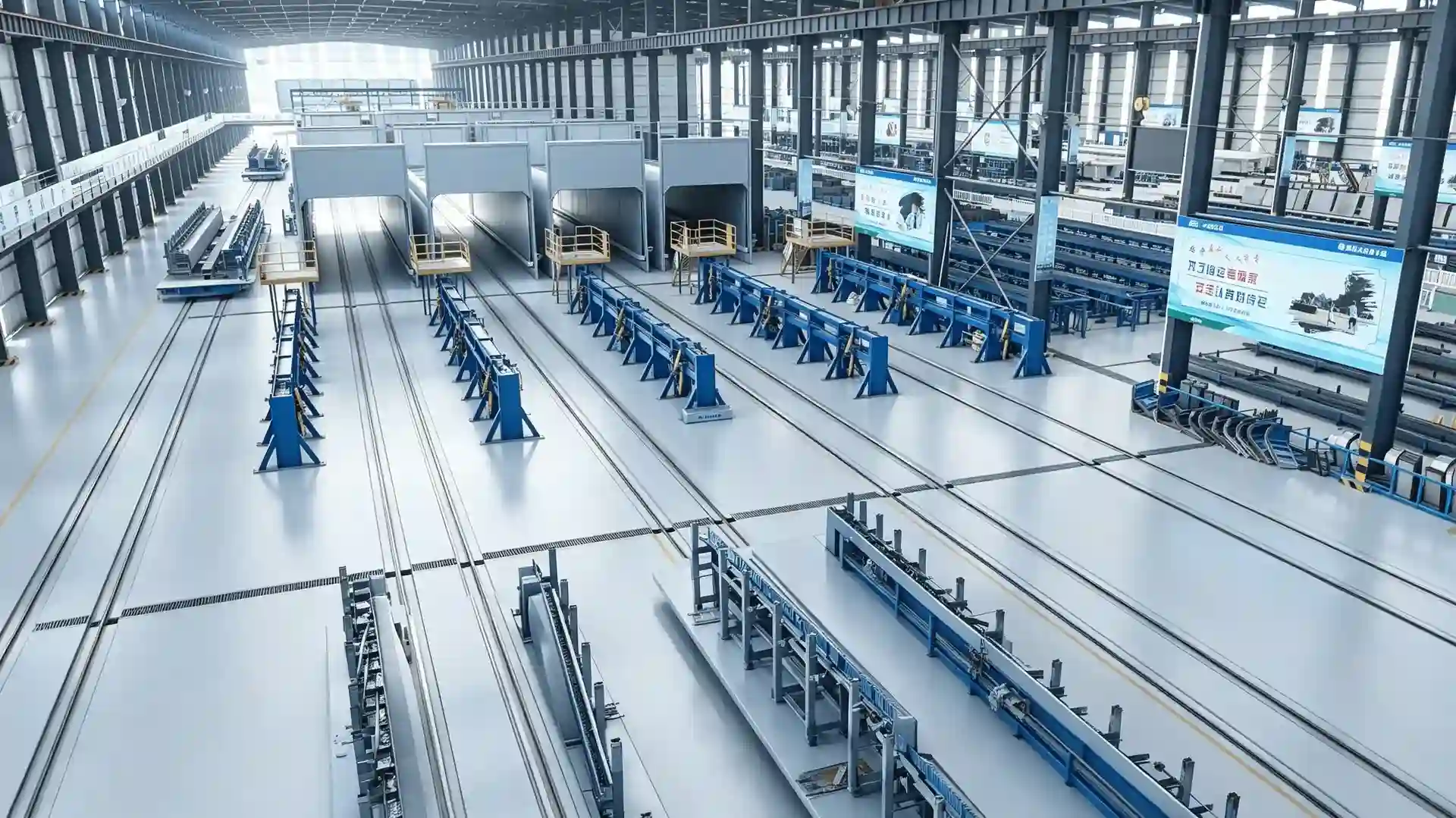
What "equipment package" usually means
A precast beam production line is a project, not a single machine. The equipment package is the set of machines, formwork, moulds, conveyors, prestressing and curing systems that the supplier delivers so the plant can cast components. Buyers comparing two quotations often find the numbers differ not because one supplier is cheaper, but because each bidder assumed a different boundary around what they supply.
Stating the package scope early keeps the comparison honest. Realjet supplies production lines for precast concrete components, including engineering, equipment manufacturing, installation and commissioning where confirmed through the current website and project documents. It does not sell the beams, girders or other precast components that the line produces.
Split the scope: equipment, installation, civil, utilities
A typical line project separates into four layers, and the RFQ should say who owns each:
- Equipment supply: formwork and moulds, casting beds or tables, prestressing and tensioning equipment, concrete placing and vibration, curing system, handling and transfer gear, control systems.
- Installation and commissioning: mechanical and electrical erection, piping, wiring, software configuration, trial operation and performance checks.
- Civil works: foundations, pits, anchor bolts, drainage, crane beams and the building shell.
- Utilities: power, water, steam or heating for curing, compressed air, and the connection point at the site boundary.
Some suppliers quote only the equipment and expect the buyer to handle civil works, utilities and part of the installation. Others offer a broader scope that includes installation and commissioning. Neither is wrong, but a buyer who does not state the split will receive offers that are not comparable.
The word turnkey appears in many proposals. Use it only when the supplier's scope genuinely covers the full project-specific line delivery, including installation and commissioning confirmed in writing. A line that still needs the buyer to build foundations and connect utilities is not turnkey, and the label can hide a scope gap.
Where responsibility boundaries cause disputes
Most disputes on a line project come from an unclear boundary, not from a machine that fails. Common gaps include:
- who designs and pays for the foundation and anchor bolts;
- who supplies the power and utility connections to the equipment;
- who is responsible for concrete batching and the mix design;
- who trains the operators and hands over the process documentation;
- who owns the interface between the supplied equipment and the buyer's existing crane or handling system.
Write these into the RFQ as explicit "supplier provides" and "buyer provides" lists. This protects both sides: the supplier can price the real scope, and the buyer knows which site preparations to start before the equipment arrives.
Capacity, mould count and what drives the package
The equipment package follows the production target, not the other way around. The output per day, the component types, the casting cycle and the curing method set how many mould sets, beds or tables, and handling units the line needs. A higher daily target needs more mould sets and more floor space, which changes the building size and the utility load.
Give the supplier the target daily or monthly volume, the component range and the casting cycle, then let the proposal set the equipment quantity. This keeps the package matched to the real objective instead of a round number. Reference points such as PCI MNL-116 cover plant quality control for precast concrete, while EN 13369 sets common rules for precast products that the project can adopt for acceptance.
The curing method also shapes the package. A line using low-pressure steam curing needs steam generation and distribution equipment, while a line relying on natural curing needs more beds or a longer cycle. State the curing approach so the proposal includes the right equipment and floor plan.
Standards that frame the specification
The RFQ should name the standards the line and its output must meet, because they affect equipment choice and QA. Examples that buyers commonly cite include:
- EN 13369, the European common rules for precast concrete products, for component acceptance;
- PCI MNL-116, the PCI manual for quality control of precast plants and production;
- local structural and safety codes that apply at the project site.
State which standard applies, which tolerance or quality class the components must hold, and which QA records the supplier must deliver. This turns a vague "high quality line" request into a quotable specification. Buyers who fix the standard and the QA records up front also make supplier comparison faster, because each bidder prices the same acceptance basis instead of an assumed one.
Next step before you request the quotation
Before contacting suppliers, write the production target, the component list, the site conditions and the scope split. Confirm which parts are your responsibility and which you expect the supplier to deliver, including installation, commissioning and training. When those inputs are fixed, open a review with the precast beam production line team so the proposal matches your plant objective rather than a generic configuration. Recording the split in the technical agreement, not only in the RFQ, prevents later disagreement about which side owns a missing item.