Production scenarios and design basis
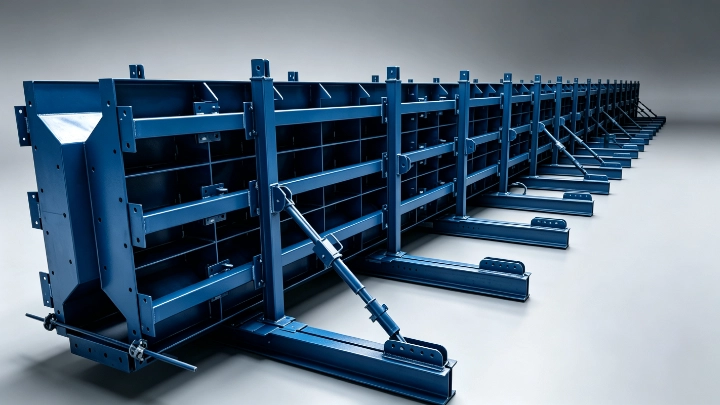
I-girder moulds support repeat production in precast factories or dedicated casting yards. Engineering begins with the approved flange and web geometry, girder height and length range, end details, reinforcement, prestressing system, lifting arrangement and casting sequence.
Is this mould relevant to your project?
This mould type may be relevant when:
- Approved I-girder sections and length variants define a repeat production family
- Prestressing, end details or embedded items affect the mould arrangement
- Side-form opening must protect the flange and web geometry during demoulding
- The mould must fit the available casting bed, lifting equipment and yard workflow
Configuration directions
| Configuration direction | When it may be considered | Main review focus |
|---|---|---|
| Conventional bottom, side and end forms | Crane access and a direct opening sequence are available | Panel division, locking, supports and demoulding clearance |
| Mechanical or hydraulic side-form movement | Larger side forms or repeated cycles require assistance | Moving mass, stroke, synchronization, safety and maintenance |
| Movable or station-based arrangement | The production plan uses defined stations or mould transfer | Rails, foundations, utilities and handling interfaces |
Product performance and engineering features
- Side, bottom and end forms matched to the approved I-girder section
- Stiffened frames and locking positions developed from the mould design basis
- Replaceable end details or inserts where an approved component family permits adjustment
- Mechanical or hydraulic assistance reviewed against moving mass and target cycle
- Working access for reinforcement, concrete placement, inspection and maintenance
Final component tolerances and acceptance criteria remain subject to the approved project documents, production controls and applicable standards.
Required project inputs
Approved I-girder drawings, component schedule, prestressing and embedded-item details, target output, casting and curing method, available operating space, lifting plan and factory or yard layout.
About Realjet
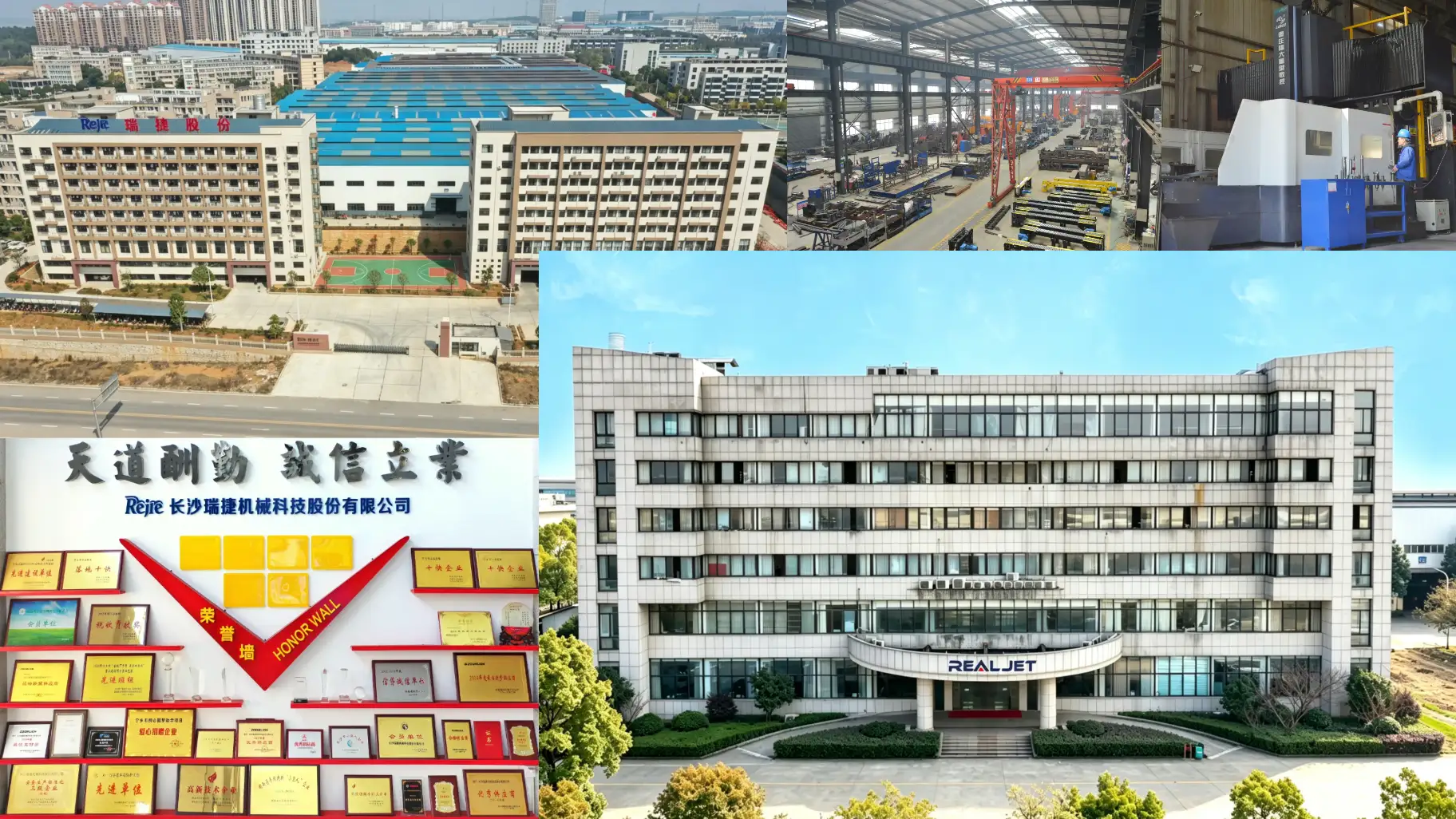
Realjet develops project-specific equipment for precast concrete production. Final dimensions, functions, interfaces and delivery boundaries are confirmed through technical review before manufacturing.