
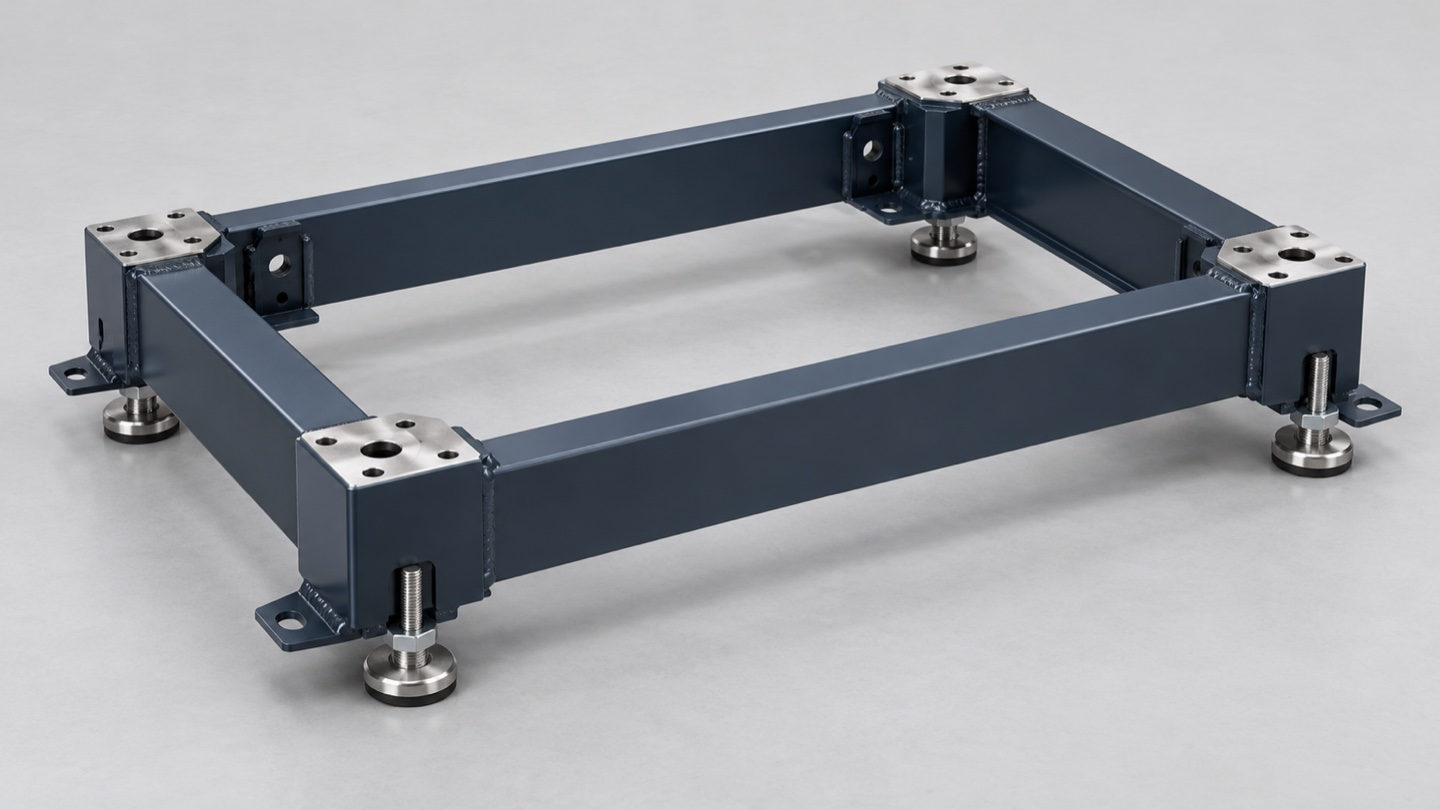
Where the welded server rack base fits
A base matched to your server cabinet
Order a custom welded server rack base for your AI or data-center cabinet design. The base connects the cabinet structure to its defined floor supports. Rack-bottom fixings, cable access and foot or caster interfaces are manufactured to your approved drawings, with the hardware and inspection scope agreed for the order.
Fixed and movable support arrangements
Levelling feet, anchors and casters create different support conditions. Identify which carries the cabinet during normal operation, movement and transport. Their positions and the cabinet centre of gravity affect the required reinforcement and validation.
Specify the part and delivery condition
The welded rack base and specified mechanical attachment points. Levelling feet, casters and fasteners are included only when itemised; the complete rack and seismic certification are outside the bare-base order.
| What you can order | Details that define the scope |
|---|---|
| Welded base | Rack connection, open cable route and reinforcement |
| Base with machined attachment points | Foot bosses, seating contacts and cabinet fixing holes |
| Base with purchased hardware | Approved foot/caster model, fasteners and assembly scope |
Manufacturing around your mounting interfaces
Form the cabinet support structure
Cut base plates and reinforcement, then bend or weld the approved sections. Locate the cabinet attachment pattern and support contacts before welding so the mating face is not pulled into position by the rack bolts.
Machine the support connections
Check distortion, then machine the specified foot seats, threaded bosses and cabinet holes. Keep the support plane and rack connection within the drawing datum scheme. Confirm whether stability treatment is required before finishing.
Finish and assemble the specified hardware
Protect threads and designated conductive contacts during coating. Fit only the approved purchased feet or casters included in the order, and check adjustment and fastener access against the rack template.
REALJET combines plate cutting, bending, welded fabrication and specified milling/boring operations for approved equipment drawings. The quotation confirms the material, usable machine envelope, tooling and inspection setup for your part. A required external operation is identified before manufacture.
Agree the first-article inspection plan
| Feature | Check to agree | Record for acceptance |
|---|---|---|
| Cabinet interface | Diagonals, seating plane and attachment holes | Cabinet-bottom template fit and dimensional report |
| Foot or caster mounts | Mount heights, thread engagement and clearance | Hardware installation checklist |
| Loaded support condition | Defined load distribution and supports; deflection and permanent set if ordered | Separately agreed load-test report, not an inferred rack rating |
Mark the drawing revision, datums, inspection limits and measurement support condition before the sample is made. The measuring method and available instruments must suit the feature and tolerance; confirm any specialist measurement or test provision in the quotation.
Approve the sample or pilot batch against the agreed results before repeat supply. Record accepted changes in the drawing revision and inspection plan.
Protect the interfaces during delivery
Agree packing supports, protection for machined contacts and threads, and identification for any mating sections. Send the quantity, destination and required shipping terms so packing and freight scope can be included in the quote.
Questions before you order
Will this fit any 19-inch rack?
No universal fit is assumed. The rack-bottom geometry and support arrangement must be supplied even when the internal equipment uses a standard rack format.
Does the base have a seismic rating?
A bare-base dimensional report does not establish a complete rack seismic rating. Provide the rack and anchorage requirements for a separate engineering and validation review.
Send your welded server rack base drawings
Rack-bottom drawing, cabinet weight distribution, centre of gravity, floor anchors and separate operating, rolling and shipping support conditions.
Include the dimensioned PDF, assembly view, available STEP/DXF/DWG files, bill of materials, material and finish, quantity, drawing revision and destination. Identify the interfaces and first-article checks that control acceptance.
Attach files in your email application. For confidential files, use Enquiry to arrange the exchange method first.