Rural Pavement Construction Solutions

Equipment combinations for rural road paving, access routes, concrete yards and courtyards, from on-site mixing to screeding, finishing and joint cutting.

Applications

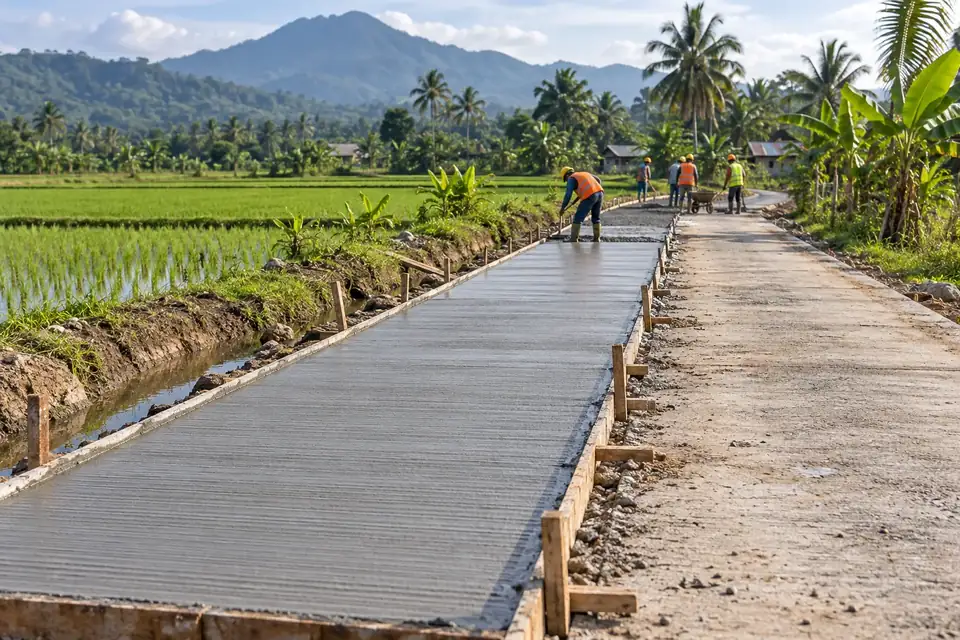
Concrete farm road with shoulders and a drainage ditch

Concrete Roads

Farm roads and rural access routes

Connect farms, villages and produce collection points with paved access for agricultural vehicles, harvesting machinery and light trucks.

Vehicle access and loading
Design the sub-base and pavement for the vehicles and loads using the road.
Wet-season access
Combine pavement construction with drainage, shoulders and ditches to address mud and ruts after rain.
Produce transport
Provide a more even route for harvesting and collection traffic, reducing disruption from rough road surfaces.
On-site concrete supply
Where suitable cement, aggregates and water are available, a self-loading mixer can prepare concrete near the work.
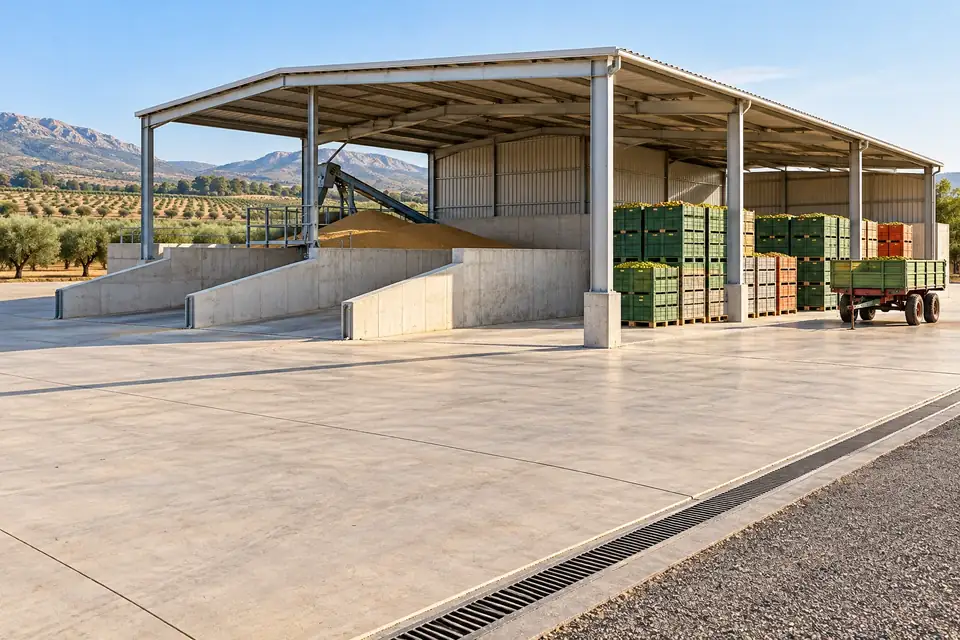
Concrete working yard outside a rural produce collection warehouse

Concrete Yards and Floors

Drying yards, public spaces and courtyards

Create hard surfaces for drying, loading, public activities and everyday use, with finishes suited to each task.

Drying and threshing yards
Where the crop-handling process permits, use a hard surface to reduce direct contact with soil and facilitate cleaning and drying operations.
Public spaces
Select the pavement layout and load capacity for gatherings, parking and other community uses.
Courtyards and working areas
Address mud around buildings and work areas to support access, loading and routine cleaning.
Drainage and durability
Select drainage falls, joints and surface finishes for the intended use, alongside suitable sub-base construction and curing.

Rural Pavement Construction Challenges

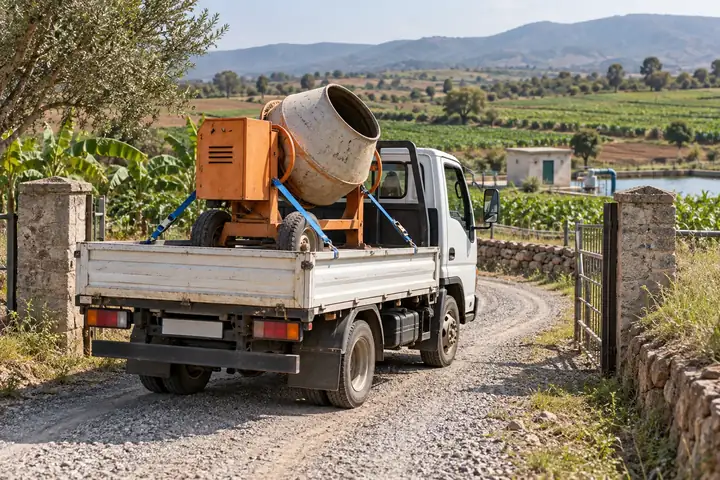
Equipment transport at a narrow rural entrance
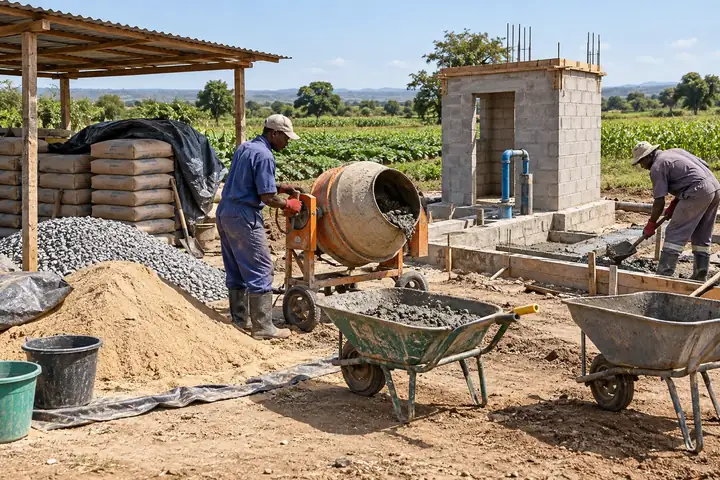
On-site mixing at a scattered rural construction site
ChallengeSite ConditionsEquipment and Work Planning
Scattered small poursSmall jobs across multiple sites complicate concrete delivery.Mix near the pour and plan equipment moves.
Narrow site accessLimited road width and turning space restrict access.Check machine size, gradients and ground capacity.
Inconsistent batchingPoor material measurement and water control affect the mix.Confirm the mix design, weighing system and water supply.
Limited skilled labourLabour shortages can delay placing and finishing.Match screeds, trowels and saws to the crew; train operators.
Curing and joint planningPoor curing or joint cutting increases cracking risk.Plan curing and joint cutting to the design and concrete conditions.
Limited power supplyRemote sites may lack reliable electricity.Choose engine-driven models or a correctly sized generator.

Project Value

AreaPractical ValueConditions to Consider
Project costsMatch equipment to workload and budgetInclude concrete supply, labour, energy and site moves.
Crew planningReduce repetitive manual workProvide trained operators and site supervision.
WorkmanshipSupport consolidation, levelling and joint cuttingResults also depend on the sub-base, mix, operation and curing.
Site conditionsMatch power options to local resourcesPlan fuel, water and maintenance before work starts.
Project coverageEquip scattered and remote small worksCheck access, working conditions and project costs.

Rural Pavement Construction Equipment

Self-Loading Concrete Mixers

Load, mix, transport and discharge concrete on sites with suitable materials and batching arrangements.

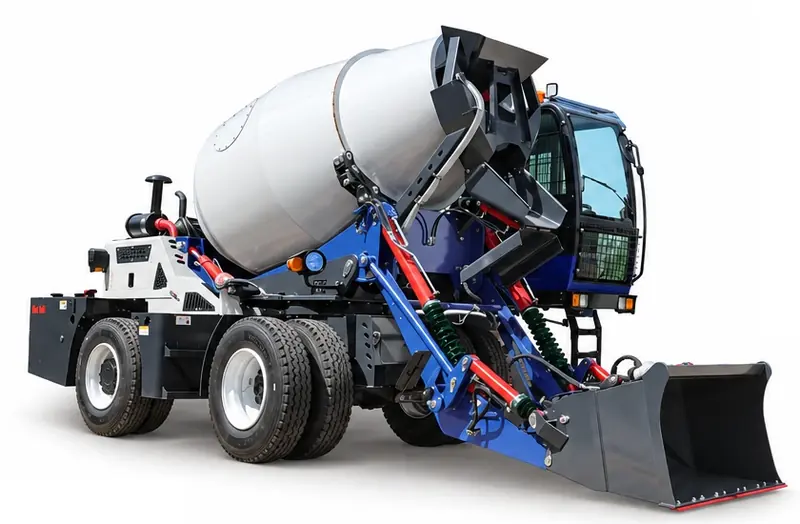
Self-loading concrete mixer showing the bucket, drum and cab
Capacity matched to the project
Capacity classes range from 1.5 to 5 m³. Select for pour size, supply cycle and access conditions; confirm usable concrete output per batch.
On-site mixing and transport
Use the loading bucket to feed the drum, then mix, move and discharge concrete near the work across scattered pouring locations.
Discharge matched to placement
Plan discharge around the parking and pouring positions. The documented 3.5 m³ reference build has a hydraulically extending chute; confirm other builds separately.
View Equipment

Concrete Screeding Equipment

Spread and level freshly placed concrete on straight road sections and open slabs.

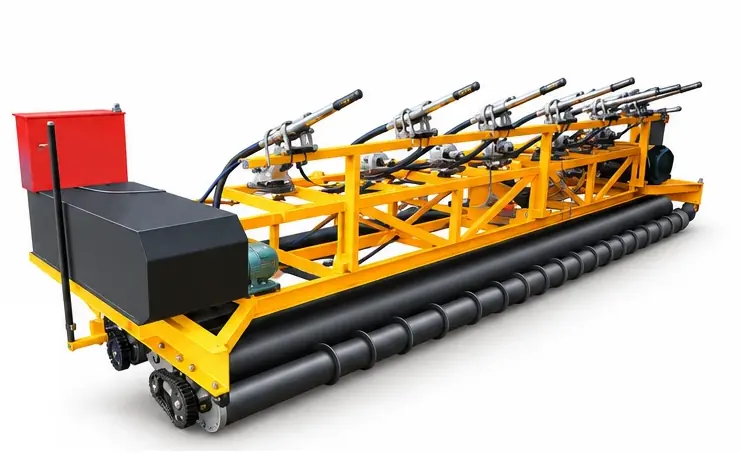
Roller and vibrating concrete screeding equipment
Working width matched to the slab
Select rollers, frames and support arrangements for the road or floor width rather than applying one width to every job.
Vibration and screeding together
Integrated vibrating pavers combine front-mounted vibration with roller screeding for the operations covered by the selected configuration.
Project-specific level control
Define guides, supports and level-control methods for the project. Laser or ultrasonic options and finished-floor tolerances require separate agreement.
View Equipment

Walk-Behind and Ride-On Power Trowels

Float and finish warehouse and machinery-shed floors where a trowelled finish is specified.

Walk-behind power trowel with handle and blade guard
Walk-behind machines for smaller areas
For smaller floors, areas with obstacles and locations where a ride-on machine cannot conveniently operate.
Ride-on machines for open floors
Select a ride-on configuration for the floor area, available access and operating conditions.
Power and finish matched to the job
Confirm the engine and power arrangement for the model. Select pans, blades and timing for the specified finish; treat slip-resistant areas to the project design.
View Equipment

Concrete Saws

Cut concrete to the specified joint layout for slab panels and maintenance work.

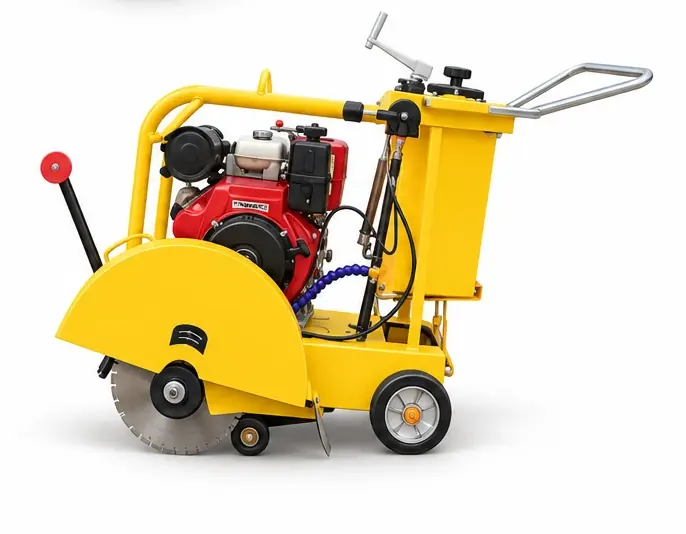
Concrete floor saw with blade guard, engine and wheels
Blade and cutting depth together
Reference models list 400 / 500 mm blades and a 0–180 mm cutting-depth range. Confirm maximum depth for the fitted blade and machine.
Electric, diesel and petrol options
Select power for the electrical supply, fuel and working environment. Catalogue cutting speeds from different conditions are not a universal productivity comparison.
Cutting to the joint plan
Plan timing, depth, cooling water and consumables together. Joint cutting serves the joint design and does not replace concrete curing.
View Equipment

Equipment Support

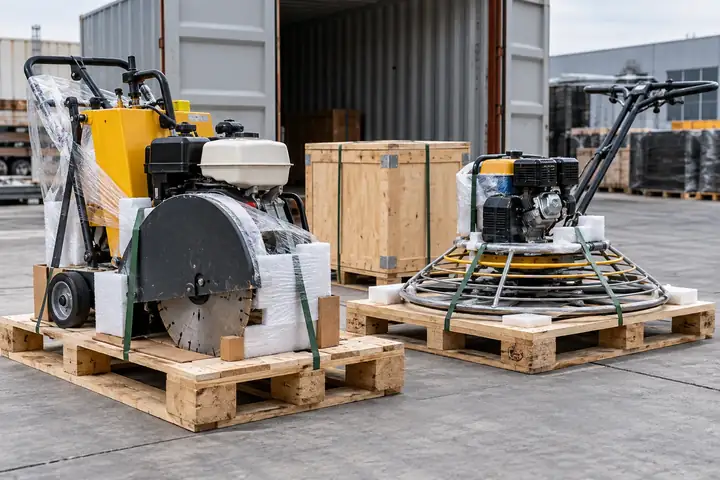
Concrete equipment secured on pallets for shipment

Transport and Delivery

Confirm the shipping method, delivery point and required documents for the destination and machine size. Agree the equipment configuration and accessory list before shipment.

Technician demonstrating equipment controls with operating documents

Operating Documents and Commissioning

Agree manual language, batching arrangements and commissioning requirements. For electrical equipment, confirm voltage, frequency and power supply. Define training and start-up support in the supply agreement.

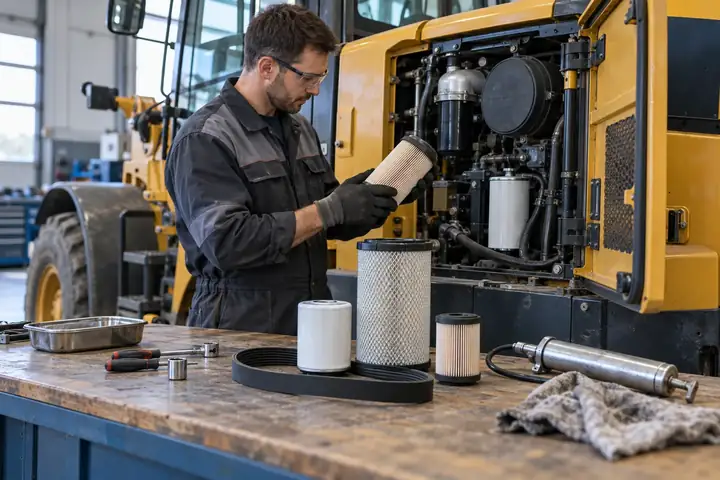
Technician checking equipment beside service tools and spare parts

Maintenance, Parts and Support

Define routine servicing, wear parts, warranty scope and technical support arrangements. Confirm spare-part prices and estimated lead times separately.

Configuration Advantages

Concrete supply and surface equipment together

Combine self-loading mixers, screeding equipment, power trowels and saws around the construction sequence, connecting concrete supply with the following surface operations.

Separate configurations for roads and floors

For roads, consider width, traffic loads and surface texture. For floors, select screeding and finishing equipment for the area, use and specified finish.

Small pours and continuous work planned separately

Small, scattered pours may prioritise on-site mixing and site moves. For continuous paving, match usable batch output and transport cycles to the placing rate.

Equipment matched to site resources

Select configurations around electricity, fuel, water, operators and spare parts, alongside machine specifications and the actual construction conditions.

Request an Equipment Configuration and Quote

Tell us the project country, intended use and approximate workload. Share site photos, drawings or an existing equipment list so we can define the configuration and quotation scope.

  • Project country, delivery location and application
  • Road length, floor area or estimated concrete volume
  • Existing concrete supply, materials and water
  • Entrance width, turning space and electrical supply
  • Equipment required, quantities and planned schedule

Agricultural application images on this page include illustrations and are not all photographs of completed projects.