Start with the product and the standard
Before asking any supplier for a quotation, fix the product itself. A PHC spun pile is a hollow, prestressed, centrifugally cast concrete foundation member. Its geometry, prestress level and concrete strength are defined by the project standard, not by the equipment supplier. In China the product is covered by GB/T 13476-2023, "Pretensioned spun concrete piles", which took effect on 1 March 2024 and replaced GB/T 13476-2009. That standard classifies piles by concrete strength, outer diameter, wall thickness and prestress category, and it sets the centrifugal casting and steam-curing regime. Other markets may apply regional equivalents such as ASTM C76 for the centrifugal concrete process or EN 12794 for precast foundation piles.
The buyer owns the approved pile drawings, the applicable standard and the concrete design. The line supplier works within those inputs. Mixing the two responsibilities is the most common source of later dispute, so state them separately from the first conversation.
Define output against a real cycle, not a best case
Daily output is the number that drives most of the equipment sizing, and it is also the number most often quoted optimistically. Output depends on the number of moulds, the number of spinning frames, the curing capacity, the concrete charging and demoulding method, and the pile length. A longer pile occupies a spinning frame and a curing position for longer, so two lines with the same spinner count can deliver very different totals if one has more curing positions or faster handling.
Ask each supplier to state the assumed cycle, the number of moulds, the curing volume and the handling method in the same table. A low equipment price with too few curing positions simply moves the bottleneck to the yard. The quotation should also name the buyer inputs it assumed, so you can see whether the number reflects your product mix or a generic layout.
Map the equipment package to the process
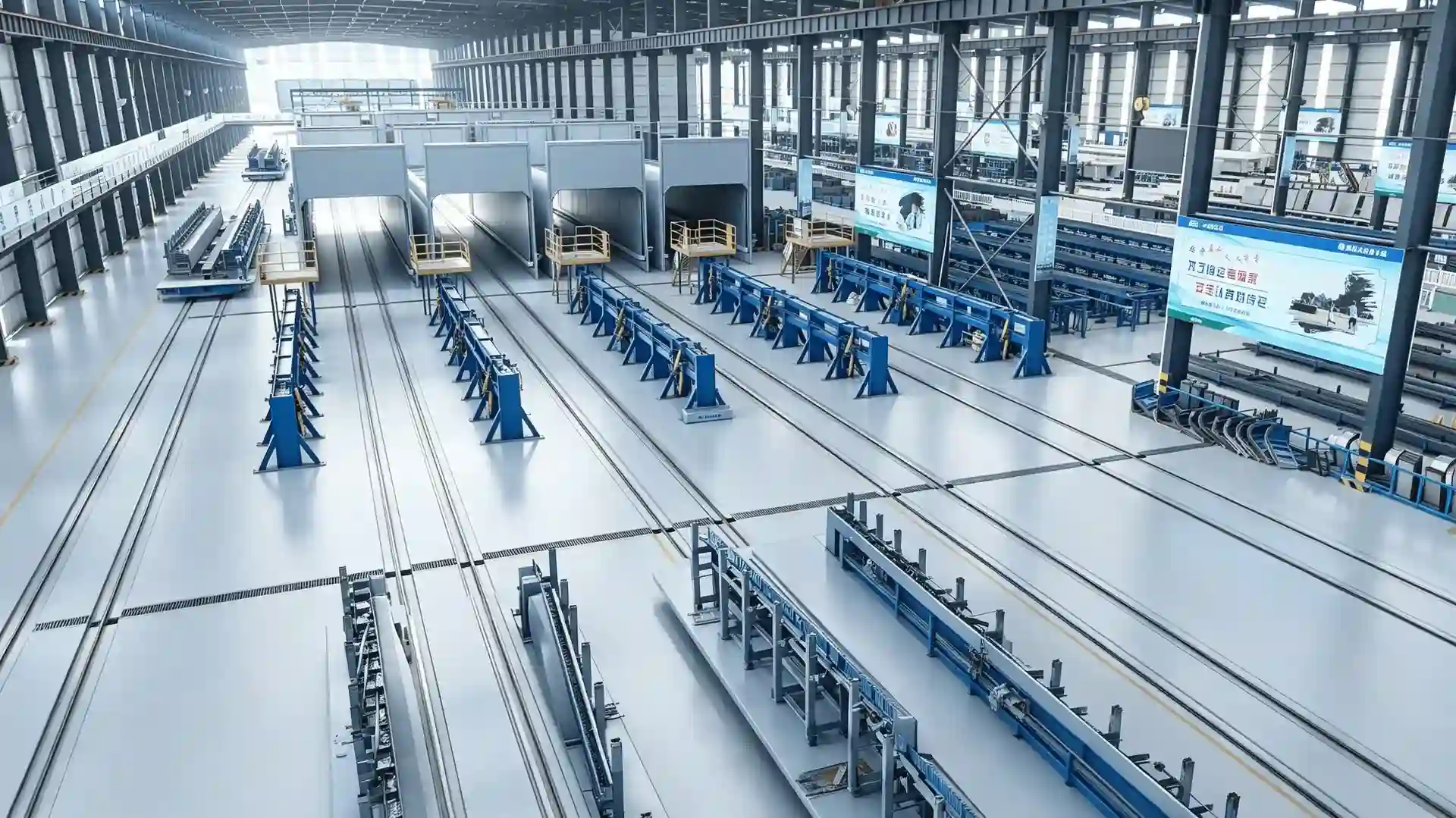
A complete line covers the full process sequence rather than a random list of machines. The connected steps are reinforcement preparation, cage welding, mould preparation and closing, concrete batching and feeding, pretensioning, centrifugal spinning, steam curing, demoulding, cutting to length and handling. Each step has its own equipment, and the package should be scoped to the product and the target output.
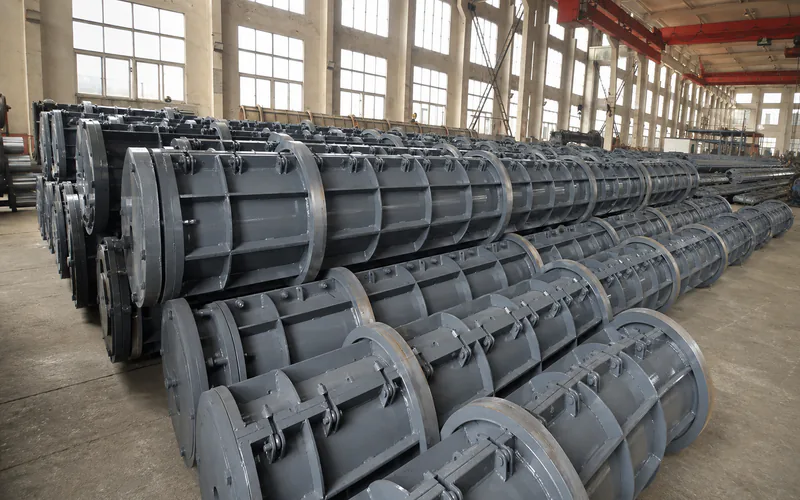
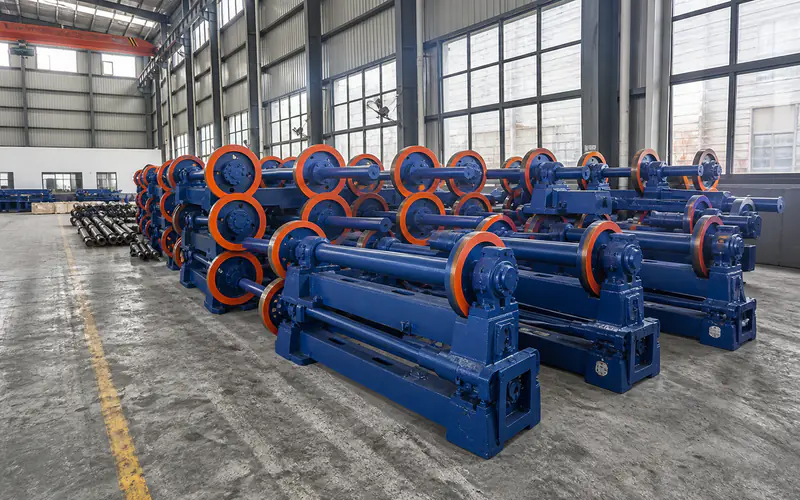
For a spun pile line the core items are the steel moulds sized to the pile diameter and length, the centrifugal spinning frames, the cage welding machine, concrete batching and conveying, the steam curing chamber or pits, and the overhead or gantry handling. The exact machine list should be confirmed during technical review instead of copied from a standard layout, because diameter range, wall thickness and daily volume change the right configuration.
Reserve space and utilities before fixing the layout
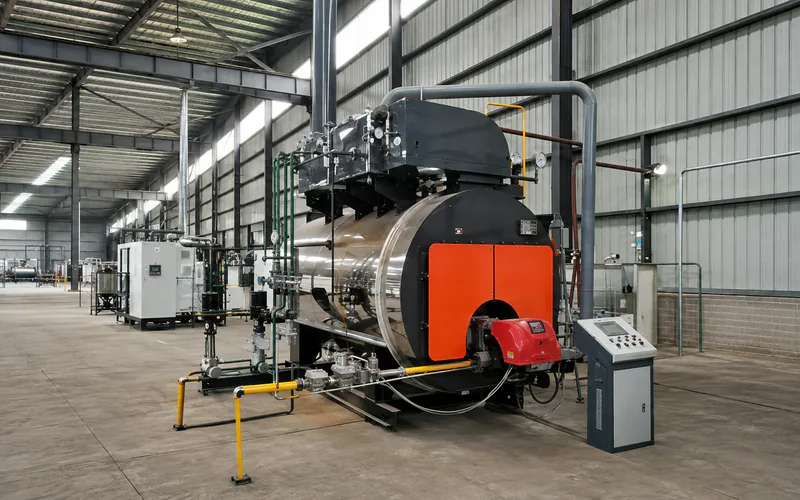
The spinning frames need foundations and a straight, level track. The curing chamber is often the largest single item and the longest lead component, so confirm its dimensions and door arrangement against the pile length and the handling route before the layout is fixed. Overhead crane or gantry coverage must reach every station where a long mould is lifted, and the steam boiler needs a permitted location with fuel or utility supply.
Plan for water, power and compressed air as well. Civil foundations, the boiler permit and utility connections are normally part of the buyer's site scope unless the contract states otherwise. Drawing the layout on paper after the machines are ordered is a frequent cause of rework, because the real constraint is usually the building column grid and the crane span, not the equipment footprint.
Separate the supplier scope from the buyer's site scope
A clear boundary prevents both over-scope arguments and gaps that surface during installation. Mark every item as included, buyer supplied or excluded. Realjet provides line engineering, equipment manufacturing, and installation and commissioning where the project confirms it. Civil works, concrete plant integration, local permits and the casting of the piles themselves sit outside the equipment supply unless the contract includes them.
The same logic applies to controls. Sensors, steam controls and the curing cabinet can be connected within the agreed control scope, but the buyer's authorised concrete and quality personnel still own strength development and release approval. Stating this up front avoids the assumption that the supplier certifies the concrete.
What to send the line supplier
Prepare a package that lets the supplier return a comparable offer. Send the pile diameter and length range, wall thickness, prestress level, target concrete strength, daily output, the applicable standard and the site constraints. Include a scaled building and equipment layout, the available utilities, and the mould quantities and masses if you already hold them.
With those inputs, review the spun pile production line planning page so the response addresses the correct equipment boundary for your project. Share the product drawings and the site constraints early, and treat the first proposal as the start of a scope discussion rather than a fixed price.