
The check sequence the drawing does not contain
A fabricated frame travels with a drawing, a material certificate and a delivery date. What it does not carry is the order in which the work was checked, or who was entitled to stop it. That sequence is the inspection and test plan, and the sensible moment to agree it is the purchase order, while price, drawing revision and delivery are still being argued.
Most buyers meet the plan late. The fabricator sends a document for approval after the first plates are cut, the inspection body is already booked, and any change now costs programme rather than paper.
What the document has to answer, row by row
An inspection and test plan is a table, one row per operation, with columns that make each row answerable without a phone call:
| Column | The question it closes |
|---|---|
| Operation | Which step of the build the row covers |
| Characteristic | The dimension, weld, coating or document being checked |
| Method | How it is checked, and with what |
| Criteria | The drawing tolerance or standard clause it is judged against |
| Control point | Hold, witness or review |
| Parties | Who performs the check and who signs |
| Record | The document that survives |
Two of those columns do the commercial work. The criteria column decides whether a disagreement is about fact or opinion. The control point column decides whether production waits.
Three control points with three different costs
The vocabulary is old and fairly stable across fabrication quality plans. What varies is how much of it a buyer writes into the contract.
A hold point stops the work. The next operation cannot start until the named authority has inspected and signed. It is the strongest control available and the most expensive, because the shop, the crane and the welders are waiting.
A witness point is an invitation. The buyer or the inspector is told when the operation will happen and may attend. If nobody attends within the agreed window, the work proceeds and the fabricator's own record stands.
A review point is a document check with no stopping power. Certificates, procedures and reports are read after the fact.
| Point | Stops work | Released by | Typical use |
|---|---|---|---|
| Hold | Yes | Buyer, inspector | Fit-up before welding |
| Witness | No | Fabricator QC | Welding and coating |
| Review | No | Document control | Reports |
Asking for everything as a hold point usually backfires. A plan with twenty holds does not buy twenty times the assurance; it buys a fabricator who prices the waiting time, and on a bad week lets that waiting reach the delivery date.
Where the standards stop and the order starts
Standards define the work that has to be inspected. They do not define your control points.
ISO 3834-2 sets out what comprehensive welding quality requirements cover, from procedure qualification through inspection and testing to records. ISO 5817 gives quality levels for weld imperfections, so that an acceptable weld becomes a number rather than a matter of taste. EN 1090-2 ties the extent of inspection to an execution class chosen from the consequence of failure. Fabricators who work to these standards reference them in their quality documentation.
None of the three says that fit-up must be held before the first arc is struck on your frame. That is a contract decision. If the order is silent, the fabricator's own default plan applies, which is usually sensible, internally consistent and not written around your risk.
The points worth holding on a welded frame
Five points repay a hold, because they sit where rework is expensive.
Material identification, before cutting: heat numbers matched to certificates and to the grade on the drawing. The certificate side of that is covered in material certificates and traceability.
Fit-up, before welding: joint preparation, root gap measured after tacking, and the datum the assembly is built from. Once the first pass is laid, correcting fit-up means gouging. The drawing items that make fit-up checkable are set out in weld joint preparation and fit-up.
Weld completion, after cooling and before coating: which method and how much of the weld is tested is a separate decision, covered under welding procedure and NDT scope. What the plan has to fix is timing. A test run too early, or a coating applied over an untested weld, turns a repair into a strip and recoat.
Machined interfaces, after machining: the dimensions that matter to the mating part cannot be checked before the cut is made.
Final release: dimensional record, trial assembly where the order calls for one, and the documents that travel with the goods. First article inspection covers the first-off check that precedes a repeat run.
Notification windows decide whether the plan survives a schedule
A hold point without a notice period is a stoppage waiting to happen. The order should say how many working days' notice the fabricator gives, which working hours and time zone count, and what happens if the buyer cannot attend.
The usual answer is a deemed release: if the buyer has not attended within the window, the fabricator proceeds and records the fact. Without that clause, a buyer's travel delay turns into the fabricator's delay claim.
Who signs, and what sits behind the signature
Three parties can hold a point: the fabricator's own quality control, the buyer's inspector, or an independent body. The choice is commercial as much as technical, since a third party adds cost and, on a congested programme, latency.
Where non-destructive testing is used, the person performing it should be certified for the method and at the level the plan requires. ISO 9712:2021 covers qualification and certification of NDT personnel across methods that include visual, magnetic, penetrant, radiographic and ultrasonic testing. A certificate that does not cover the method actually used is a gap that is easy to miss.
Change control belongs in the same document
A frame is rarely built to a drawing that stays still for the whole order. Something on the customer side moves: a motor frame size, a mounting hole, a clearance to a neighbouring machine.
An approved inspection plan without a revision number is a trap, because the second drawing revision inherits the first one's control points and nobody notices the point that should have been added. The order should say that the plan is re-issued with every drawing revision, that the fabricator raises the change before cutting rather than after, and that a hold point added by a change carries its own notice period.
This is where a project loses a week. A revised bracket is cheap. The same bracket found after the frame has been machined and coated is a repair, a repaint and, if it reaches the final release, a delivery that slips with no clear cause.
The release pack is the practical gate
Payment milestones usually hang on a document set, so the order should name it. On a welded frame the pack normally holds the dimensional record against the drawing revision, NDT reports traceable to weld identification, material certificates, references to qualified welding procedures and welder approvals, coating records, and the non-conformance log with dispositions.
A single release note, signed against the plan revision, is what turns that pile into a decision.
What to write into the enquiry
| Item | What to state |
|---|---|
| Drawing revision | The revision the plan is written against, and how changes are handled |
| Control points | Hold and witness points by name, not "as required" |
| Notice | Working days, hours, time zone, deemed release |
| Authority | Who may sign each point, and on what qualification |
| Records | The exact list, format and language of the release pack |
| Cost | Whether third-party inspection is in the price or billed at cost |
Where this sits in a fabrication order
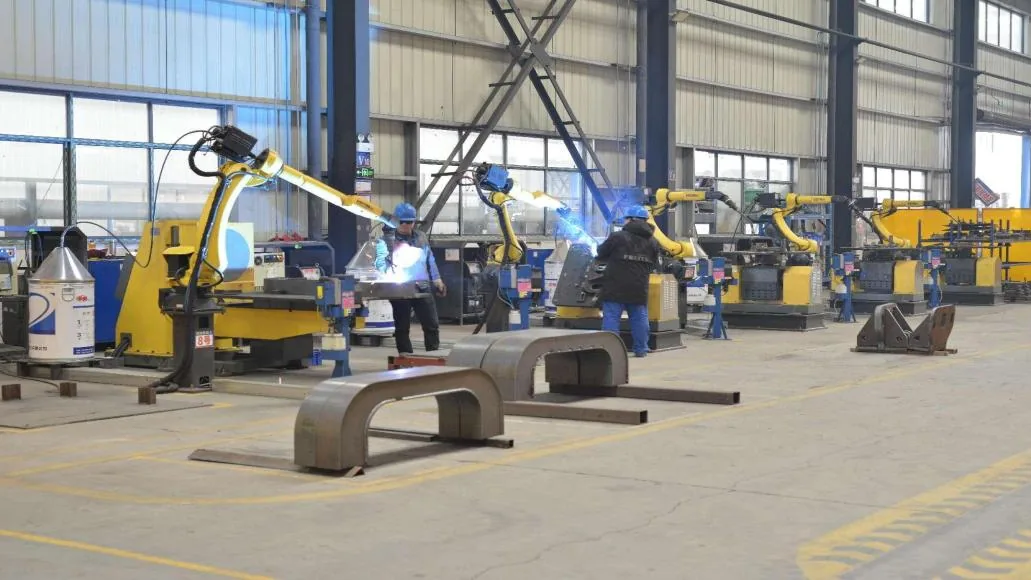
Realjet fabricates welded frames, structures and equipment supports to customer drawings, and machines the interfaces after fabrication. Welding is covered by a quality system to ISO 3834-2, with EN 15085-2 CL1 for railway work, and arc and GMAW welding is largely robotic with post-weld cleaning. Dimensional records can be agreed against the component drawing, and witness points can be arranged.
What the order still has to settle is the part no supplier can decide for you: which points stop the work, who attends them, how much notice is given and which body signs. Those answers move both price and programme, which is why they belong in the enquiry rather than in the first week of production.
If the frame is part of a larger machine build, the contract manufacturing service page describes the scope that sits around the drawing.