
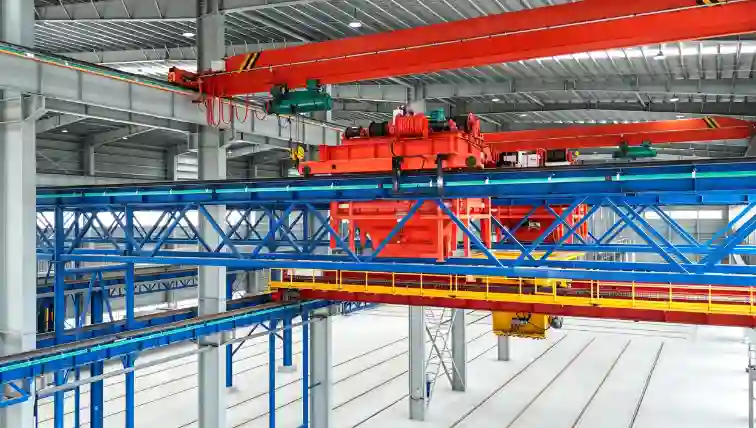
Concrete placing is a line-capacity decision
Concrete placing sits between batching and compaction, but buyers often treat it as a small line item. In practice, the selected method affects casting time, access above the mould, crane use, cleaning, operator numbers and the amount of concrete waiting between the mixer and the component.
A precast beam line supplier cannot size this part of the process from daily output alone. The RFQ needs the beam schedule, concrete demand per casting, allowable placement sequence, batch arrangement and factory layout. Without those inputs, two proposals may use the same words but describe very different supply boundaries.
Buyers need to decide how fresh concrete will move from the agreed handover point to every required area of the mould within the production plan. The choice may involve a skip, conveyor, distributor or a combination of equipment.
Set the concrete handover point first
Mark where the production-line supplier takes responsibility for the concrete. The handover point may be below a buyer-provided batching plant, at a receiving hopper, at the end of a belt conveyor, or at another defined interface. State who supplies the mixer, discharge gate, support steel, access, controls and washdown arrangement.
This boundary affects price and performance. If the line supplier receives concrete from a separate batching plant, the RFQ should provide the batch size, discharge height, expected delivery pattern and available control signals. If the proposal includes more of the batching scope, ask the bidder to separate that price and list the required civil works, aggregate storage and utility interfaces.
The buyer's concrete technologist and project specification remain responsible for the approved mix and production controls. The equipment proposal must work with those requirements rather than choosing a mix to suit the machine.
Convert the beam schedule into placing demand
Prepare a casting schedule for the peak operating case. For each beam family, state the concrete volume, number of placement layers or stages, expected casting window, mould position and simultaneous demand from other lines. Include the number of shifts and any planned changeover between component types.
Then ask bidders to show the capacity chain:
- batch quantity and expected interval at the handover point;
- receiving or buffer capacity within the equipment scope;
- travel distance and route to each mould;
- placing rate and distribution sequence assumed in the proposal;
- cleaning and return time before the next casting;
- response when concrete supply or a downstream operation stops.
The calculation should use the same production calendar as the rest of the line. A placing system with a high nominal rate can still delay output if it waits for a shared crane or cannot reach a second mould. Cleaning time between casts can cause the same problem.
Compare transport concepts against the factory layout
Concrete can reach the mould through different equipment concepts. An overhead skip may move between the batching interface and a distributor. A belt conveyor may serve a fixed route. A rail-mounted distributor may travel along casting positions. Some factories combine these elements.
The RFQ should not prescribe a preferred concept before the route is checked. Give suppliers the building grid, clear height, crane rails, mould elevations, access platforms and no-go zones. Ask for the complete movement envelope in loading, travel, placing and maintenance positions.
Pay close attention to shared overhead space. A concrete carrier, bridge crane and reinforcement lifting route may all need the same area at different times. The proposal should show how the operating sequence prevents interference rather than assuming that every item is available on demand.
Define placement and compaction as connected operations
The distributor needs to place concrete where the approved casting procedure requires it. The RFQ should identify mould length, width, reinforcement congestion, access restrictions and any staged placement around embedded items. State which functions are manual and which the equipment must control.
Compaction is a separate operation, but its timing depends on concrete delivery. A placing concept that delivers concrete unevenly can create waiting or force the compaction team to move unpredictably. Ask suppliers to show how placing and vibration are coordinated along the mould, including operator visibility and manual intervention points.
PCI's description of plant quality control technician responsibilities covers batching, mixing, conveying, placing, compacting, curing and finishing under the plant or project specification. That sequence is a useful reminder for procurement: the equipment boundary may be divided between suppliers, but the production and quality process remains connected.
Specify controls and data by function
Do not use "automatic concrete distributor" as the entire control requirement. List the functions that the buyer expects. These may include travel positioning, discharge control, recipe or beam selection, equipment status, alarms, manual recovery and production records. If a function is not required, leave it out rather than paying for an unclear automation label.
Define interfaces with the batching control and wider line controls. For each signal or data exchange, state the source, destination, timing and party responsible for testing both sides. The supplier should also explain what happens when a communication link fails. Operators need a controlled way to stop, empty or recover the system without creating an unsafe movement or losing track of the batch.
Record requirements should follow the buyer's quality plan. Do not assume that the placing equipment stores mix-design or test information unless this is explicitly included and technically connected to the plant system.
Put cleaning and waste handling into the layout
Concrete equipment needs regular cleaning. Show where washdown occurs, where water and solids go, and how operators reach hoppers, gates, belts or distributors for cleaning and inspection. Assign responsibility for water supply, drainage, solids separation and disposal according to the site plan and local requirements.
The cleaning position can affect line availability. If the distributor blocks a mould or shared travel route while being cleaned, include that time in the operating sequence. Ask the bidder to identify wear parts, replaceable liners and access needed for routine inspection. This is a pre-purchase layout decision, even though the work happens during production.
Request one comparable concrete-placing proposal
Issue the same scope table to each bidder. It should separate batching, concrete transfer, distribution, compaction, controls, support steel, platforms, utilities, civil works and site services. Require a layout, cycle calculation, equipment list, interface schedule and exclusions.
Ask for utility loads and connection points, maximum equipment weights, installation access and the buyer work needed before delivery. The proposal should also state the documentation, training and trial-production support included in the price.
Realjet presents concrete conveying and placing as part of its production lines for precast concrete components. For a project review, send the beam drawings and schedule, concrete volumes, casting sequence, batching interface, building layout, crane arrangement, utility data and required control boundary. Final configuration and capacity depend on technical review of those inputs.