
What supplier verification covers for a precast line buyer
A precast production line combines steel structures, machinery, electrical systems and controls. Installation may or may not be included. Since the package is configured for the project, the buyer needs to check the supplier's engineering, fabrication and delivery evidence alongside the price.
No single certificate answers the whole question. Legal standing, technical capability, quality controls and project references each cover a different part of the procurement risk.
Record the evidence requested, the person who checked it and any unresolved exception before the commercial evaluation closes.
Structural steel and welding credentials
Much of a precast line is welded steel: beds, frames, transfer tracks, gantries and supporting structures. If the project treats any supplied item as a construction product in the European market, ask the project authority which regulatory route and harmonised standard apply. The European Commission explains that harmonised standards provide the technical basis for declaring construction-product performance and CE marking. Do not infer the applicable execution class or certification scope from the equipment name alone; obtain it from the project specification.
For fusion-welded work, ISO 3834-1:2021 sets out how to select among the comprehensive, standard and elementary quality-requirement levels in the ISO 3834 series. Ask the supplier which level and fabrication activities its evidence covers, then compare that scope with the project specification. Procedure qualifications, welder qualifications, inspection plans and welding coordination should be reviewed against the code named by the design authority; an ISO 3834 certificate does not replace that project-specific check.
Where an execution class or comparable fabrication category is specified, ask the supplier to state the covered level and show how it matches the project. A certificate with a narrower scope is evidence of a gap that must be resolved before award.
Quality system and factory production control
A quality management certificate can support a supplier review, but it does not by itself prove control of the specific welding and fabrication work in your package. Ask for records that connect the quoted scope to incoming material control, production planning, welding, inspection, nonconformance handling and calibrated measuring equipment.
Request current certificates and their scope statements rather than accepting a logo on a presentation. If welding, machining, coating or controls will be subcontracted, identify who performs the work, which procedures govern it and how the prime supplier controls the records. The commercial proposal should make that boundary visible.
Reference projects and workshop capability
Certificates describe a supplier's audited scope. References show whether its delivered work is comparable with the proposed package. Ask for projects with a similar component type, output and delivery boundary, preferably with a customer contact who can confirm the facts. Experience with the same component family can be useful, but it should still be checked against the exact process and scope in the new project.
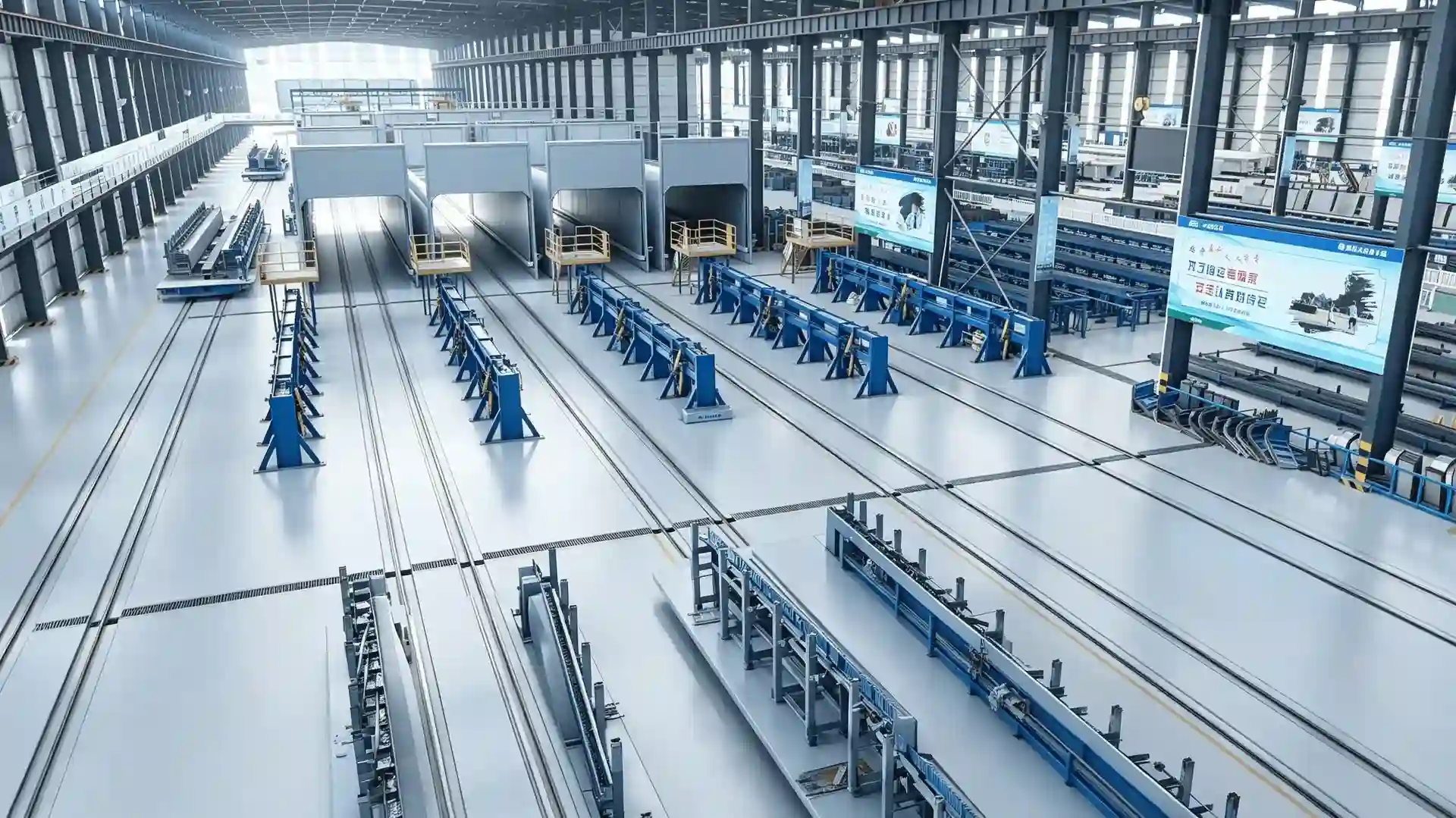
The workshop sets the limit on what can be assembled and tested before shipment. Check lifting capacity, machining and welding resources, assembly space, and the proposed trial-assembly and factory-test arrangements. If a large structure cannot be assembled at the supplier's works, the proposal should explain how fit and alignment will be verified before site installation.
Ask also how the supplier plans and staffs a project of your size. A single line can run for many months across design, fabrication, shipping and commissioning, and the buyer should understand who manages the programme, what the design and drawing review cadence looks like, and how after-sales support is structured after handover. A supplier that cannot name a responsible project contact or describe a commissioning plan is signalling a delivery risk that the price will not show.
Factory acceptance, inspection and documentation in the contract
Factory acceptance testing and witnessed inspection should be defined in the contract, not negotiated after the equipment is built. Specify which tests are witnessed, which records are delivered, and what acceptance criteria apply. This includes dimensional checks, functional runs, welding inspection results and the full documentation package: drawings as built, certificates, test reports and operating manuals.
A power-on demonstration does not cover dimensions, fit, records or every agreed function. Define the FAT criteria and witness points before award so the supplier can price and plan the required checks.
Scope boundary checks before you sign
Write down what the supplier provides and what remains with the buyer: civil foundations, utilities, cranes, concrete batching, curing systems, installation, commissioning, training and spare parts. Two proposals with the same headline price can have very different boundaries. Compare those boundaries before comparing totals.
Use the precast production line planning route to share your component drawings, output target, site conditions, requested delivery boundary and acceptance requirements. Realjet can then review the project-specific equipment and service scope instead of assuming that every line includes the same engineering, installation or commissioning package.