
What the line produces
A precast concrete pipe production line makes reinforced concrete pipes for drainage, sewer, storm water, culverts and irrigation. Realjet supplies the production line, the equipment and the project scope for these precast components, not the pipes themselves. The buyer runs the line and sells or installs the pipes.
Pipe diameters run from a few hundred millimetres to more than two metres, and standard lengths sit around two and a half metres, though both vary by standard and market. The line has to be planned around the diameter range and the joint type the project demands.
Spun casting versus vertical casting
Two processes dominate the sector. Centrifugal spun casting, often called Hume pipe after the process origin, feeds concrete into a rotating mould and compacts it by centrifugal force. It gives a dense wall but the output per machine is modest and the wall is relatively thin.
Vertical vibrated casting places a stiff, low-water concrete into the annular space between an inner and outer mould and compacts it with a vibrating core. It allows quicker demoulding and a higher piece rate on a given footprint. Some suppliers cite sixty to eighty pipes per day for vertical casting against two or three for spun, but those figures depend on diameter, length, automation and labour, so treat them as supplier ranges, not guarantees.
A third route, horizontal or roller suspension casting, is used for some diameters and reinforcement layouts. The right process depends on the pipe class, the joint and the output target.
Equipment and pipe moulds in the line
A complete line is more than one machine. Typical packages include:
- a cage welding machine that forms the reinforcement cage to the pipe length and diameter;
- a concrete feeding and placing system;
- the spinning or vertical casting machine;
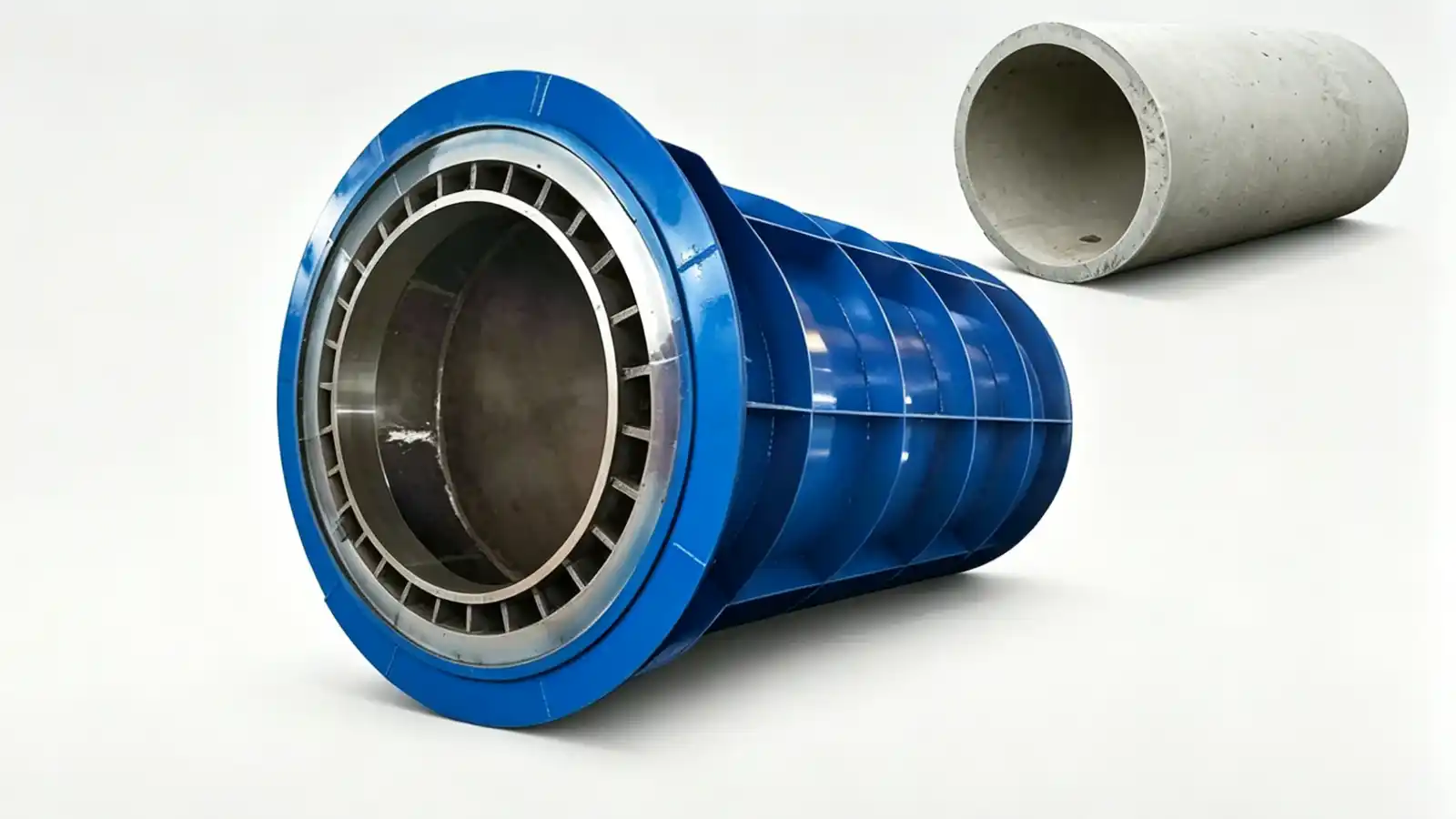
- the pipe mould set, usually an outer mould, an inner mould, a base ring and a spigot forming ring;
- a curing area, with steam where accelerated curing is used;
- demoulding, handling and storage equipment.
The pipe mould systems are the reusable steel tool at the centre of the line. Their diameter range, joint profile and surface finish decide the pipe the line can make, so the mould specification and the machine specification have to be agreed together. The line also needs a handling plan for green pipes, which are weak until they reach early strength, and a storage yard sized to the curing queue.
Capacity drivers
Output is set by several factors, not one machine rating. Larger diameters need longer casting and curing and fewer pieces per shift. The number of moulds in rotation, the curing method and the shift pattern set the daily volume. A buyer should size the line from the project's diameter mix and delivery schedule, then confirm the mould count and curing capacity that support it.
Factory and utilities
The line needs a level floor with space for the spinning or casting machines, the curing area and crane movement. Power, water and a compressed air supply are basic. Steam for accelerated curing adds a boiler and distribution. Incoming concrete can come from a batching plant on site or be delivered, and the buyer should confirm which interface the equipment package covers.
Why process choice shapes the layout
The casting method decides the building. Spun lines need long machine bays and heavy foundations for the rotating equipment. Vertical casting lines pack more output into a smaller area but need reliable vibration and demoulding handling. The curing space and the mould storage scale with the chosen process, so the process decision should come before the building is drawn. Buyers who fix the diameter range and output first get a line layout that matches the site instead of one that is retrofitted around it. Curing is the slow step, so the number of moulds in circulation often matters more than the casting machine speed when output is the constraint.
Design inputs the buyer prepares
Before requesting a quotation, gather the documents the supplier needs to scope the line:
- the pipe standard, such as ASTM C76 or EN 1916, and the load class;
- the diameter and length range, with the joint type for each;
- the reinforcement requirement and any lining or coating;
- the target output and the delivery schedule;
- the factory footprint, utilities and local site conditions.
ASTM C76 and EN 1916 are the common references buyers use to fix the pipe performance class. The supplier designs the line to those inputs; the buyer confirms the scope and the responsibility boundary.
Responsibility boundary
Realjet connects the pipe moulds, the casting machine and the supporting equipment into a production solution sized to the buyer's components and site. Final diameters, interfaces, installation and commissioning scope are confirmed through the buyer's project documents. The precast production line solutions page describes the kind of project scope Realjet can take on for precast concrete components.