
What a double-T slab is
A double-T slab is a prestressed concrete member with a wide flat top and two parallel stems, giving it a T shaped cross section when viewed end on. The shape carries long spans as a floor or roof unit, so it is common in parking structures, industrial buildings, commercial floors and many public buildings. A production line for these components makes the slabs, not the buildings that use them. Realjet supplies the production line, equipment and project solution, not the precast slabs themselves.
How a double-T slab line casts
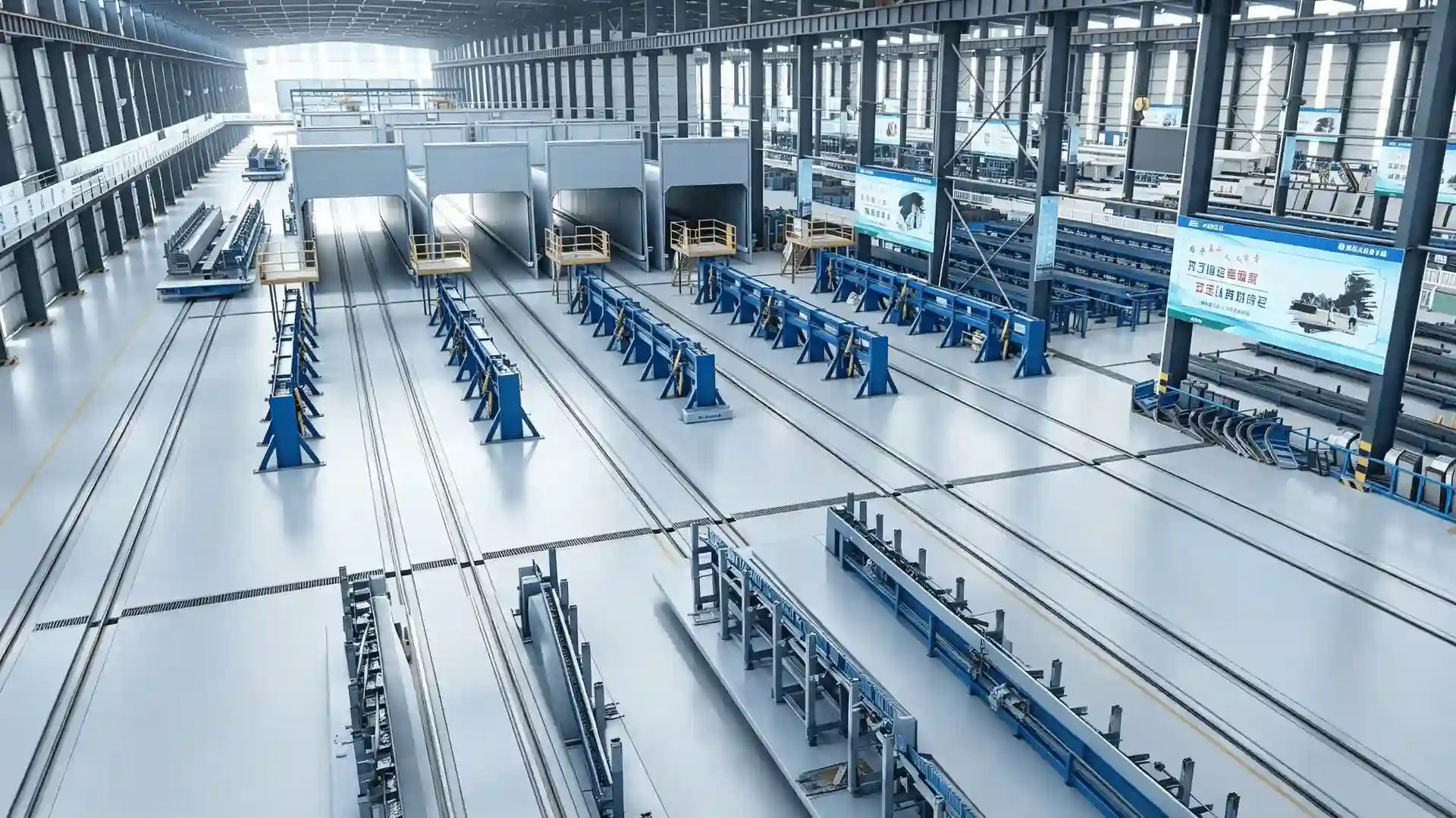
Most double-T slabs are cast on long line beds using the pretensioning method. The bed is a long, flat, steel faced casting surface, often in the range of 100 m to 150 m, divided by bulkheads into the individual slab lengths a project needs. High strength strand is stressed along the bed, reinforcement and connection hardware are placed, concrete is poured and compacted, and the slab gains strength under curing before the strand is released and transfers prestress to the concrete. The Canadian Precast Prestressed Concrete Institute describes this long line method and the typical width and depth ranges for double-T slabs.
Casting moves along the bed in a repeating cycle. After one set of slabs is finished and cured, the bulkheads shift and the next set begins. Because the same bed serves many lengths, the line suits projects that need a repeating family of slabs more than a single one off size.
Forms, bulkheads and soffit finish
The bed carries steel forms that define the slab soffit and edges, with movable bulkheads that set each slab length. Because the soffit is cast against a smooth steel face, the finished underside is usually fair and may need only caulking at the longitudinal joints. Where the project calls for a specified finish grade, the buyer should state it up front, because a higher grade can require different form surface preparation or a different release and cleaning routine. The bulkhead system also drives how fast the bed resets between cycles, so its adjustability is part of the equipment decision, not just a site detail.
Capacity and what drives it
Installed capacity is not the same as parts per day. The real output depends on bed length, the number of casting positions, the concrete strength gain under the chosen curing method, and how quickly the crew can stress, pour and strip one cycle. Steam or heat assisted curing shortens the wait between cycles, while ambient curing stretches it.
A buyer should size the line from required delivery volume and the project schedule, not from a headline capacity figure. Two lines with the same bed length can differ sharply in output if one uses faster curing, more bulkhead positions or a more automated concrete distribution system.
Factory space and utilities
A double-T slab line needs a long, straight hall with a clear span wide enough for the slab width plus handling room. The bed itself is fixed, so the building is planned around it. Utilities that shape the design are power for mixers, tensioning and distribution equipment, a steam or hot water source for curing, and a water supply for concrete and curing.
Storage and handling space matter as much as the casting area. Slabs are large and need a flat, drained yard for curing and a clear path for lifting and loading. Buyers who underplan the yard often bottleneck the line at the outgoing end rather than at the bed.
Design inputs the buyer must prepare
The supplier needs the slab geometry the line must produce: stem spacing, slab width, depths and the range of lengths. It also needs the prestressing strand pattern, the concrete strength and curing target, and any architectural or structural finish on the soffit. Local design codes such as ACI 318 in the United States or CSA A23.4 in Canada set the structural rules, and the line is configured to meet them, not the other way round.
The buyer should also decide the level of automation. Manual bulkhead setting and concrete placement cost less up front but need more crew, while automated distribution and tensioning raise first cost and lower cycle labour. This trade off belongs in the early specification because it changes the equipment package.
Buyers should also confirm the lifting and transportation plan, because double-T slabs are large and the line layout must leave a safe path from bed to yard. A hall that looks adequate on paper can stall if the finished slabs cannot be lifted and moved without conflicting with the next casting cycle.
What Realjet supplies and what stays with the buyer
Realjet provides production lines for precast concrete components, including the engineering, equipment manufacturing, and installation and commissioning where the project scope confirms it. The double-T slabs remain the buyer's product, designed by the buyer's engineer and cast on the supplied line.
Buyers comparing options should review precast concrete component production lines and the slab and panel moulds that pair with long line casting, then prepare the geometry and volume inputs above before requesting a proposal.