
What the line produces
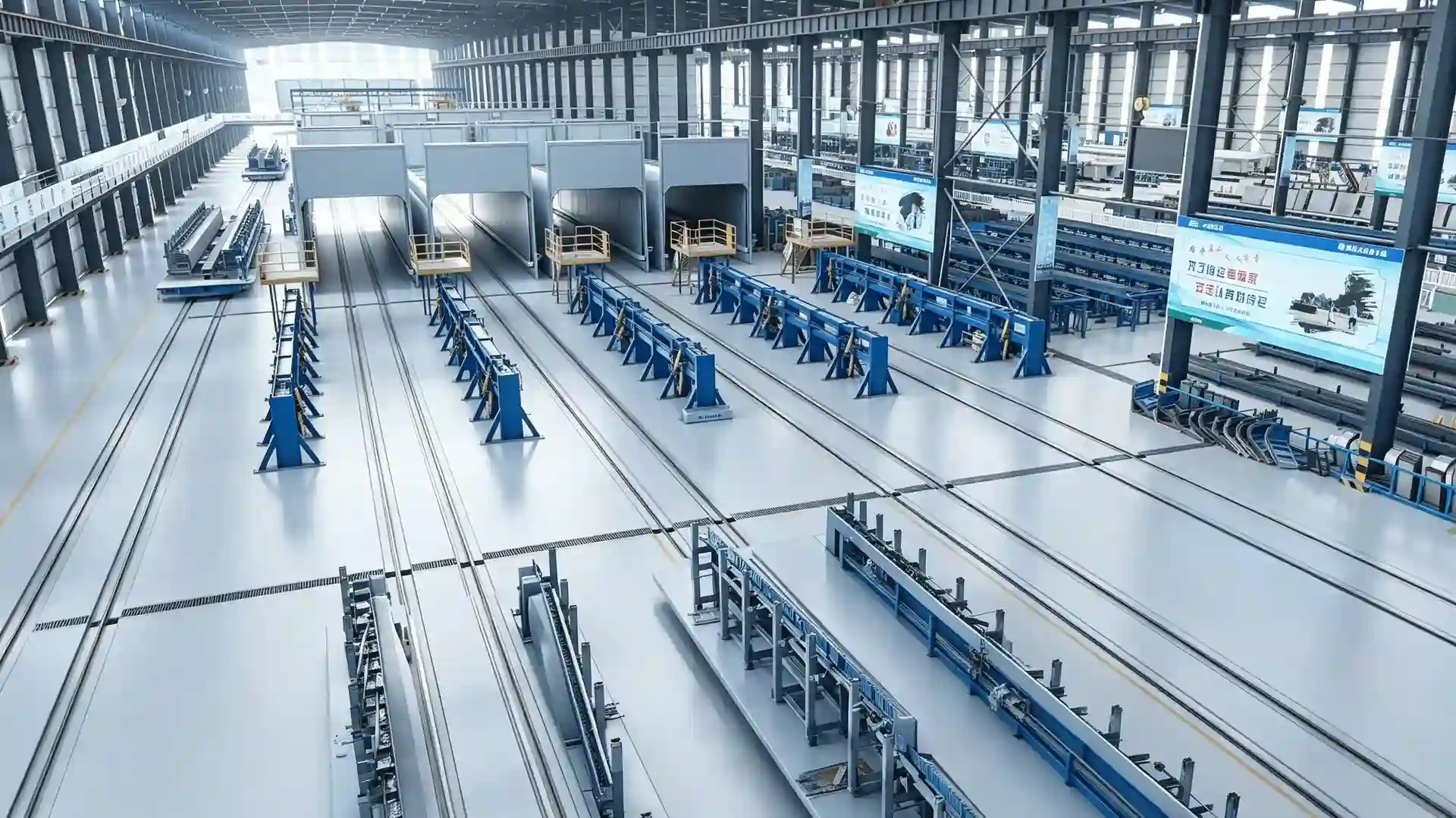
A precast I-girder production line makes prestressed concrete I-shaped bridge girders. The "I" describes the cross section: a top flange, a bottom flange and a vertical web. In North America these are often AASHTO Type I through Type VI girders or bulb-tee girders; in other markets similar single- or multiple-web prestressed beams serve the same structural role. The line does not make the completed bridge. It makes the girders that a contractor later erects and connects to a deck.
The PCI transportation resources list the common precast bridge shapes and show where I-girders sit among box beams, bulb-tees and adjacent boxes. The AASHTO bridge standards define the girder types used across many US state projects. Both are useful when you write the specification, because they tell the supplier which section family your design follows.
Realjet supplies production lines for precast concrete components, including the engineering, equipment and, where confirmed, installation and commissioning. It is the line and the process that are offered, not the girders themselves.
How an I-girder is cast
Most I-girders are pretensioned. Strands run the full length of a long casting bed and are stressed before concrete is placed. After the concrete reaches the required strength the strands are released and the compression is transferred to the girder. The mould or form defines the flange width, web thickness and any camber; the bed length sets how many girders can be cast in one pour.
The production sequence runs from bed preparation and strand stressing, through reinforcement and placement, concrete casting and vibration, steam or natural curing, strand release, demoulding and finally storage on sextants or supports. Curing control matters because release strength and camber depend on it. PCI's plant quality manuals, such as MNL-116, describe the controls producers use, and they are a useful reference when you write the acceptance criteria.
The forms themselves are usually steel, either fixed to the bed or adjustable between a small set of sections. A line built for one girder type runs simpler forms and faster changeovers. A line that must serve several sections carries more form sets or adjustable tooling, and that equipment cost shows up in the proposal. The strand anchorage and the tensioning gear are part of the line too; their capacity has to match the highest prestress force in your girder range.
Capacity drivers a buyer should understand
Two numbers dominate the discussion: how many girders per day and how many beds the site holds. Output is set by bed length, cycle time per bed and the number of beds, not by the girder alone. A 30 m girder and a 40 m girder use the same bed differently because of handling and curing time.
Geometry also drives equipment. A deep bulb-tee needs a different form and lifting plan than a shallow I-girder. Multiple cross sections in one project mean either adjustable forms or more form sets, and that changes both cost and floor space. State the span range, the flange and web geometry and the total girder count early, because they shape the whole layout.
Site, utilities and labour
A girder line needs a long, flat production area, heavy lifting and a curing system. Steam curing needs a boiler and a water and power supply; some sites use enclosed curing chambers. The floor must carry concentrated loads from prestressing and stacking, so the civil foundation is part of the scope, not an afterthought.
Labour depends on the automation level. A manual line needs more hands per girder; a more automated line shifts effort into setup, maintenance and quality control. Neither is right by default. The choice should follow the project volume and the local workforce, and the staffing plan belongs in the early brief.
Inputs to prepare before line design
Before asking a supplier to design a line, collect the data that fixes the layout:
- Girder type and cross-section drawings, including flange and web dimensions.
- Span range and the total number of girders.
- Required daily or monthly output.
- Site boundary, existing utilities and any height or crane limits.
- Local standard for prestressing, concrete and acceptance.
- Handling and storage method on site.
A project that skips this step usually returns to it later when the bed length or the crane capacity no longer fits the real girders. The earlier the supplier sees the actual section and count, the closer the proposal matches the need.
Matching the line to your project
Treat the line as a project deliverable, not a catalogue item. Compare suppliers on how they handle bed length, form changeover, curing control and the boundary between equipment supply and installation. The precast beam factory page on Realjet's site outlines the kind of production line offered and the components it covers. Use it to frame the questions you put to any supplier, then ask each one to show how their layout meets your span range and output target.
Where the project requires verified production quality, check whether the eventual producer will run under a recognised plant certification such as PCI's program, which audits plants against manuals like MNL-116. That is a producer qualification, separate from the line supplier, but it affects who can actually make your girders once the line is installed. Keep it on the checklist so the equipment and the operating certification are planned together.