
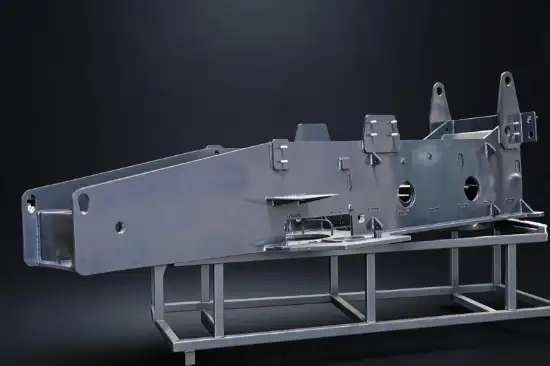
What the turntable does and why it is not an off-the-shelf part
An aerial work platform turntable is the structural hub between the chassis, the slewing bearing and the upper working equipment. It transfers vertical load from the boom or scissor mechanism into the slewing system, carries the bending moment from off-centre work and keeps the connection geometry of the upper equipment aligned with the bearing and the chassis. It is also a fabrication item that has to be made to the buyer's drawings, material list and inspection plan, because the loads, the slewing bearing interface, the equipment mounting pattern and the connection to the chassis vary from one machine model to the next.
Buyers often start the search with the word turntable and a general image. The catalogue picture shows a representative part. The actual part a supplier will quote is a welded steel assembly, a set of machined faces, a bolt pattern, a bearing race diameter and a coating system. Each of these has to be defined before the price means anything, otherwise two bidders can return numbers that describe different parts. The first task of the RFQ is therefore to send the controlled drawing and the interface book, not a photo.
What the RFQ must fix before asking for a price
The enquiry package has to identify the structural role of the turntable in the buyer's machine, the governing standard or execution class, the materials, the welded joint details, the critical machined interfaces and the inspection evidence the buyer will accept. The buyer, not the supplier, decides these points. A made-to-drawing supplier can only work to the data given.
A practical RFQ input list for a turntable includes:
- the assembly drawing, the weld map and the part-level drawings, each with revision and status;
- material grades for plates, sections, cast or forged nodes and fasteners, with the standard reference;
- the slewing bearing interface, bolt circle, race diameter, surface finish and perpendicularity limits;
- the equipment mounting pattern, pin positions and the local loads and moments to be transferred;
- the execution class for fabrication, the welding standard and the weld quality level required;
- general and welding geometrical tolerances, or a reference to a specific tolerance class;
- the surface preparation, coating system and the surfaces that must remain uncoated;
- the inspection plan, the documents to be issued and the format of the inspection records;
- the delivery scope, packaging, trial assembly requirements and the site support expected.
If any of these are left open, the bidder has to choose. The choice usually favours the supplier's existing tooling and may not match the buyer's machine. It is far cheaper to fix the inputs than to rework the part later.
Welding, machining and inspection evidence
Most turntables are welded fabrications that carry a slewing bearing and a set of equipment mounts. The welded datum structure has to stay flat and square after welding, because the bearing race seats and the equipment mounting faces are machined on the same datum. Standards exist for both. EN 1090-2 groups geometrical tolerances into essential, functional and special tolerances and offers two functional classes; class 1 is the default for routine fabrication, class 2 is used where the design demands tighter fit-up. For heavily welded structures, EN ISO 13920 is an alternative set of general tolerances for linear and angular dimensions and for shape and position, as described in the SteelConstruction.info overview of accuracy in steel fabrication. The buyer should state which class or which standard is to be used and which dimensions are inspected against it.
Weld quality follows EN ISO 5817 or, for US projects, AWS D1.1. The level of imperfection allowed (B, C or D in EN ISO 5817) belongs in the enquiry, along with any NDT scope. The supplier should be asked to show the welding procedure qualification records and the welder certificates that cover the joint types and thickness ranges in the part. Machining evidence should include the equipment list, the in-process inspection points and the final dimensional report against the approved datum.
Surface preparation and coating need the same discipline. The buyer should state the standard (for example ISO 8501 for surface preparation), the coating system, the dry film thickness and the surfaces that must remain uncoated for the bearing seat or the equipment interface. A paint the part line item is a warning sign.
How to compare bidders on process, not on the photo
A turntable RFQ is a process comparison. The drawings and the standards limit the geometric outcome; the difference between bidders sits in process control, inspection rigour and the quality of the interface with the buyer's machine. A short list of comparisons that can be asked for in writing:
- the proposed weld sequence and distortion control method, with the fixture description;
- the machining datum plan, with the equipment that will be used and the in-process checks;
- the inspection plan mapped to the drawings, including weld NDT, dimensional reports and material certificates;
- the workshop trial assembly scope, if any, and the records the buyer will receive;
- the supply chain for plates, castings, bearings and fasteners, and the change-control procedure if a source changes;
- the delivery scope, packaging, transport restraints and the documents to be issued at handover.
Two bidders can return the same price and a very different risk profile. The RFQ is the place to expose that difference before the contract is signed.
What Realjet covers in a turntable contract manufacturing order
Realjet provides machinery contract manufacturing for project-specific turntable structures. Each assembly is produced to the customer's approved drawings, material requirements and inspection plan, with cutting, forming, fixture-controlled welding, interface machining, surface treatment and dimensional inspection connected in one controlled scope. The dimensions, materials, loads, bearing interface and equipment mounting details are confirmed through technical review before manufacturing begins. To start a review, send the controlled drawings, the material list, the weld requirements, the critical tolerances, the coating system, the target quantity and the acceptance standard through the contract machinery manufacturing service. The exact published contract-manufactured aerial work platform turntable reference describes the manufacturing scope in more detail, while a project enquiry is the right place to confirm the boundary for a specific machine.