
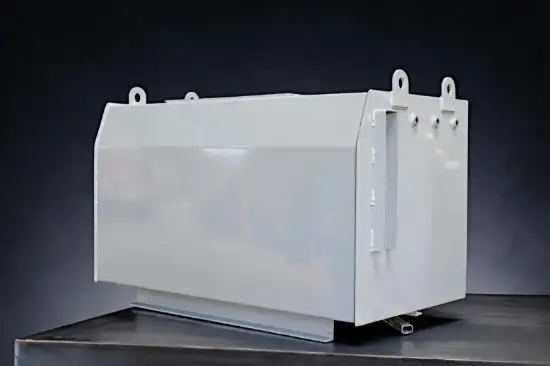
Why fuel tanks are ordered as contract manufacturing
Machinery fuel tanks rarely fit a catalogue. The envelope is set by the host machine, and capacity, mounting, filling, venting and outlet points follow the machine layout. Most buyers therefore source them as made-to-drawing contract manufacturing: you supply the authorised drawings and specifications, and the shop cuts, forms, welds, tests and finishes the tank to those documents. Realjet provides made-to-drawing machinery contract manufacturing for fabricated tanks and similar welded assemblies. The final manufacturing route, test plan and supply boundary still depend on the customer's approved documents.
Catalogue tanks seldom work because the installation envelope, certification and fluid duty differ from one machine to the next. Writing the tank as a contract manufacturing RFQ keeps the design ownership with you and lets the shop demonstrate conformance to your specification. The point of this guide is to list what belongs in that RFQ so the first quotation addresses scope and evidence instead of filling gaps with assumptions.
Drawings and specification the RFQ should attach
Send the controlled drawings that define the tank as a finished part. At minimum:
- overall envelope, capacity and the mounting or skid interface;
- plate thickness by location, and any stiffeners or internal baffles;
- filling, venting, drain and outlet positions, with thread or flange standards;
- lifting, anchoring and access features;
- surface finish, coating system and marking requirements;
- the fuel or fluid the tank must contain, where that changes material or test choices.
If the drawing leaves the weld map or acceptance class open, state the welding code you want applied. Buyers often point to AWS D1.1, the US structural welding code for steel, or to a project-specific welding specification. The code sets who qualifies the procedure and how the welds are accepted.
Material certificates and traceability
Specify the plate grade and ask for mill test reports traceable to the heat. The shop should keep material identification through cutting, forming and welding so a completed tank can be tied back to the certificates. This matters most when the tank sits in a load-bearing or safety-related machine structure. Realjet's fabricated fuel tank example is produced to authorised drawings with recorded material traceability; it is a reference, not a standard specification, and each tank is reviewed against the customer's documents.
For stainless or clad tanks, name the grade and any contamination or cleanliness limits, because those change cutting and handling. State whether leftover material must be returned with the heat mark visible for audit.
Welding specification and procedure qualification
Define the welding requirement before asking for a price. A useful RFQ states:
- the applicable code or customer welding specification;
- whether a Welding Procedure Specification (WPS) and Procedure Qualification Record (PQR) must be supplied, and who qualifies them;
- acceptance level for imperfections, often referenced to ISO 5817, which grades weld imperfections for steel;
- welder qualification evidence where the part is safety-related.
A manufacturer working to ISO 3834, the international quality requirements for fusion welding, keeps the procedure, personnel and records that a fuel tank order usually needs. ISO 3834 is a welding quality system, not a product acceptance code, so pair it with the welding code above. State the responsibility boundary clearly: the customer's drawing and specification define the weld, and the shop demonstrates conformance.
Leak and pressure testing
Fuel containment fails silently, so the test method belongs in the RFQ. Common options:
- hydrostatic test, where the tank is filled with water and held at a defined pressure;
- pneumatic or air-pressure test, with a bubble or pressure-decay check;
- dye penetrant inspection of welds, referenced to ISO 3452, for surface-breaking defects.
Pick the method the fluid and duty allow, and write the test pressure, hold time and acceptance limits. Decide who witnesses the test and what the tank is filled with for the check. The customer's specification sets the pass criterion, and the shop reports the result against it. A pneumatic test on a large welded envelope needs a controlled area, so confirm the method and the safety set-up before the build.
Surface treatment and final inspection
Name the coating system and any pre-treatment, because fuel tanks need both corrosion protection and a clean internal surface. State marking, labelling and the documentation pack: material certificates, WPS/PQR, test report, inspection record and packing list.
Final inspection should confirm geometry, no leaks at the agreed test, clean internals and complete documentation. Keep the acceptance evidence with the order file so later service or audit can trace the build.
Cleaning, venting and packing for shipment
Fuel tanks ship as empty fabricated parts, but residue and vapour rules still apply. State whether the tank must leave the shop dry and vapour-free, and whether any internal coating needs curing before packing. Define the lifting points and the export crate or frame so the part arrives without distortion. For long overseas freight, confirm the maximum packed dimensions against your port and the machine assembly sequence.
What Realjet supplies and what stays with you
Realjet manufactures fabricated fuel tanks to customer-authorised drawings, with controlled welding, leak testing and inspection per the agreed scope. The supplier does not set the tank's capacity, material or acceptance class; those come from your design and applicable requirements. Send the correct drawings, material specification and test basis through the enquiry so the response covers scope, evidence and quotation assumptions rather than estimates.
Start a fuel tank enquiry from the contract manufacturing page with your drawings and the acceptance criteria above.