
Why site selection comes before equipment specification
Choosing a site for a precast production line is not only a real estate decision. The shape of the land, the road access, the soil bearing capacity and the available utilities all constrain what kind of line will fit and how much it will cost to install. A buyer who selects equipment first and then tries to fit it into a constrained site usually pays more in civil works, material handling and lost output.
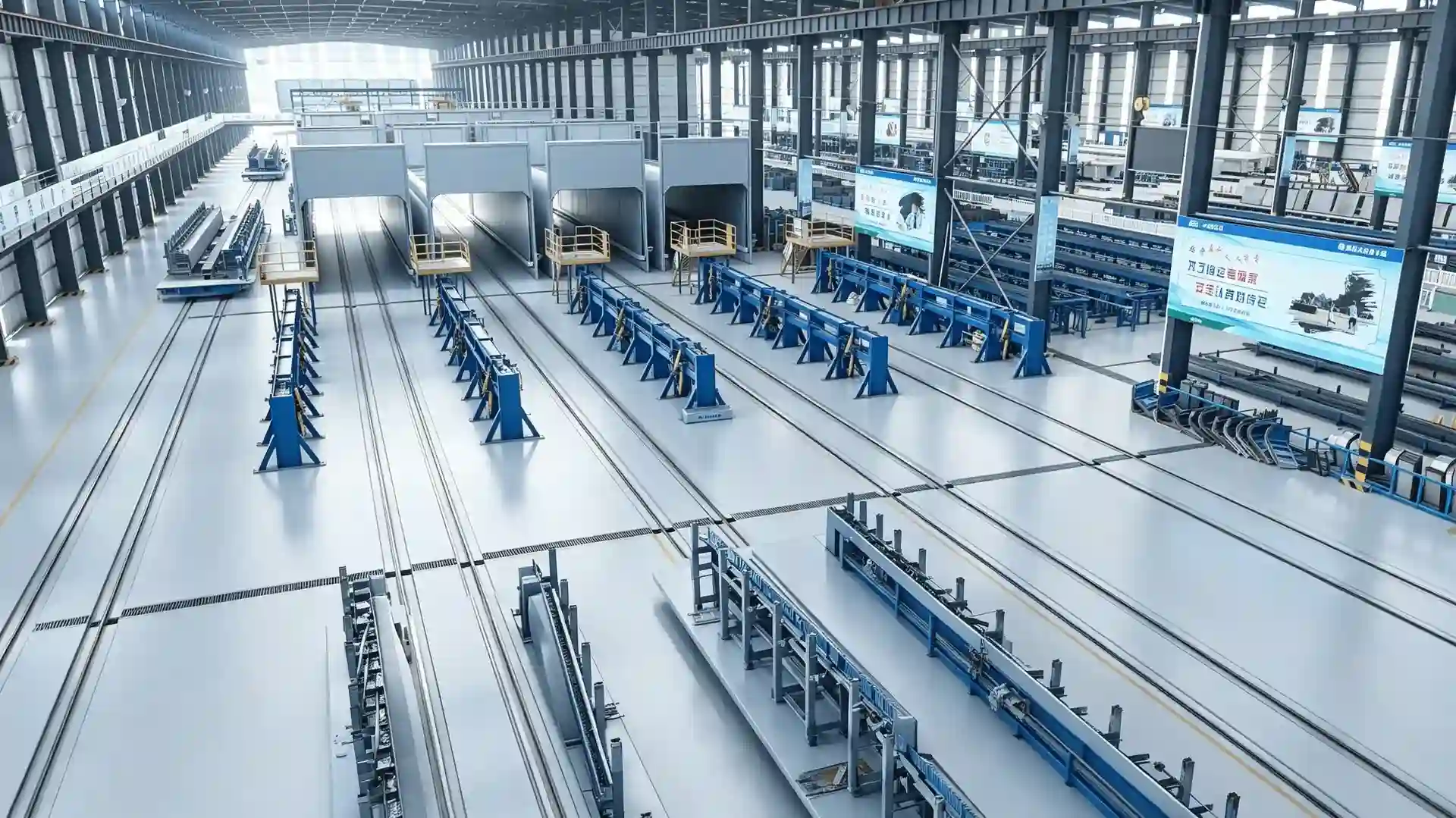
The site defines the production hall span, the bay length available for casting beds, the crane runway length, the batching plant location and the curing area layout. It also determines whether the line will be fixed in place, partly movable, or arranged as a circulation system. Realjet supplies project-specific production lines for precast concrete components and reviews site data as part of the engineering stage. The earlier the site information is shared, the more accurately the line can be sized.
Location and logistics checks
A precast plant produces heavy, bulky components that must reach the construction site without damage. Start by mapping the transport route from the plant to the main project locations. Check bridge load limits, tunnel heights, road widths, turning radii and any weight restrictions that apply to the longest and heaviest elements you expect to cast. If the components are bridge girders, the route matters as much as the plant itself.
Proximity to raw materials also affects operating cost. Cement, aggregates, admixtures and steel arrive frequently and in large volumes. A location near reliable suppliers shortens haul cycles and reduces the working inventory you must keep on site. Water supply matters too: concrete mixing, curing and cleaning consume significant volumes, and the source must be consistent in quality and quantity.
Labour availability and local skills are part of the location decision. A highly automated line still needs operators, maintenance staff and quality inspectors. A more manual line needs more workers with concrete and formwork experience. Check local wage levels, training providers and whether the project can attract the required staff for the production schedule.
Land and layout requirements
The land area must cover the production hall, raw material storage, batching plant, rebar preparation and cage assembly, casting beds or mould stations, curing area, finishing and repair area, finished-component storage and dispatch. A common rule of thumb is that the storage and stacking area should be comparable to or larger than the covered production area, because precast components often sit on the ground while waiting for transport.
Soil conditions affect foundation design. Long casting beds need a stable foundation that does not settle differentially along the line. Movable equipment on rails needs level tracks with controlled alignment. Ask for a geotechnical report before the supplier designs foundations. The report should cover bearing capacity, settlement expectations, groundwater level and any need for ground improvement.
Drainage is easy to overlook during site selection, but rainwater and curing runoff can halt production if the yard floods. The site should have enough slope and drainage capacity to keep the production floor and storage yard workable. In cold climates, consider whether outdoor storage is practical in winter and whether curing areas need enclosure.
Utilities, permits and environmental constraints
A precast line needs more than floor space. The electrical supply must support batching plant motors, cranes, ventilation, welding equipment and any steam or curing systems. Ask the local utility about available capacity, voltage and reliability. Backup power may be needed for critical controls or curing continuity.
Water, compressed air and possibly steam are standard utilities. Curing systems may use steam, hot water or electric heating depending on the climate and product requirements. The site must have a water source with enough volume for mixing and curing, and a way to manage wastewater. Many plants collect curing water, settle suspended solids and reuse or discharge the water according to local rules.
Permits and zoning can delay a project if they are not checked early. Confirm that the land is zoned for industrial use, that environmental approvals cover dust, noise and wastewater, and that building permits allow the proposed hall height and crane loads. In some countries, precast plants also need product certification or factory production control approval before components can be used on public projects.
What to send to the production-line supplier
Once the site is shortlisted, prepare a package for the line supplier. Useful information includes the site plan with dimensions, the geotechnical report, utility capacities and points of connection, the product mix and annual output target, the largest component dimensions and weights, the planned casting method, climate data and any local standards the equipment must meet. With this data the supplier can propose a line layout, estimate civil works and identify any site constraints that need engineering solutions.
Realjet develops production lines for precast concrete components from project drawings and production targets. The site review is part of that process, not an afterthought. If you are evaluating a location for a precast production line, share the site package early and request a layout proposal that matches both the ground conditions and the product plan. You can begin from the precast beam factory overview and compare fixed and circulation layouts in our guide to fixed versus circulation precast beam production lines.