
A repeat welded assembly is often bought twice in different ways. The first order is a project with a drawing, a price and a delivery date. The second is a stream of releases against an agreement, where the drawing may change, the quantity may move and the supplier still has to hold capacity. Buyers who carry the first order's habits into the second usually find that the quotations are not comparable and the records do not line up.
The agreement needs its own rules. Set those rules before the supplier is chosen, while the order is still a purchasing decision rather than a scheduling detail for the production team.
What a scheduled agreement actually commits
A scheduled release arrangement separates the technical and commercial baseline from the act of calling off a batch. The baseline fixes the part, the revision, the quality requirements, the unit price or price formula, and the period covered. Each release then states how many units to make and when to deliver them.
That separation only works if both sides know which document wins when they disagree. The agreement should say so. It should also say whether the buyer's forecast is a planning figure or a commitment. A supplier who prices a firm annual quantity and a buyer who treats that figure as a forecast are entering two different contracts.
The contract manufacturing service page describes the made to drawing route for welded frames, structures and equipment supports. A scheduled agreement is a way of buying that route repeatedly. It does not change who owns the design or who approves a change.
Fix the revision before you discuss volume
A release cannot identify a part by name alone. It needs a controlled drawing number and revision, a bill of materials revision, and a list of any approved deviations. If the assembly is a weldment with machined interfaces, the machining drawing belongs in that set as well.
This is especially important when the same frame is used in several machines. One customer may release the part with a different hole pattern because a nearby machine changed. The supplier needs to know whether that is a new revision, a project variant, or an error in the release. A useful rule is that no batch is released against an uncontrolled drawing, even when the change looks small.
Geometric tolerances on the interface drawing should follow an agreed convention such as ISO 1101. The standard does not select the datum scheme for the part. The designer still does that, and the supplier should not pick one to make fabrication easier.
Turn the annual quantity into bands
Annual volume is a poor basis for a single price when releases are irregular. A supplier who sees 400 units spread evenly across a year will price differently from one who sees 300 in one quarter and 100 in a rush at the end. Ask bidders to price defined quantity bands and to state the lead time associated with each band.
The bands should be measured in released batches, not in theoretical annual output. State the normal batch size, the smallest batch you will release, and the largest batch the agreement must absorb. If the schedule is a call-off against a project programme, say which dates are firm and which are indicative.
Capacity held for a release that never arrives is paid for somewhere, either in the unit price or in a later expediting charge. Buyers who want a lower unit price can offer a firmer schedule. Asking the supplier to absorb the uncertainty will still appear in the quote somewhere.
Say what each release notice must contain
A release notice should carry enough information for the supplier to build without a conversation. That includes the agreement reference, the part number and revision, quantity, required delivery date, delivery address, any packaging requirement, and the name of the person authorised to change or cancel the release.
It should also carry the inspection level. If the first ten units of a new revision need a hold point, the notice must say so. If the buyer wants material certificates with every batch rather than on request, that belongs here too. The inspection and test plan guide explains how hold and witness points are normally set out for fabricated parts.
Set a notice window. A buyer who releases on Monday for delivery on Friday is buying expedited work, whatever the agreement says about price. A realistic window gives the supplier time to place material, book welding capacity and plan machining without displacing other work.
Traceability across mixed batches
Scheduled orders often carry several revisions at once. Older assemblies remain in service, spares are needed, and a new revision enters production. The supplier's material and batch records need to follow the revision rather than the part name.
Ask for the identification rule in the quote. How is a batch tied to a material certificate? How is a weld record tied to a welder and a procedure? How will a unit be identified if it is reworked? The material certificates guide covers the document side of that question for made to drawing work.
ISO 9001 is a useful reference for the discipline, not for the answers. ISO 9001:2026 is now the current edition, and ISO keeps its harmonised clause structure, so a buyer's existing requirement language does not need to be rewritten for the edition change. The standard does not decide which records your part needs. The agreement does.
Evidence that travels with a release
Define the release pack once and use it for every batch. A typical pack for a welded assembly may include a dimensional report against agreed characteristics, a weld inspection record, material identification, and any coating or machining record the specification calls for. The exact list comes from the drawing and the quality plan.
For welding quality, ISO 3834-2:2021 defines comprehensive quality requirements for fusion welding and was confirmed again in 2026. It gives a buyer a way to describe the welding quality system expected of the shop. It does not replace an inspection plan for a particular part, and it does not state how often a dimension must be measured.
The first article inspection guide is a useful companion when a new revision enters the schedule. Agree whether the first article is a one off event per revision or a repeating event after a defined break in production.
Change control between releases
Most disputes in a scheduled agreement come from changes that nobody called changes. A substituted steel grade, a moved hole, a different coating, or a new subcontractor can each alter the cost or the evidence. The agreement should name the approval route and state that work stops on the affected revision until the route is complete.
Write down who may approve a deviation, who may accept a material substitution, and how quickly the supplier must respond to a buyer's proposed change. A quiet email between engineers is not a controlled change, even when both sides understand it. The drawing review and deviation guide sets out the same boundary for a single order.
Separate commercial changes from technical ones. A change in release quantity is usually a schedule and price question. A change in geometry is a design question. Both need a record, but they should not go through the same approval.
Capacity, fixtures and storage
If the supplier builds a fixture to hold the assembly, the agreement must say who pays for it, who owns it, and where it lives between releases. The fixture ownership guide deals with those questions in detail. Leaving them open is common in scheduled work because the fixture cost is spread across batches and easy to forget.
Capacity is a related issue. A supplier may reserve welding time or a machining slot for the agreed schedule. If the buyer wants that reservation, it should be priced and described. If the buyer does not want it, the lead time should be allowed to vary with the supplier's load.
Finished units held awaiting a later release also need an owner. State who stores them, for how long, at what risk, and whether the buyer can inspect them before shipment. Storage on the supplier's floor carries a cost and needs an owner in the agreement.
Price, payment and the quiet schedule
Ask bidders to separate the unit price from the costs that depend on the schedule. Those may include material procurement, fixture cost, setup for small batches, inspection effort and expediting. A price that blends them makes later comparison impossible.
Payment terms should follow the same logic. If the agreement covers a year, state whether payment is on release, on shipment, or against a call off invoice. The quote cost driver guide explains how made to drawing prices are built, and the same drivers apply here with the added effect of release timing.
Do not ask for a firm price across an indefinite period without stating the basis for reopening it. Material cost and drawing revision are legitimate reopening triggers. A vague index clause gives neither side a workable threshold.
Responsibility split and what Realjet confirms
The buyer owns the drawing, the revision rule, the inspection level and the release notice. The designer owns geometry and tolerances. The supplier owns the fabrication route, the welding sequence, the records it generates and the people it assigns. Any subcontracted operation still needs to appear in the records under the prime contractor's name.
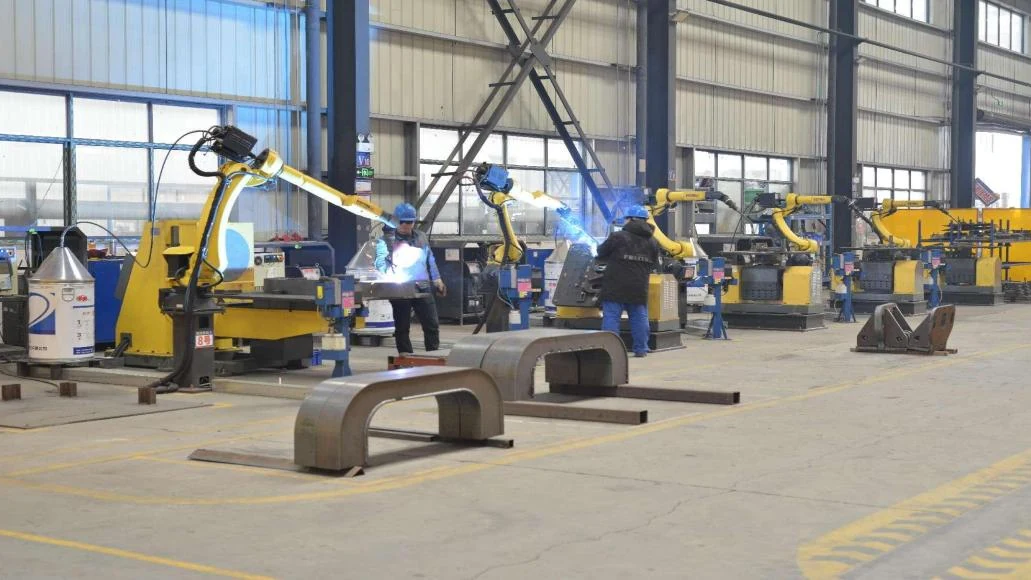
Realjet manufactures welded machine frames, structures and equipment supports to customer drawings, with machining of interfaces after fabrication. Its welding quality system is to ISO 3834-2, with EN 15085-2 CL1 for railway work, and robotic welding covers arc and GMAW processes with post weld cleaning. Bending runs from 3,200 to 6,000 mm at up to 500 t, and machining includes drilling, boring, deburring and sub assembly.
Those are descriptions of capability, not a promise about a particular scheduled agreement. Batch size, reserved capacity, storage, delivery terms and inspection frequency stay subject to technical review and the signed contract.
Before you issue the schedule
Write the baseline, the release notice template and the evidence list on one page each. Send all three with the enquiry and ask every bidder to return a marked up version. If two suppliers read the same schedule differently, fix the wording before comparing price. A clear release rule is worth more than a lower rate attached to an unclear one.