
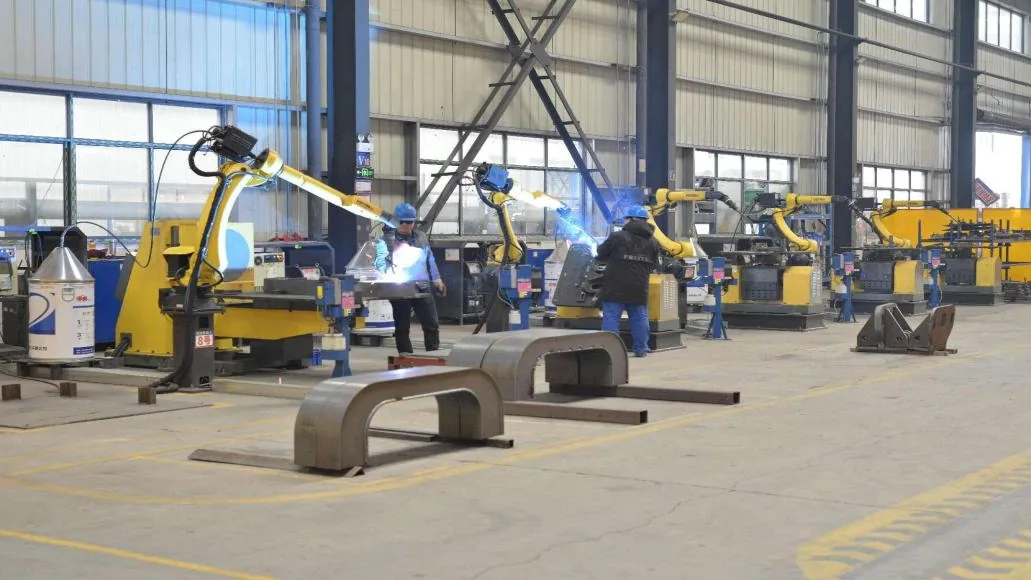
Fixtures become a commercial question before they become a tool
A welded frame can look identical whether it was held in a purpose-built jig or tacked together on a flat plate and straightened afterwards. The two routes carry different costs, and they give different answers to a question buyers often leave until the second order: who owns the fixturing? In contract manufacturing, that question belongs in the first enquiry, because the answer decides whether a repeat order can move, what it will cost to requalify, and what evidence the buyer can demand when something changes.
The commercial answer and the physical answer are separate. A fabricator may own a universal welding table and a set of clamps, while the buyer owns a dedicated gauge that checks a mounting face. Both sit in the same workshop. Treating them as one item on a quotation is how a programme ends with a tool that nobody can locate or a drawing that nobody is allowed to use.
Three assets that get confused
A jig holds or locates a part while work happens on it. A fixture is the wider assembly that supports, clamps and locates a component through an operation. A gauge measures or verifies a feature, often without changing the part. They are bought, stored and transferred differently, so an enquiry should list them separately.
The useful split is not by name but by whether the item exists for this part number. A general purpose welding positioner has value on many jobs and normally stays with the fabricator. A jig built around one bracket's datum pattern has no other use, and its fate should be written down before it is cut. Industry practice treats paying for a tool and owning it as two distinct questions, and the written agreement decides both.
What the quality system asks for
ISO 9001:2015 clause 8.5.3 requires an organisation to exercise care with property belonging to customers or external providers while it is under that organisation's control. It asks the organisation to identify, verify, protect and safeguard such property, and to report loss, damage or unsuitability while retaining documented information on what happened. The note to the clause explicitly includes tools and equipment, as well as intellectual property.
That clause does not decide who holds title. It sets the minimum behaviour once a buyer has supplied something. A buyer who sends a master gauge to a fabricator should expect an identifying mark, a receipt condition, a record of where it is kept and a reporting route if it is damaged. A supplier qualification review is the right point to ask how that is done in practice, before any tooling is shipped.
For welded work, ISO 3834-2 sets quality requirements for fusion welding, and it sits alongside rather than replaces the commercial ownership terms. A fabricator can hold a welding quality system and still have no obligation to hand over a part-specific jig.
Designing the fixture: whose drawing governs
The product geometry belongs to the buyer's drawing. The locating scheme that makes the part repeatable in a fixture is often proposed by the fabricator, because it knows how the part will distort and which faces can carry a clamp. Both contributions need a revision reference. If the fabricator changes a locator to solve a welding problem, the buyer needs to know whether the mounting interface moved with it.
A datum scheme based on ISO 1101 gives both sides a common language for the faces and holes that control assembly. In the enquiry, name the datum features the fixture must respect and state who signs any change to them. The drawing and BOM readiness guide covers the wider package a supplier needs before it can quote tooling honestly.
Paying for it is not the same as owning it
A fixture charge can cover design, material, setup, modification or use, and it can be spread across unit prices instead of appearing as a separate line. None of those payment routes establishes title by itself. The purchase order should state the owner, the custodian, the permitted use and what happens at the end of the programme.
For a buyer planning a second source, this is the difference between a movable asset and a new tooling project. It also shapes price comparisons. One quotation with a low unit price and an undisclosed fixture charge buried in tooling may be more expensive over a two-year run than a higher unit price with clear ownership. The repeat order guide shows what else travels between orders when a drawing changes.
Storage, custody and the second order
The practical failure is simpler than a legal dispute. The jig exists, but nobody knows where, or it has been modified for another customer, or the locating pins have been replaced without a record. A buyer should ask for an asset identifier tied to part number and revision, a storage location, a condition photograph and a named custodian.
A first article inspection on the first order establishes the baseline. A repeat order should start from a check that the same fixture, unchanged, still produces the same critical features. Where a trial assembly was part of the original evidence, record whether the repeat will repeat that step or rely on the earlier approval.
Maintenance, wear and who authorises a change
Locators wear, clamps loosen, pads get ground flat and weld spatter builds up on locating faces. Routine cleaning and replacement of standard consumables normally sit with the party holding the tool. A change to a locating surface that affects a critical feature is different: it needs a reason, a drawing revision, a re-verification and a record.
Write the approval threshold into the order. Small adjustments the fabricator may make on its own should be listed. Anything touching a datum, a mounting hole position or an inspection feature should return to the buyer. This boundary matters most when a dimensional inspection plan uses the fixture itself as the measurement reference.
Process fixtures the fabricator brings itself
Not every tool should be on the ownership schedule. A fabricator's own positioners, backing bars, press brakes and standard clamps are part of its production capability, and it will use them on other work. Forcing those items into a buyer-owned list adds paperwork without protecting any design interest.
The dividing line is whether the item embodies the buyer's geometry. A backing bar cut to one flange profile does. A standard angle plate does not. If the distinction is unclear in a quotation, ask the supplier to mark which items are part-specific and which are general equipment before the order is placed.
Transfer at the end of the programme
A buyer who may move production needs an exit route in the agreement. That route should name the assets, the drawing and revision set that goes with them, the condition record, who packs and pays for transport, and the point at which custody changes. A tool that relies on a proprietary machine interface may not be transferable in a useful sense even if title passes, so ask whether the receiving site can mount and verify it.
None of this assumes the relationship will end badly. It is the same discipline used for making a fabricated frame to drawing: decide the boundary while the design is still cheap to change.
Evidence to ask for before award
A short schedule in the RFQ does more than a long clause later. Ask each bidder to state:
| Question | Why it changes the order |
|---|---|
| Which jigs, fixtures and gauges are part-specific | Separates buyer interest from supplier equipment |
| Who designs the locating scheme and who approves changes | Fixes design authority for the interface |
| Is the charge separate or included in unit price | Makes two quotations comparable |
| Who holds the tool and under what identifier | Supports the clause 8.5.3 care duty |
| What triggers re-verification after wear or repair | Prevents silent drift in critical features |
| What is delivered at the end of the programme | Makes a second source possible |
The answers belong next to the welding scope, inspection plan and packaging terms in the original enquiry, not in a discussion after award.
Where to take the question
Tooling ownership belongs in the purchase enquiry. A made-to-drawing supplier should be able to say, before the first cut, which tools exist for the part, who will own them, how they will be kept current and what a repeat order will require. Realjet's contract manufacturing service covers welded frames, machined interfaces and assemblies made to customer drawings, with the tooling and inspection boundary agreed as part of the order rather than discovered later.