
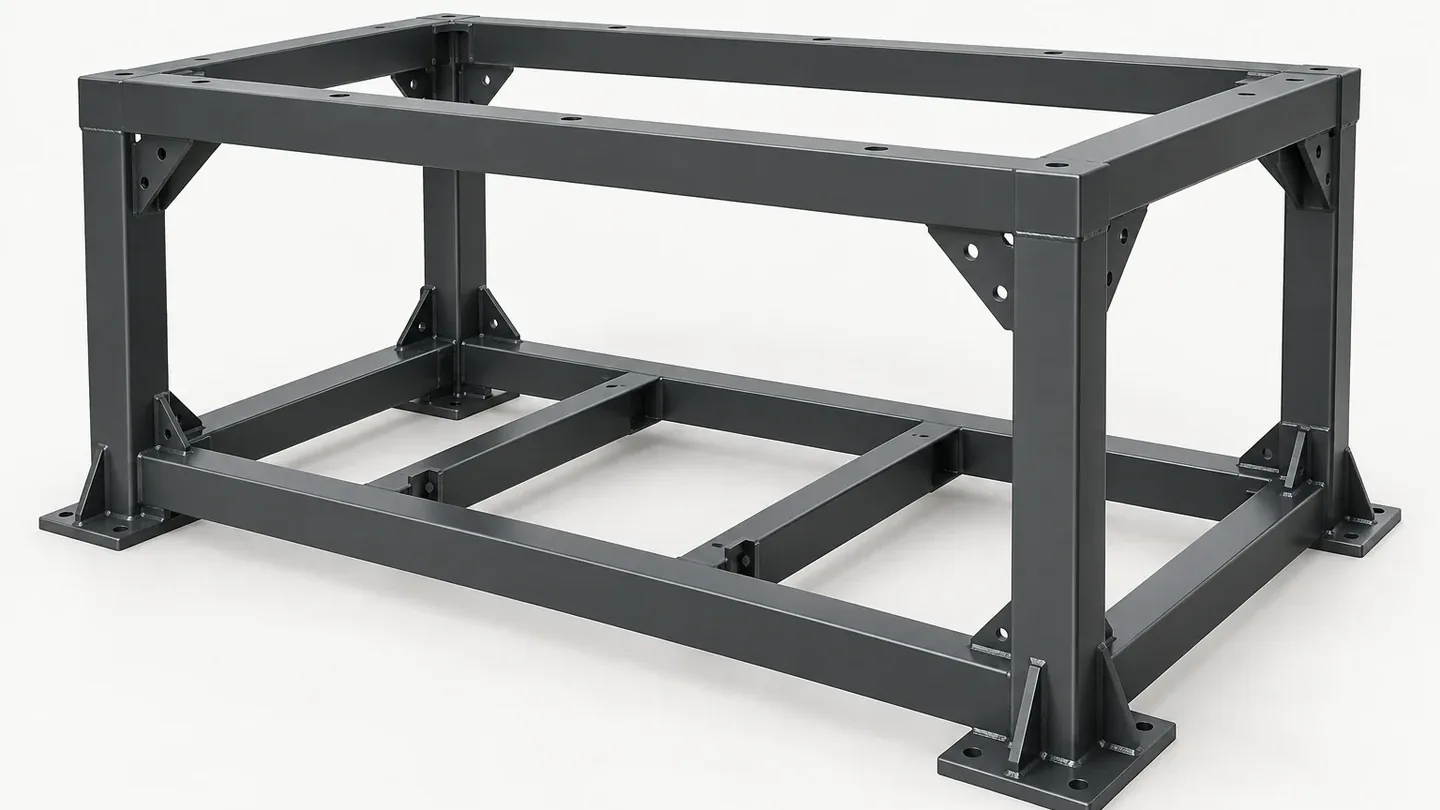
What a model-only RFQ contains
A model-only package is an enquiry built around a 3D product definition rather than a set of dimensioned 2D drawings. The model carries the geometry of the part and may also carry product manufacturing information: dimensions, geometric tolerances, surface notes, material callouts and weld annotations. ISO 16792:2021 covers two application methods, 3D model-only and 3D model with a 2D drawing in digital format. It sets requirements for preparing, revising and presenting the data set, and takes the rules for interpreting dimensions and geometry from other standards such as ISO 129-1 and ISO 1101.
Buyers reach this route for sound reasons. A frame may exist only as a design model, the assembly may be awkward to describe in 2D, or the buyer may want one master data set to serve both fabrication and later assembly. Those reasons do not decide who interprets the model when two software systems read it differently.
Fix the manufacturing scope first
State at the outset that the enquiry is for made-to-drawing contract manufacturing, and name the physical deliverable. Realjet fabricates welded machine frames, structures and equipment supports to customer drawings and machines interfaces after fabrication. Put that boundary next to the contract manufacturing service page and the steel frame fabrication product page in the buyer's own reference notes. Accepting a model does not widen the scope or transfer product design to the supplier.
The same applies to bought-out items. If the assembly includes motors, cylinders, guards or fasteners that the buyer purchases separately, list them in the bill of materials with a clear party for supply and fit. The drawing and BOM readiness guide covers the fields that stop a quotation from being built on guesses. A model can carry a parts tree, but a parts tree is not a purchasing responsibility matrix.
Dimensions and tolerances still need a rule
ISO 129-1:2018 establishes general principles for presenting dimensions and associated tolerances that apply to 2D drawings and can also be applied to 3D applications. It does not define the meaning of a dimensional tolerance. A label attached to a face in a CAD system tells a reader where to look; the GPS definition standards tell them what is permitted.
For welded fabrications, agree a single source for general tolerances before asking for prices. ISO 13920:2023 gives tolerances for welded constructions, while ISO 1101 governs geometrical specification. Say which one overrides the other when they disagree. A model that is accurate to the millimetre does not make a welded frame accurate to the millimetre, because cutting, fit-up and welding all move material. The tolerance stack-up guide explains how those movements combine.
Datum features deserve their own paragraph in the RFQ. Identify the faces, holes or edges that establish the coordinate system for machining, and say whether the datum scheme appears in the model annotations, in a separate document, or both. If the same frame has a machined mounting face and a welded lifting point, the datum that controls the mounting face should be named explicitly.
Weld and process information does not live in geometry
A solid model can show where two plates touch. It cannot say whether the joint is a full penetration butt weld, which process is used, what quality level applies, or how much non-destructive testing the buyer expects. Those items belong in a welding schedule that accompanies the data set. Use ordinary welding symbols and written notes that a supplier can quote against; the welding procedure and NDT scope guide gives a pattern for that schedule.
Also state the inspection point at which a welded frame is measured. If machining happens before coating, and coating before final assembly, the model may describe a state that exists only at one of those stages. Name the stage, the temperature basis where relevant, and the party that records the result. The machined interfaces guide shows how buyers separate a welded condition from a finished interface.
Surface treatment is another document item. A colour swatch or a note in the model does not set blast preparation, film thickness or masking of machined faces. Point the bidder to a written coating specification and to the surface condition that must exist before the first coat. The surface treatment and coating RFQ guide covers the clauses that usually go missing.
Agree the file format and revision rules
Ask for a named exchange format and state the native CAD system only as background. ISO 10303-242:2025, the STEP application protocol for managed model-based 3D engineering, covers product definition data, configuration control and product manufacturing information including dimensional and geometrical tolerances. It is a sensible reference when a buyer wants one file to carry both shape and annotation. If a simpler STEP variant or a neutral mesh is accepted, say which information may be lost in translation.
Revision control is where model-only packages often fail. Record the model revision, the issue date, the authorising engineer and the rule for superseding it. A supplier that receives three near-identical files named with dates cannot tell which one has the approved hole pattern. Require a written acknowledgement of the revision used for the quotation and another at the point of manufacture, so a late design change cannot be priced as though it were included.
Ask bidders to report any feature they cannot interpret. A short query list at tender stage is cheaper than a change order after cutting begins. The drawing review and deviation guide describes how to keep those queries visible to every bidder.
Inspection against a model
Dimensional inspection against a model needs a declared method. Ask whether the supplier will use a coordinate measuring machine, a laser tracker, a total station or manual gauges, and which features each method covers. The same drawing set should state how results are reported: a table of nominal, tolerance and measured values tied to feature identifiers that appear in the model. The first article inspection guide sets out what a buyer can reasonably request before a first batch is released.
Keep material evidence separate from geometric evidence. If the RFQ calls for mill certificates, require the certificate type and the method for linking each heat number to a part or batch. The material certificates and traceability guide explains why that link cannot be invented at the end of the job. Heat numbers and inspection records live outside the model and must be specified there.
Where responsibility sits
The buyer's engineer owns the product definition, the datum scheme, the weld schedule and the acceptance criteria. Realjet's verified scope covers fabrication to that definition, machining of interfaces after welding, robotic arc and GMAW with post-weld cleaning, and a welding quality system to ISO 3834-2. Bending from 3,200 to 6,000 mm at up to 500 t, plus drilling, boring, deburring and sub-assembly, may be used where the drawing calls for them.
Design authority, product performance and field installation remain outside that scope. Nothing in a model-only package transfers them to the fabricator. If the buyer wants a trial assembly, a witness point or a particular export pack, each item needs its own line in the RFQ. The supplier qualification guide offers a way to check that a shortlisted shop can produce the evidence the model alone cannot supply.
Before you send the enquiry
A model-only package works when the buyer treats the data set as one input among several. Send the model in an agreed format with a locked revision, a welding schedule, a general tolerance rule, a datum scheme, a coating specification and a list of bought-out items. Add the inspection evidence you expect and the party responsible for each document. Then ask bidders to quote that package, not their interpretation of it.
Those documents give bidders a common basis for a price. If you are preparing a fabrication enquiry and only have a design model today, share the model together with the written decisions above so a scope can be proposed against them.